Skip to content

Posts from the ‘DINOS’ Category

Six Tips for Safer, Happier Dog Walking

It’s National Walk Your Dog Week and to celebrate, I got the chance to guest blog for a wonderful nonprofit called Found Animals Foundation.

The folks at FAF totally get DINOS. So they wanted to help spread the message that even though we’re all really excited about Walk Your Dog Week, we still need to remember to be respectful and responsible too.

I love it when the DINOS messages spreads to a new group of dog lovers!

If you’re looking for a polite way to talk to someone you know about their leash problems, my guest blog: Six Tips for Safer, Happier Dog Walking  is the perfect intervention.  Read it here now.

When you visit the FAF blog to read and share it, don’t forget to let FAF know you appreciate them spreading the DINOS message: DINOS are GOOD dogs, they just need space!

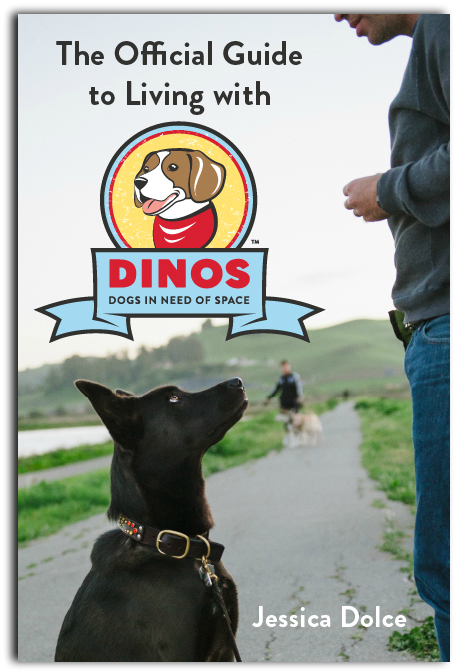
p.s. Need something polite and informative to give to strangers while you’re out dog walking? I got you. Check out my pocket-size handouts on Flickr and now available on Cafe Press.

The DINOS Message or All Jacuzzis are Hot Tubs, but Not All Hot Tubs are Jacuzzis*

One of the very cool, and truly unexpected, things about DINOS is how crazy popular the term DINOS has become in the last 10 months. When I was sitting at my desk last year, totally annoyed after a difficult dog walk, and coined the term DINOS/Dogs in Need of Space, it never occurred to me in a million years that DINOS would become a commonly used term to describe dogs.

In particular, DINOS has come to be synonymous with “reactive”, and since I work and live with reactive dogs, that’s pretty ok with me, most of the time. I love that having a term, other than reactive, helps dog owners feel better about their dogs (and themselves). Trainers have told me that talking to owners about DINOS is a way to break the ice about reactivity, without freaking their clients out. Most of all, I love that being a DINOS means you have a team now. You’re not alone if you have a reactive dog: there are so many of us we could stage a DINOS-only Olympics. We would, of course, need a lot of space.

As the term becomes more popular, as it spreads from country to country, I’m starting to see how various animal welfare groups, writers, and other organizations are relaying, repackaging, and relating the DINOS message. It’s very exciting stuff, but it occurred to me that it might be time to have a little pow wow about communication, messaging, and language choices because if we want the dog-owning public to understand and respect our DINOS wishes, we need to consider our messaging.

(p.s. this is aimed at groups or writers who are speaking on behalf of ALL DINOS – not so much about individuals talking about their own dogs.)

Marketing business sales


So, let’s get clear on one big thing:

All reactive dogs are DINOS, but not all DINOS are reactive.

Understanding this will help us to spread the message more effectively.

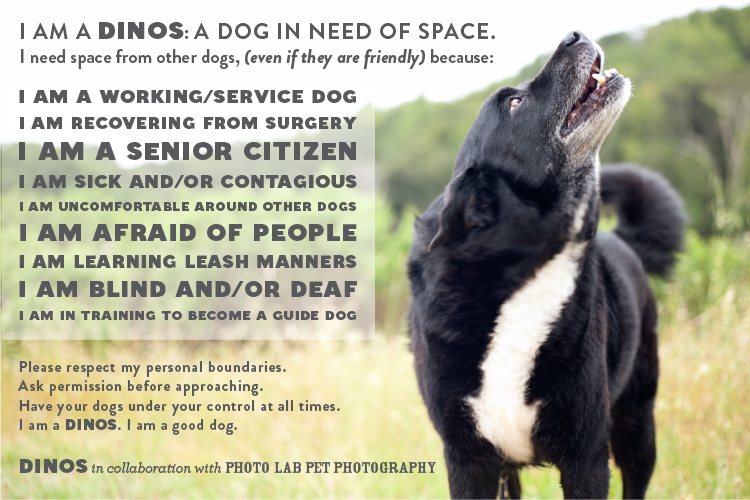
There are so many reasons why a dog might be a DINOS (for life or just for the day). Let me recap, for anyone new to the blog. A dog might be a DINOS because:

-They are injured

-They are seniors

-They are contagious

-They are working

-They are recovering from surgery

-They are learning how to politely greet other dogs

-They are service dogs

-They are afraid of people

-They are blind or deaf

-They have a medical condition

-They are being walked by a person that is a HINOS (a human in need of space)

Now let me ask you guys something: If you were a MDIF, someone likely to let your dog run up, on leash or off, to an unfamilar dog, which dog would make you more sympathetic, and therefore more likely to listen to the DINOS  message:


A dog that is 16 with bad hips and needs space to avoid injury

or

A dog that is reactive and needs space to stay calm


What about this?:


A service dog who needs space to do her job properly

or

A dog that is fear-aggressive and needs space to keep everyone safe


Now, I know all you DINOS owners will say that it doesn’t matter what the reason is for a dog to need space. They need it and they should get it. Indeed, you are correct!  But being right is rarely the most effective way of changing other people’s behaviors (think: dieting, smoking, wearing jeggings).  If we want to reach the most amount of people with the message that many dogs need and deserve space, we should consider how we market our plea for space.

Here’s my 10 second p.r. lesson on the topic:

reactive dogs = no sympathy

old, injured, one-legged service dog with epilepsy = give that poor baby some space!


This dog clearly needs our help!


Ok, maybe one nice lady will have sympathy for the reactive dog, but how many of you have been told, usually be some dude who’s screaming in your face, that if your reactive dog needs space, you “shouldn’t be out in public with that nasty dog” or “It’s not my problem.” Or we get cursed at and told, “Train your dog!”

People who have never lived with a reactive dog just don’t get it.  But they’re the ones who need to hear our message the most. Which is tough, because they have very little sympathy for our dogs.

As far as they’re concerned, if our dogs are so “bad”, then we don’t have a right to walk them in public. Lost of folks believe that a friendly dog should have the right to go up to any dog it sees. If the other dog doesn’t like it, then they have the problem and shouldn’t be allowed out of the house.

So how do we reach these people – the ones we’re really hoping will hear the DINOS message?  We need to make DINOS sympathetic and more relatable. We need to make sure that the world hears that a dog can be a DINOS for lots of reasons. Many of which are no one’s fault, have nothing to do with training or behavior issues, could happen to them even, and therefore, these dogs have the “right” to be out in public and have space.

Now, don’t get me wrong, this isn’t some sort of attempt to shove reactive dogs into the closet or deny that some DINOS are dog-aggressive.  This is about how to get our message heard by the largest number of people and move them to change their deeply ingrained beliefs and behaviors.

Because if a lot of people get the message, reactive dogs will reap the benefits. It won’t matter to Boogie if someone gives him space because they understand reactivity or if they’re just being polite because they now understand that dogs needs space for lots of different reasons.

Here’s the thing: I don’t think the average dog owner is at all interested in learning about what reactivity is or how it works. Trying to explain DINOS by focusing on teaching the world about reactive dogs is a sure way to lose a sizable chunk of our audience.

On the other hand, if I tell people that Birdie’s back is really sore and she’ll snap at a strange dog who jumps on her: they get it. They’re nice people and they don’t want my old dog to get hurt. Maybe they had an old dog once or are saddened when they think about their own dog aging. If I say the message right, they might even remember what I told them the next time they’re out walking their dog.


I’m old and my back hurts. What’s so hard to understand about that?


So, if you’re like me and you’re trying to get as many people as possible to understand that some dogs needs space, leading with reactivity isn’t the way to go.

If we lead with the message that some dogs are “damaged” or traumatized or have “issues” or something else considered negative, DINOS will likely become synonymous with “dangerous” or “bad” and then, trust me, no one will give a turd about respecting our dog’s needs. They’ll just want our dogs banned/muzzled/etc.

So for everyone out there spreading the message that dogs need space, I’m asking you to consider your words, your messaging, and your approach to relaying this idea to the general public. In order for the message to be effectively heard, we need to capture the public’s sympathy and help them understand that many dogs are DINOS (or will one day become DINOS), and since you can’t always tell just by looking at them, it’s best to give ALL dogs some space.

So go forth, spread the message that there are Dogs in Need of Space. Tell the world that DINOS are GOOD dogs. And don’t hesitate to throw in that reactivity is common and pretty normal. But always remember who your audience is and try to tailor the message to them.

The more people who understand and respect that many dogs need space, the more all dogs will benefit, reactive dogs included.

**Why yes this is a Big Bang Theory reference. Bazinga!

Yellow, But Not Mellow

Author’s Note: I am not responsible for the Yellow Ribbon campaign and it’s not officially associated with DINOS™ or Notes From a Dog Walker.  If you’d like to learn more, here’s the source of the project and the newer Yellow Dog project. Those hard-working folks deserve all the credit – not moi!

While I was away on vacation the other week, I got about ten thousand (give or take a few) emails and Facebook posts about this image:


To say that folks are excited about the color coded system is an understatment – social media is bubbling over with dog  owners who have raided craft stores for yards of yellow ribbon. I’m expecting to start seeing dogs wrapped completely in yellow, waddling down the street like little sunshine colored mummies!

For those of you who missed it, I weighed in on this topic the other month when I wrote about color systems in Color Me DINOS and here’s the short version of what I said:

I think color coded systems are a MUST HAVE for any closed group: dog walking clubs, sporting events, camps, etc. Any place where everyone is on the same page and fully understands what the colors signify. Many groups, like Chicago SocialBulls use a fun combo of bandanas and various flair, to help dog walkers communicate with each other. It’s very effective in a closed group. I totally recommend it.

When it comes to using the color system in public, I say go for it, but with some concerns (see below).

I have no doubt it will help some people  communicate with some strangers while they’re walking down the street. I’m thinking in particular of dogs with medical conditions, like my pal Taz who has epilepsy and needs space from other dogs to avoid having cluster seizures. A color system that can help Taz get the space he needs? Super awesome.

I’d really love to see this work, so I don’t want to be a Debbie Downer, but I do have a few concerns about the color system. Humor me:

1. This won’t do much, if anything, to help us communicate with dog owners that just don’t care. That includes people who ignore leash laws or let their dogs wander loose, people who let their dogs charge into our yards, people who think that our dogs will learn to like other dogs if they just meet their friendly dogs, people who ignore the “Do Not Pet” patches on Service Dog vests, the people who don’t listen to us say “No” now..and others. That’s a pretty big group.

2. This only works if people can see the yellow flag (and know what it means). So if they’re walking up from behind and can’t see the leash, it’s not going to help. Oh and some folks just won’t get it. My friend, who does not have a DINOS, saw this poster and commented that it looks like a poop bag is tied to the leash.

3. So, that means that the color system should be viewed as just one tool in a larger toolbox. If you’ve got a yellow tie on your dog’s leash, don’t assume the people around you can see it, know what it means, and/or care. So we still need to be proactive and on our toes. We can’t rely on a yellow flag to do the work for us. It might work sometimes, it might not. Ultimately, we are responsible for our dogs.

4. Which brings me to liability issues. I’m not sure if it’s the pit bull owner in me  – the one that is extremely wary of publicly declaring my dog might be “dangerous” in some way – but the language in these Yellow Dog posters worries me. If I were behind the Yellow Dog campaigns (some people think it is me, but I can’t take any credit – this isn’t officially associated with DINOS in any way), I’d run my language and messaging by a lawyer. Before I put a yellow ribbon on my dog, I’d want to be 100% sure I’m not making myself liable or seen as negligent if my dog gets into an altercation. (side note: can we please take the pit bull off of this poster? They have a hard enough time as it is. They don’t need to be the face of this campaign).

5. Finally, just because a dog doesn’t have a yellow ribbon on, doesn’t mean he deserves to have strange dogs up in his grill. Which means all of us still have to be polite, respectful, and responsible. Focus on the people. They’re the problem, not the dogs. People need to be responsible for their dogs. People need to learn that they should always ASK before they approach or allow their dogs to approach another dog. The only way to really ensure that everyone gets to safely enjoy public spaces is for people to take responsibility for our dogs and ourselves. You know the drill:

  • Control your dogs, on leash and off leash, at all times.
  • Always ask permission before you or your dogs approach an unfamiliar dog.
  • Wait for an answer.
  • If the answer is no, allow others the space to pass.

No matter what’s hanging off a dog’s leash, if we all controlled our dogs and took a second to politely ask if we can approach, rather than assuming it’s ok, we’d all be doing each other a world of good.

I hope the yellow ribbon campaign is a big help to those of you that decide to try it out. Please let me know what your experiences are, if you do, ok?

In the meantime, I’m going to keep working with my friends at Design Lab (the folks who brought you the DINOS logo) on a complimentary project: we’re creating a poster that reminds people to always ASK, before approaching an unfamiliar dog. Hopefully, between the color coding and a campaign that encourages responsibility and respect for others, all of us with DINOS will get a little relief!

For more info on the yellow dog campaign, see the original source here!

Happy Boogie Day!

Today is Boogie’s Gotcha Day aka the day we adopted him. Well, sort of.

Today is actually the day when I went in to work on my day off,  back when I worked at the shelter, and said, “It’s my birthday, so my husband told me I could bring home any dog I wanted. And I pick Stoli.”  And then I loaded this worried little pit bull into my car and took him home to “foster” for a while. That was four years ago.

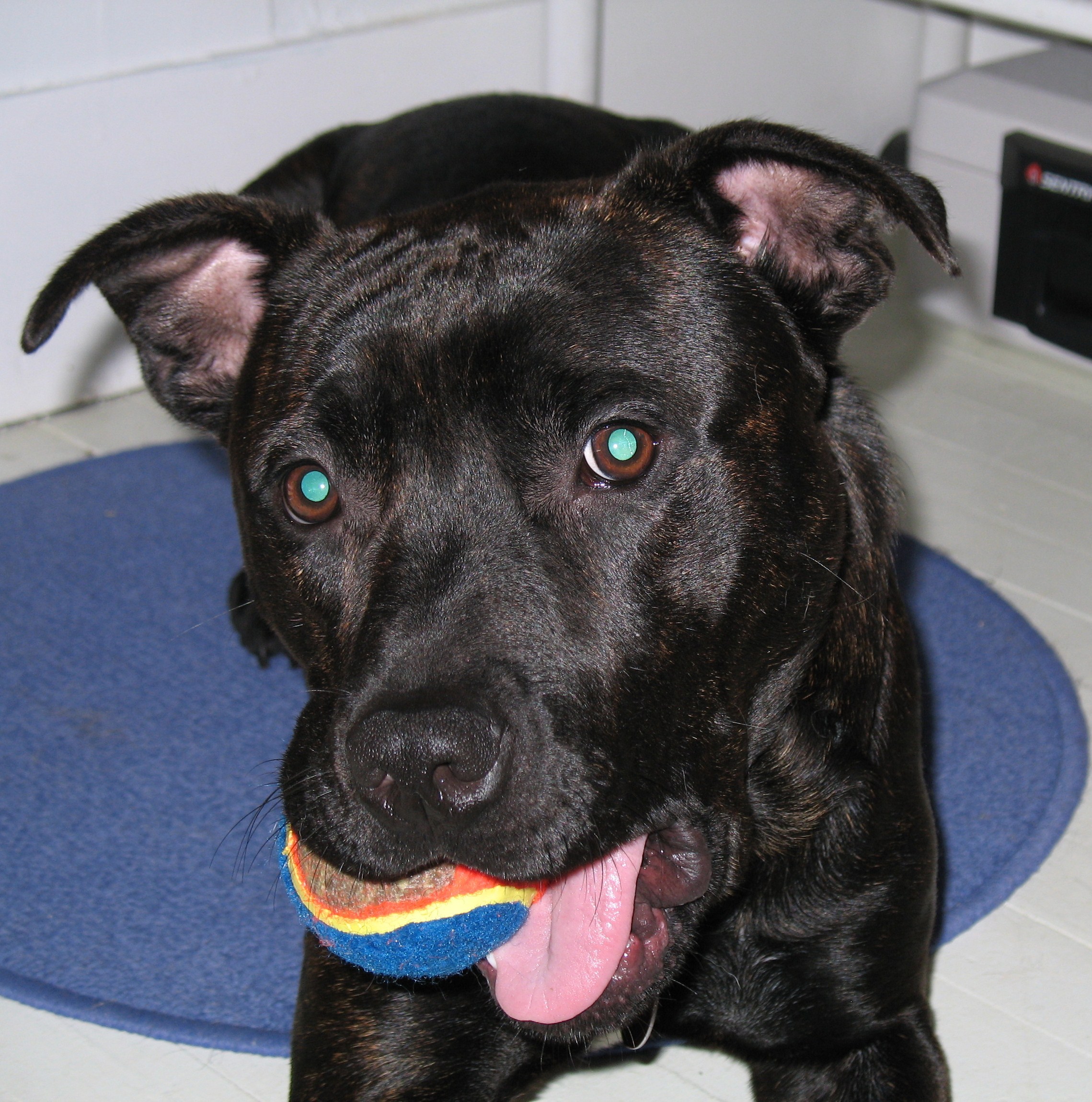
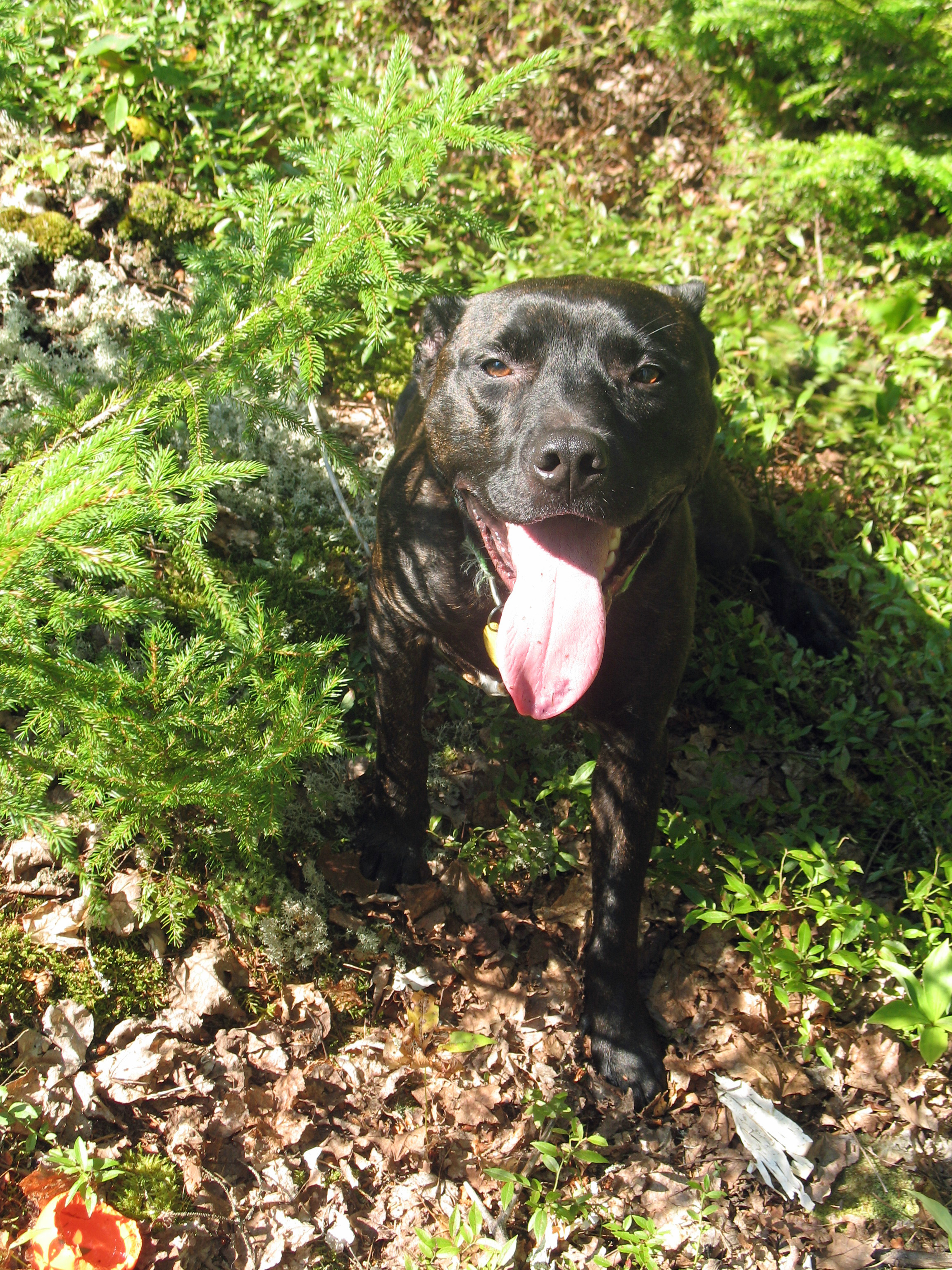
Here he is on his first day at home with what I would soon discover is the thing that makes him feel most safe in the world: a ball.

Ball = I’m OK

Back then, Boogie was really afraid of everything: cell phones, cameras, coffee cups, people dancing, the cats, strangers, other dogs…you get the drill. Despite all that, he was (still is) the sweetest, most handsome little man in the world.

And even though he turned out to be a DINOS , Boogie is such an easy dog in all the ways that matter most to us. He didn’t need to be potty trained. He’s gentle with our older dog Birdie. He’s not destructive and doesn’t mind being left home alone. He sweet on our three cats. He’s a couch potato, so he doesn’t need a lot of exercise (even as a youngster). And he’s happy to hang out on his bed, chewing a bone and entertaining himself all evening. All he asks is that we play ball with him for a little while every day.

I know a good deal when I see one, so we stopped “fostering” him and adopted Boogie that fall. Our little gang has been complete ever since.

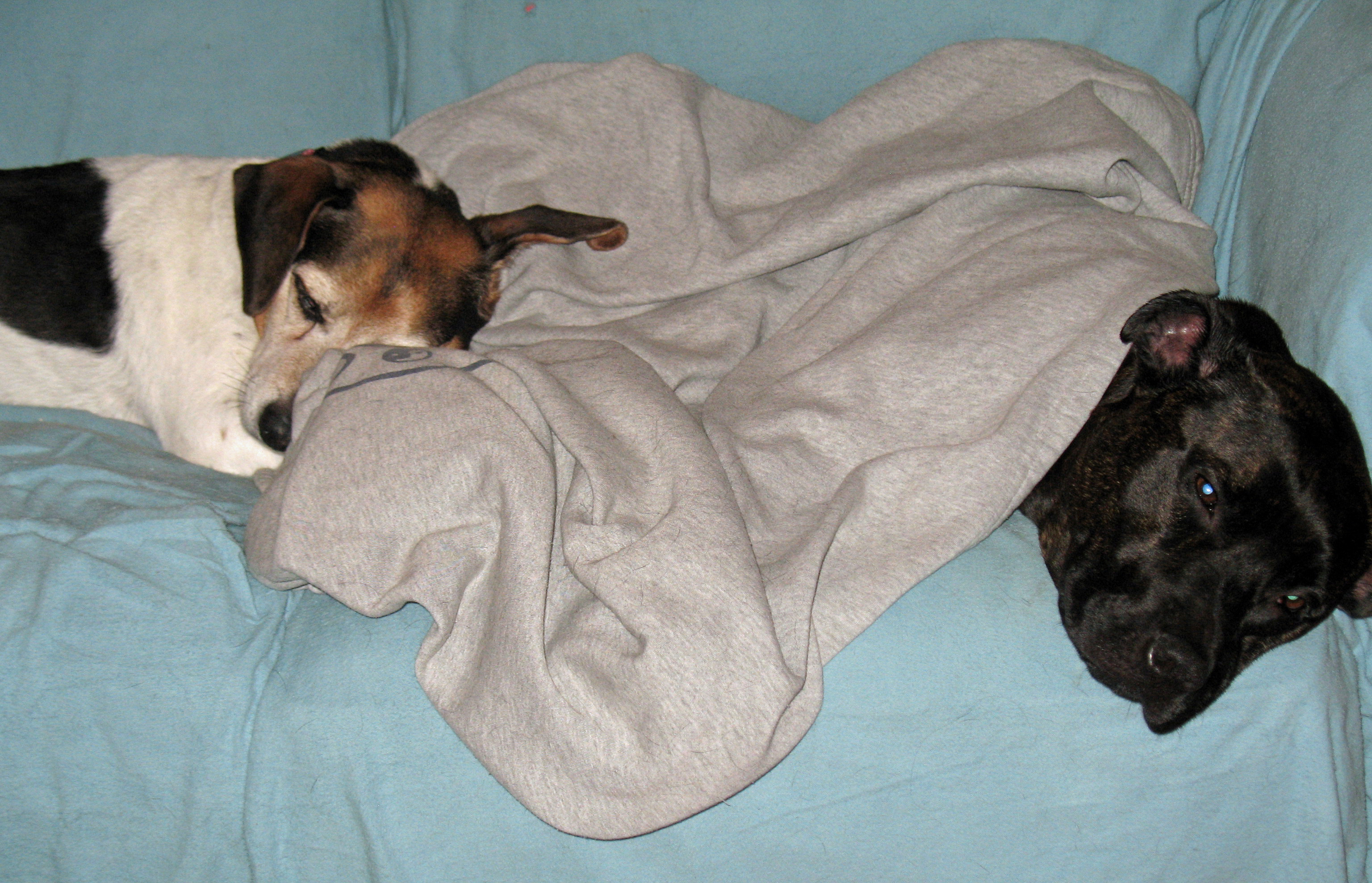
Boogie is a really happy dog at home. The world he lives in is on the small side, but he’s got Birdie, three cats, and the two of us to love on him every day. Plus two pet sitters that think he’s the bees knees, a gang of friends from all over the East Coast and a Grandma who looks forward to coming to stay with him. Plus lots of naps:

Here’s the thing. One of the reasons we’re all so happy is because Boogie’s world is purposely small.

To be honest, I don’t do a lot of training with Boogie anymore, though there is stuff we’re working on. I’m kind of a slacker and I don’t really enjoy training dogs (I’ll do it, I’d just rather be doing something else). For example, we’re not constantly working on his leash reactivity, like we used to when we lived in a city together. The first couple of years, we got all of our exercise by walking on leash, so leash skills were a priority. But this summer we bought Boogie a two acre yard, so he can chase balls until the sun sets.

We live in the middle of nowhere now. Walks are for pleasure and we can choose when and where we want to go. They’re no longer a part of our daily exercise (that’s where a flirt pole comes in). So I’ve slacked on his leash skills. Yep, that means I’m a dog walker that doesn’t walk my dog every day.

I have no doubt that if I put in more effort, he would be less leash reactive, but on a day-to-day basis, everything is working for our family. I think that’s important for all us: find out what works for you and your dog, so that everyone is enjoying life and each other’s company. Then don’t feel bad about it if it’s not exactly the same as what the next person is doing. Is your dog safe and happy? Is everyone around your dog safe and happy? Then you’re doing something right. Plus, happy people tend to keep their dogs.

Do what you need to do to set your dog up to succeed at his own pace and try not to make yourself miserable either. That might look different depending on your individual dog or the environment you live in. For Boogie, that means he hangs out at home some days, while we take Birdie on more public adventures.  For other dogs, it might mean lots of training classes and regular walks with a social club. Figure out what works for you and your dog.

I don’t have anything to brag about – no titles or certifications. Except that we’re all really happy together and Boogie isn’t stressed out. It’s a simple life for our little man and it works for all of us. And that feels like a success to me.

But just in case you think we lock Boogie in a closet all day: even though we keep things simple at home, it doesn’t mean we don’t have fun together or try new things! We just got back from our summer vacation in the woods.

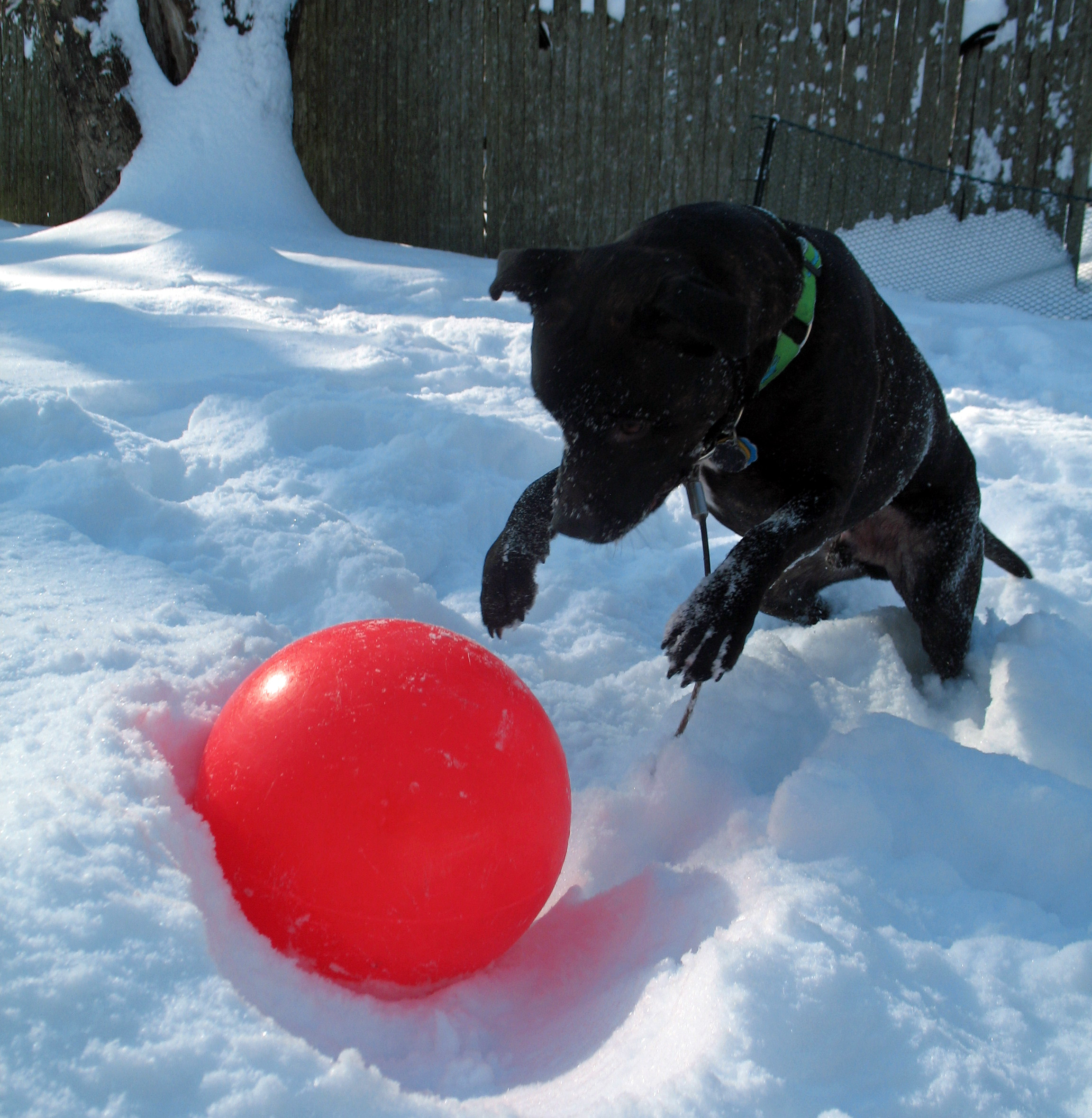
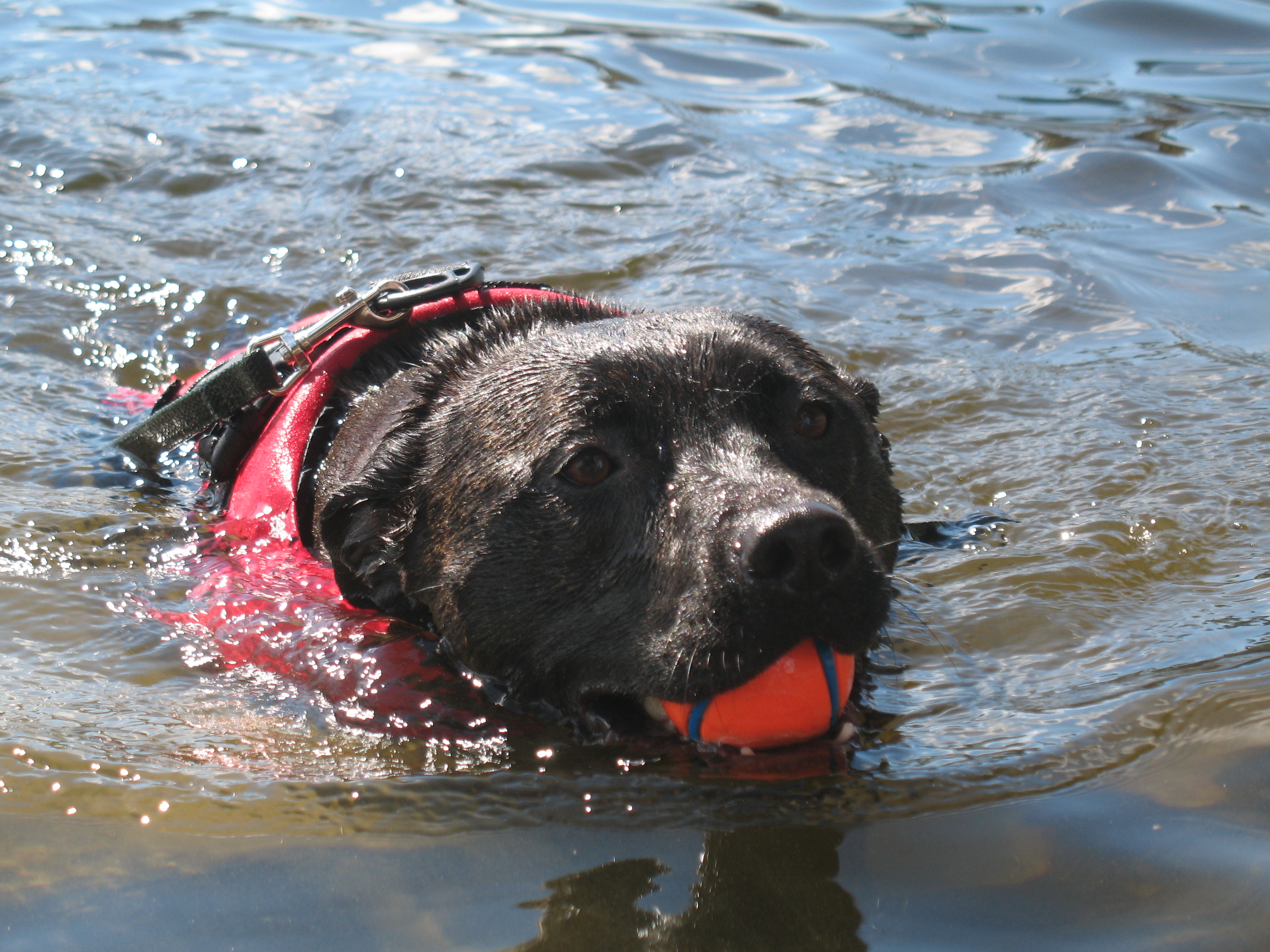
Last summer we taught Boogie how to swim. He was very scared of the water, but he went in because we were there to cheer him on and…his ball was in the water.  No ball will ever be left behind on Boogie’s watch!

This year, he got really brave and learned to jump off a dock. He was so scared and made such crazy crying noises as he watched his ball float away (it sounded like he had a rubber chicken stuck in his throat), that I thought the entire town was going to call animal control to help him.

Finally, he put his front paws on the top rung of the dock’s ladder and plopped into the lake like a little hippo bull. Next thing we knew, he was running and JUMPING off the dock, faster than we could even throw the ball.

Not every day is a dock diving day for us, but we make small steps, at our own pace, each week in the right direction. These days coffee cups, cameras, and overnight guests don’t scare Boogie. He’s almost five years old now and he’s a good boy. He makes me so happy.

Happy Gotcha Day Boogie. You’ll always be my very best birthday present.

The Inventor of Spray Cheese is My Hero.

Today I splurged and bought myself a veterinary house call.  It was time for Boogie’s annual exam and we’ve been searching for a new vet, so I figured that since we’re switching vets anyway, why not upgrade to an in-house visit?

Last year’s vet visit was a disaster (see: 2011 stink-a-thon) and we figured a visit at home would not only help Boogie feel more relaxed, but it would nice for us too: we have 5 pets and I’m tired of airing out my car for three months after my cats explode in their crates from car sickness. Dude, have you ever tried to get cat pee smell out of a car’s upholstery? Years. It takes years.

The vet was just here this afternoon, so I figured I’d give you guys an update, for anyone following the saga of the wee Boogie.

We didn’t take this vet visit lightly. Prior to today, we’ve been practicing different restraints and approaches to see what’s most comfortable for Boogie and trying to counter condition him to some stuff, like blood draws. Many fearful dogs prefer a blood draw from their rear leg, because it’s scary having people up front, near their heads, but after a lot of counter conditioning (per Sophis Yin’s great resource), Boogie wasn’t getting any more comfortable with it. So we knew we needed to practice restraints for a front leg and maybe a jug draw.

Earlier today, as the clock ticked closer to lift off, I gave Boogie a wheelbarrow of calming treats and exercised him for an hour right before they arrived.

Ok, so picture this: the vet pulls into the driveway.  We started off out in the yard. Boogie was freaked out when the vet and the vet tech (Hi Denise!) arrived. This is something we used to deal with a lot, but in the last year, thanks to lots of practice, he’s started to enjoy meeting new people in the yard. So it was a bummer that it was a rocky start. I’ll chalk it up to being in a new house, since we just moved in a couple of weeks ago and these were our first visitors. 

To let him cool off, we let him hang out with his ball and focused on our other dog, Birdie, for a few minutes.  Birdie loves meeting new people and wanted to show the vet the new cyst she grew on her head. She was really proud of it.

Then we went inside and put Boogie’s basket muzzle on. Boogie needed vaccinations, a blood draw, and a lump inside his ear examined. While he was lying on his bed, getting fed a steady stream of Easy Cheese by me, the vet looked in his ear and gave him one shot, then I picked him up (he was too nervous to leave his bed, but we had to get him on all fours) and placed him between my legs. I loosely restrained him and gave him some distracting-noogies on his forehead while the vet gave him another vaccination in his hip.  Lastly, we restrained him for a front leg (!) blood draw. I rubbed his forehead a lot, feed him more cheese, and told him he was a champ. 


Did I ever tell you, you’re my hero?


Did Boogie growl during the exam? You bet.

Did he struggle or try to get away? Nope.

Did he eat half a can of cheese? Oh yeah. I heard the nozzle sputter and cursed myself for not having a spare can of cheese on hand (rookie mistake). Luckily I had a Lickety Stick handy. Mental Note: don’t cheap out on the spray cheese next time. Buy a case.

After the examination, we took Boogie’s muzzle off and he approached the vet and vet tech with a wagging tail. Not a bad way to end the visit.

Wanna know one of the very best parts? Start to finish, I think they were here for 15 minutes. Normally, going to the vet takes 2 hours (packing them up, driving them there, waiting in the car, the exam, and return trip. Plus post-car vomit, poop, and pee detail.  And then a stress-induced coma nap.

So the fact that I’m writing this to you all right now, while my husband picks up some Thai food, is a victory in and of itself.

But back to Boogie. I really appreciated that, rather than scold Boogie for growling, the vet just kept examining Boogie while I fed him treats. Hopefully, that approach will begin to change Boogie’s emotional response to being handled by a vet. One of these days, Boogie will need more vet care than just an annual exam, and I’m hoping we can start making it a more positive experience for him.

What was the most helpful thing we did in preparation for the visit?  Hands down it was teaching Boogie to love his muzzle.

All the other stuff helped a wee bit, but the most helpful counter conditioning that we did, prior to this visit, was teaching Boogie that his muzzle is the best thing ever. We started by letting him use it as a giant ice treat (aka the Kuzzle), then had him wear it for very short periods, and then eventually for longer lengths of time and during pretend exams, all while being hosed by Easy Cheese.  We’re talking many, many weeks of cleaning cheese out of his muzzle. It wasn’t overnight.

So the end report: Home visits are super great. Get one. It’s like going to spa, only there’s a stool sample involved. And this new vet is welcome back any time. Most of all – muzzles are really handy. Teach your dog that it rains cheese or peanut butter or liver when they wear one.

Oh, and now for the really good news: tomorrow we leave for a  family vacation with the dogs. Boogie earned it and we can’t wait to take him swimming. Here he is on last year’s summer vacation:

See you all in a week!

Step by Step, Oh Baby*

Hey! Did you guys know that you can buy an affordable 30 day online pass to read Dr. Sophia Yin’s Low Stress Handling, Restraint, and Behavior Modification of Dogs and Cats?

I didn’t! I’ve been pining over that book and dvd set for months – but at $150 it was a little steep for this needs-a-new-washer-dryer gal to spend. So there I was, sad that I couldn’t read her book, which I was sure would help me to help Boogie feel more at ease at the vet. And little did I know there was an affordable online version. Did anyone else miss this option? Go check it out!
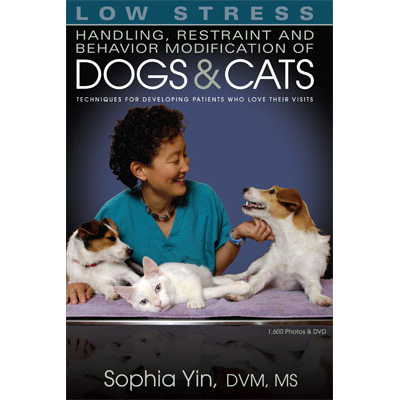
dr. yin

This book is heaven for me because my little man Boogie is a scaredy-dog. Most new stuff, situations, and people freak him out. With a little time and a game of fetch, he’s good to go, but he needs a soft touch, especially at the vet. We’ve been lucky in the past and had a wonderful vet that understood how to approach and examine Boogie. But then she left for maternity leave and we lost her. After that, we had a really unpleasant experience in our search for a new vet for Boogie – despite good recommendations, multiple advance emails and discussions with the new clinic about Boogie’s needs – it was a disaster.

The vet visit last year went something like this: The vet throws Boogie treats for a few minutes while standing near him, stares at him, then, just as he’s starting to relax (sort of), she puts him on a metal rectangle on the ground and flips a switch so the table rises out of the floor. Boogie and I were both shocked. I had thought it was clear that she would examine him on the floor. Instead, she took a scared dog and put him on a moving metal monster. Then, standing behind him, she tried to examine his abdomen. No surprise here: Boogie growled at her, a lot.

I was doing my best to redirect his attention, asking him to look at me and giving him amazing treats, but every time he growled the vet sternly told him “NO” and scared him more. I was so stunned that I was having trouble advocating for Boogie (I still feel bad about that). But I kept trying to work with him, so she could finish the exam and then we could get the hell out of there.

Then this doctor stopped the exam to chastise me – she told me I had to stop rewarding him for growling and start telling him “NO” too. And that’s when I lost it. I told her I would never correct my dog for telling someone he was uncomfortable – that correcting away a growl was dangerous because we’d be taking away his attempt to communicate his fear and that leads to dogs biting without warning. If he’s scared, then the approach needs to change. She told me I was rewarding his bad behavior by treating him. I told her she was going to take him off the table that very second and examine him on the floor. She did. Then we left. I was pissed.

So now it’s time for his annual exam again and we’ve decided to try a vet that does home visits. This is good fit us for a lot of reasons:

1. we have five pets, so we have to go to the vet a lot. It would be nice if someone came to us instead of us schlepping our rag-tag zoo across the state.

2. one of our cats gets disgustingly car sick and poops his pants, then rolls in it in his crate while I drive. So every time I get to the vet, I run in yelling, “I need a room for Gus! He’s covered in poop!” and then I spend 30 minutes trying to clean up my 18 pound cat’s poopy pants.

3. Vet waiting rooms are stressful!

4. Boogie will feel more comfortable at home, where he can meet the vet outside and play ball with him before the exam. To top it off, the vet tech coming over is an old friend of mine who worked with me at the shelter and knew Boogie when he was there on the adoption floor.

In preparation of our upcoming visit, I’ve been doing a few things: getting Boogie more comfortable wearing a muzzle, doing lots of ear, teeth, and paw touching to mimic the exam, and trying to find some detailed help for preparing fearful dogs for exams. I found Dr. Yin’s book, but I couldn’t afford it. Behold my amazement when my speed reading eyeballs slowed down long enough for me to see the tab that said ‘online version’ and realized:

I could buy 30 days of online access to the book, videos, and handouts for just $25.

I couldn’t pay fast enough and spent all night reading the book and watching the videos. If you have a dog (or cat) that is fearful or aggressive at the vet or in any scenario, go do the same. While there is a ton of general advice out there on the interwebs for helping your dog get comfortable at the vet, it’s just that – general advice that’s pretty universal: stop by often, go slowly, lots of treats, etc.

But this book gave me exactly what I need: specific instructions on how I can restrain my dog for various procedures and how to train him, prior to the visit, so that he’s more comfortable getting injections, blood draws, ears cleaned.


Since I’ve worked in shelters, I do know how to restrain and vaccinate dogs. But no one really taught me how to do this – I just learned on the fly. So I wanted detailed instruction on the various holds, all with the goal of making the experience as low stress as possible, while still keeping everyone safe – and this book delivered. The chapter on “difficult dogs” was especially juicy and delicious.

I’ve been talking with my pal the vet tech, so I know that she plans on doing Boogie’s blood draw from his back leg. Wouldn’t you know it? Dr. Yin outlines how to do this exact procedure, specifically on a fearful dog. It involves a wall, my leg, a head harness, and a lot of calm stroking and head rubbing. My husband and I will practice these moves with Boogie prior to the exam. It feels really good to have such clear, easy to understand instructions – with lots of photos – to guide us.

If your dog is stressed at the vet, the groomers, at home during nail trims, or just fearful of things like novel objects or car rides, you’ll want to read this book and watch the videos. It’s just super user-friendly. And I’m pretty sure that even those of you that have a lot of experience with dogs will still pick up a new trick or two for handling dogs and cats – like different ways to roll them on their sides or how to use a gentle leader to control a dog’s head while you examine them by yourself.

I wish more people who work with dogs professionally were required to read and implement these techniques. I don’t know about you guys, but I often encounter vet techs that have great handling skills, but they work with vets that are as graceful and comforting as Dr. Frankenstein:

These vets have all the book smarts, but no bedside manner. That would be fine, just book smarts, if they never had to touch the dogs and the vet techs could do all the handling, but vets have to touch the dogs. So why aren’t more of them taking a few hours here and there to read this book and get educated? Why isn’t it a priority for vets to learn how to properly handle dogs and cats in order to make the experience a positive and safe one for everyone involved? I’m kind of peeved it’s not on everyone’s must read list.

If you work in a shelter and you need to do vet rounds, please ask your boss to buy you this book.


If they won’t, sign up for the 30 day online version. Not only will it help you do the medical tasks you have to do as part of your daily work, but it has great tips for stuff like: entering/existing kennels, how to safely approach and leash fearful dogs at the back of kennels, and how to avoid using a rabies pole. I wish I had this resource a few years ago when I was at the shelter.

And can I just say that I’m even more annoyed at the vet from last year after reading this book? It addresses the exact scenario I encountered: someone who thinks it’s wrong to reward a dog when they are afraid. This video shows how using treats can change the emotional response of the dog, even while they’re growling.

When I emailed the old clinic to ask for Boogie’s records, they wanted to know why I was leaving and if I was unsatisfied with my experience. I was too shaken up last year to say much – I truly felt like I had let Boogie down by allowing him to be handled so badly – but now was my chance to calmly explain why I was unhappy. This is what I wrote:

The vet techs at XYZ were really terrific, but I’m looking for a vet with better behavioral and handling skills.

I prefer a vet that is willing to alter their approach in order to help my dog feel more comfortable – for instance, sitting on the floor with him, rather than putting a terrified dog on a moving table and standing behind him, correcting him loudly with a “no” every time he growled.

Correcting a scared dog with a firm “no” every time he growls, as this vet did and asked me to do, only suppresses the growl, it doesn’t change how the dog is feeling – that they are uncomfortable with how they are being approached. Teaching a dog not to growl is extremely dangerous and leads to biting without warning.

Although I tried to explain that I was treating my dog after asking him to “look” at me, the vet misunderstood that I was rewarding him for growling. I was not. I was rewarding him for redirecting his attention to me (and trying to make the experience positive). I was deeply unhappy that she didn’t understand this and that she insisted I tell him “no” for growling. We have never had such a stressful exam.

I’d suggest she look into Dr. Sophia Yin’s Low Stress Handling Techniques: http://lowstresshandling.drsophiayin.com/

Hopefully, this vet will check out Dr. Yin’s resources. More professionals need to make this sort of continuing education a  priority. In the meantime, I’m studying the exercises we need to practice in order to make our home visits at the end of the month a more pleasant experience for Boogie. I’m sure it’ll still be a humdinger of a visit, but we’re going to try our best to make it less stressful for our wee man. Wish us luck and stay tuned for an update in September!

* You bet your sweet tuckus that’s a New Kids on the Block reference. Oh baby, gonna get to you girl.
Color Me DINOS

In the last couple of weeks I’ve seen a post called Swedish Yellow Dog making its way across social media. It encourages dog owners to use a little yellow ribbon on their dog’s leashes to indicate that their dog needs space. People really seem to dig the idea.  And for good reason – it’s a smart idea!

Yellow-Dog

On this side of the pond, my buddies over at Dog Flags introduced a handy color coded system for dogs that covers a variety of messages, from “Friendly” green flags to “Ask Before Approaching” red ones.


red


I’m a big fan of any system that helps people communicate with each other (especially from a distance), so that their dogs don’t have to deal with unwanted encounters. It’s a great way to “talk” to other people about your dog’s needs, without having to say a word.

Dog training centers, dog parks, pack walks, dog competitions and other dog groups have been using the color system to communicate their dogs needs for a long time, typically using red as the color for dogs that should not be approached without permission.

The DINOS logo dog (inspired by my Beagle mix Birdie) is wearing a red bandana for this very reason:

But there’s a little problem: only the doggiest of dog people know what these colors mean.

And only polite dog people care enough to respect the color system.

That’s why they work so well in closed groups, like pack walks or dog camps. Every one is on the same page and working towards creating a positive experience for all dogs. It’s responsible dog ownership and interaction at its best.

It seems that the only way a color coded system will work out in the wilds of the public is if there’s a huge PR campaign launched to educate the average person about the meaning behind the color system and what to do when they see a red or yellow flag.

Oh, and we have to settle on a color. I’m all for red, for DINOS, obvs.

This campaign would need to cross all sectors of the pet industry: dog trainers, vet offices, humane groups, boarding and grooming, pet publications, retail, etc. and would need to be promoted uniformly in a variety of mediums. The message would need to be clear, concise, and consistent. If various companies marketed their own color coded products and kept changing the messaging, it would confuse the public.

And even then, we’d have to be content with the fact that despite a big push, only a small portion of the public will internalize and respect the color system.

We know this because: half of us walk around with t-shirts that say “Keep Back” while our dogs are wearing bright orange flak jackets that read “GET AWAY FROM ME!” and shoot off warning blasts, but yet…people still come over to pet them, while commenting about their ritzy coats. Sigh.

And a color system won’t even put a dent in one of our biggest problems: off leash dogs that are not under voice control or are roaming unsupervised.

It’s a battle we’ll never fully win.

But should we try anyway?

If more people were aware that a dog wearing a red bandana, Dog Flag, or ribbon on their leash needed space and knew they needed to ask permission before approaching, I have no doubt that some dogs would be spared some unwanted interactions with other dogs and/or people.

But I don’t think that any dog should have to wear a color-coded item in order to be treated with respect by others. I’d rather teach everyone to be respectful of ALL dogs. 

So what do you think? Is it time for a color coded PR blast? Will people really get the message or is it just another layer of confusion in this dog-avoids-dog world? Have you tried a color system? Are there down sides to this idea?

December update: The color debate is an international conversation with many pros and cons. At this time DINOS™ is not officially associated with any color system. You can read more about the yellow ribbon idea here.


The Vet’s Office: Waiting Room or Dog Park?

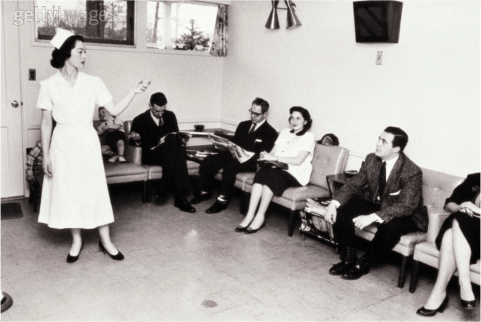
I love going to the doctor. It’s my absolute favorite place to meet new friends.

I especially like meeting new friends at the doctor’s when I feel really sick or have a painful injury. I like to shove the icky, hurty part of my body in stranger’s faces, so they’ll poke at it, while slapping me on the back.

Sometimes I’m just there for an annual check up and I feel fine physically, but I’m nervous. I’m worried that I’m going to sit in the waiting room all day and be late for work. I’m anxious that I’m going to get a mean doctor that will pinch me and talk to me about my BMI again.

When I’m really stressed, that’s when I like to look around to see if there are any people I can make friends with in the waiting room. And when I feel this way, there’s nothing I enjoy more than when other patients run up to me and ask me to do a few Zumba moves with them before it’s my turn to see the doctor.


Yep, I love being sick and nervous, in a tiny space, with no way out, and meeting new friends at the same time.

And see that quiet lady in the corner who’s nervously eating a 100 calorie pack of almonds and trying not to make eye contact with me? I asked her to arm wrestle while I was waiting to pay my bill, but she said “No thank you”.  The nerve!

So you know what I did? I turned to the receptionist and I said, in my best stage whisper, “Some people are so MEAN. I guess that patient’s not friendly, huh?”  I sure showed her how rude she was for telling me no.

SCRREEEEECH! Hold the phone. This is bananaballs, right? No one wants to do group aerobics in the waiting room at the doctor’s. No one goes to the doctor’s to meet a new BFF.

So why are so many people doing this with their dogs in the waiting room at the vet’s office?  If there’s ever a place where dogs need space from each other and the dog owners need to ask permission before their dog approaches another, it’s the vet’s office.

Seriously, why do I have to even explain this? But I do, because this happens constantly, every day, to DINOS owners at the vet.

Lots and lots of people seem to think that socializing at the vet is a good thing and dogs who can’t do that are “bad dogs”. Is it me, or do we have some totally out of whack expectations for dogs when they’re at the vet?

Dogs at the vet are sick, injured, anxious, stressed, or just plain don’t wanna play. Almost every dog at the vet is a DINOS (at least temporarily). It’s not the dog park. It’s a doctor’s office for dogs (and other small animals stuck in their carriers).


Next time you’re at the vet, keep in mind how much you would hate it if every time you went to the doctor’s office, you had to deal with a parade of “friendly” people who invaded your space, touching and poking at you, and talking non-stop. You would hate it and rightly so.

Common sense rules for the vet:

Keep your dog on leash when entering, leaving, waiting, and paying. That’s everything except the exam room.

Lock your flexi-leads. Don’t let dogs wander around, scaring cats and upsetting other dogs.

Ask permission before you allow your dog to approach another dog.

If they say “No”, just accept it.

Don’t call the other dog owner or the dog “mean”.

Don’t passive aggressively whisper about how “unfriendly” that other dog is.

News flash: When you do that, YOU’RE THE MEAN ONE. People go home and cry about how mean you were to them and their struggling dog.

To the staff at the vet’s office: please require and enforce the rule that all dogs must be on leash. Require that all small animals be secured in carriers. Stand up for your clients when other’s treat them badly by reminding everyone that the waiting room is not a dog park and there are sick, injured, and stressed pets in the room – they have a right to their personal space. It’s just safer that way.

And a final note to DINOS families: If you can, wait outside or in the car with your dogs. Ask the staff to let you know when a room is ready, then go directly into the exam room. Ask if there is a back entrance (there usually is) that you can use, so you can avoid the waiting room entirely. Let the staff know ahead of time that your dog needs space – there may be a particular time of the day when it’s slow and you’re less likely to run into crowds.

Fair enough, right? We can do it folks. Respect, compassion, manners – we’ve got that.

Speaking Dog with Photo Lab

I recently got a chance to contribute to a blog series about learning to “speak dog” hosted by my friends over at Photo Lab.

Here’s a little sneak peek of my guest blog, plus the fabulous photo they created to go with my post. You can read the rest over on their blog Tails from the Lab!

I’ve been dog walking for almost ten years…day after day, as I walk my pals, I encounter a real problem for us: many well-meaning people have no control over their dogs (or themselves). People allow their dogs to drag them across the street, forcing nose-to-nose greetings with strange dogs. Or they ignore leash laws and let their dogs run loose in designated on-leash areas.

When I encounter these scenarios I feel like I’m robbed of my ability to do what’s best for the dogs I’m walking. The dogs are telling me what they need – space – but I can’t always get it for them, because people aren’t respecting our boundaries. 

Read the whole post HERE.

DINOS in the House

So things are going to be a wee bit quiet in the land of dog walking and DINOS-loving for the next week or so. The gang and I are up to our wet noses in the insanity that is house hunting. Things are percolating with one house in particular – I don’t wanna say too much, since it’s a sure jinx. 

Things have been a *wee* bit busy. Like I’m under siege.

Anyway, what I wanted to tell you all is that every time I look at a house, I do it with DINOS in mind. How much space will my dogs have to run? How far away are the nearest neighbors? How much time should I spend sitting in my car, stalking this house, to see if there are loose dogs that run around these parts?


Yes, please.


As soon as things chill out, I’ll share how much living with DINOS (both my own and the dogs I walk) has impacted my home search and maybe we’ll spend some quality time talking about fences. Because I. can. not. wait. to have a fenced in yard. Gimme gimme.

Happy dog walking everyone!