Skip to content

Walking and Reading: 11|8|13

If you have a couple hundred bucks to spare, this vintage Dapper Dandy Dog can be yours!

If you have a couple hundred bucks to spare, this vintage Dapper Dandy Dog can be yours!

For the Dogs:

I shared this helpful blog Will You Be Coming Home to Your Dog Tonight? on Facebook earlier this year but: 1. it’s too important to forget, so read it again and 2. there’s an update at the end from medical and emergency personnel that you may have missed the first time around.

A collection of vintage photographs of Man’s Best Friend. I’ll tell you my favorite, if you tell me yours!


For the Humans:

This is what a porcupine sounds like when it’s having a snack. You need this right now.

What Captures Your Attention Controls Your Life.  I am controlled by dog turds and cat yak.

There are rules to city walking. Get to know the Step-and-Slide and do some urban strolling like a pro.


For the Laughs:

Behold! Shittens.

Don’t miss the soulful jingle in the video. Best lyrics ever.


And Offline:  I’m reading so many books and magazines and articles right now that I’m not sure which end is up. I just listened to The Great Failure by Natalie Goldberg and if you’re into Buddhists, Jews, New Yorkers, complicated relationships, and writers (I am!) it’s amazing.

No Surgery, No Problem: Treating Our Dog’s ACL Tear

Birdie graduated this month (from physical therapy, not Yale).

Turns out, we are doing pretty ok without that surgery she was supposed to get. Conservative Management has officially saved the day by taking care of Birdie’s injury and respecting our budget. Let’s discuss: 

First of all, I’m double-dog-daring myself to believe that she really is doing as well as she seems to be doing. The pessimist in me isn’t entirely convinced. Frankly, I’m afraid that as I write about how well she’s doing, Birdie’s leg is going to spontaneously combust. I have a fire extinguisher next to my desk, just in case.

Anyway, when Birdie tore her ACL this summer (a complete tear, not just a partial), surgery was the recommended course of action. For better or worse, we couldn’t afford it, so we had to explore other options. We landed on a conservative management plan. Here’s what we did: First we restricted her activity. No jumping on and off the couch, no running around in the yard. The goal was to restrict movement and allow stabilizing scar tissue to form. Birdie didn’t mind this lack of activity as her DNA test revealed that Birdie is indeed half Beagle and half a baked potato.

That being said, Birdie isn’t overweight. If she was, we would have had to put her on a diet. Extra weight is hard on injured legs. We did add a new heavy duty joint supplement, plus lots of stinky fish oil to her diet. After a couple of weeks on NSAIDs (which were too hard on her liver and kidneys to continue using them), she’s been off any and all medications. We also added non-slip area rugs around the house, so that Birdie wouldn’t slide on our hard wood floors and tweak her leg or back.

Most importantly, we started hanging out with our physical therapist, Gayle Hickok, a lot. We started with five visits in a row that first week post-surgical consult. At each visit, Birdie got some time with the cold laser, manual treatments and exercises, and then hydrotherapy in Gayle’s heated saltwater pool.

birdie swims

Ton o’ Bricks hits the high seas


Birdie was not interested in swimming – never, not once, not at all. She chose to practice nonviolent resistance by standing still on the pool’s ramp without budging or blinking. Birdie is the Rosa Parks of canine hydrotherapy.

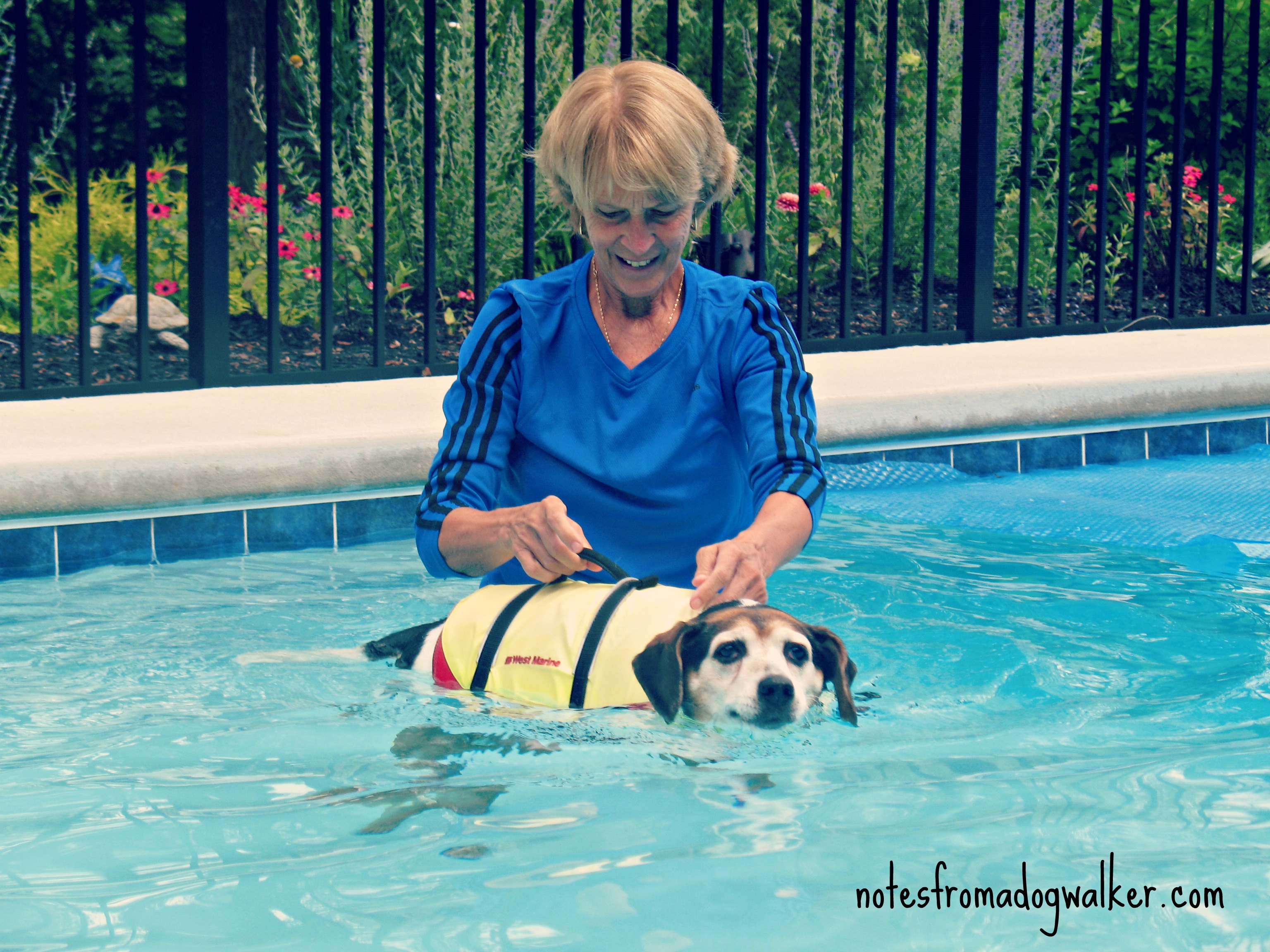
She is also surprisingly strong for a small senior citizen and “Ton o’ Bricks” Birdie had to be lifted into the water, all dead weight, by her life jacket. Once she was in the water, Gayle would gently guide her through exercises. Birdie occasionally faked massive reverse sneezing attacks in order to escape the pool (we know she was faking because the reverse sneezing stop the second her paws hit the concrete. Also, she was laughing at us).

On the other hand, Birdie thought the laser and manual treatments were exquisite, since that part of the rehab required that she be hand fed chicken while lying down on a soft bed. That’s my girl. I was also happy that these treatments were addressing her whole body, not just her bum leg.

Over the past three months we reduced our visits to twice a week, then once a week, then just every other week. From the start, Gayle felt that we had made the right choice – conservative management – rather than surgery, and Birdie’s improvements have backed that up.

About a month into Birdie’s physical therapy visits, we also began using a product at home called the Loop which produces a Pulsed Electromagnetic Field around her injured bits.The Loop is supposed to reduce inflammation and pain and increases blood circulation. I can’t say for sure if it’s helped, but it does compliment the other therapies we’re doing and Birdie continues to be pain-med-free.

birdie loop

Birdie, wearing the Loop, looks sad because no one is feeding her chicken right-this-second.


Last week, Gayle said that Birdie was good to go for a month or more until our next visit. This worried me (my DNA test reveals I’m part Eeyore). But Gayle swore to me that Birdie’s leg is in great condition. She has full extension, is weight bearing and can walk and run around, plus she has no obvious signs of pain when her leg is being manipulated. She’s come a long way since our first visit when she was only using her leg about 50% of the time.

Birdie won’t be competing in a decathlon any time soon ever, but our hope was to reduce Birdie’s pain and help her get mobile again. It looks like we did it. She still has days where she’s a little gimpy, which could be the injury or it might be coming from her atrophied leg muscles. We’re working on rebuilding her muscle and strength in that leg. But most of the time, she’s doing fine.

It’s hard to say which piece of the puzzle had the biggest impact on her recovery. Our physical therapist isn’t sure either. She keeps reminding me that all of the therapies and supplements are playing a part in her recovery and are working together to support her overall health and well being.

That’s the funny thing about taking this approach – it’s clearly working, but there are days when I still doubt myself and the choices I’ve made for Birdie.  The surgical option, plus the recovery and physical therapy that would have followed it, seems so much more tangible and measurable. With the conservative management approach, it’s a bit more subtle and there are fewer vets involved. Things have been going so well, we haven’t been back to see a vet since our original surgical consult.

birdie cold laser

Birdie and Gayle: What’s a little laser between BFFs?


I’m not sure why it’s so hard for me to believe Birdie is really ok. Sometimes I get a little panicky with an internal dialogue that goes something like this: “What if she’s not really better? What if we were wrong and she really does need the surgery? What if her leg is only pretending to be a real leg, but it’s really made up of marshmallows and candy canes, which is why she’s always licking herself? Will we have to buy her a whole new leg then? What if? What if? What if?”

That’s why I have to keep reminding myself that when Birdie runs across the yard it’s the real deal. She’s not faking it so that I won’t worry about her. Dogs are a pretty honest bunch, which I really appreciate. They don’t put on a show for our benefit (They will do it for their own benefit. See: Birdie sneezing in pool).

Dogs don’t tell fibs or fake it to save us from feeling badly or worrying about them. If you give them a toy that they don’t like, dogs won’t play it. Or eat food they think it’s awful. Or sleep on a bed they think is uncomfortable. Dogs don’t tell white lies to spare our feelings.

So I’m starting to believe that Birdie really is as good as she looks. Her life is back to normal. Opting out of that surgery we couldn’t afford in the first place wasn’t such a bad choice after all. In fact, it might have been the right choice, even if we could have afforded the surgery.

It makes me wonder how many dogs would benefit from a conservative management approach as a first option, not a “that’s all we can afford” option. Based on your earlier comments, many people never hear a peep from their vet that conservative management/physical therapy might be an option. That’s a shame. Some dogs do need the surgery, of course, but depending on the individual dog and/or the financial situation of the owner, there are other routes to explore. Vets should at least mention it.

I don’t want to jinx anything – Birdie’s leg hasn’t burst into flames yet – so I’ll just end things by knocking on wood and sharing some resources for non-surgical options if you’re in a similar boat and want to learn more about what’s out there.

Mutt Knee Brace

The Loop

WoundWear

DogLeggs 

In Maine: Pawsitive Results K-9 Rehabilitation 

Whole Dog Journal: Alternatives to Canine Surgery

Whole Dog Journal: Laser Therapy for Rehab

Yahoo Group: Canine Conservative Management

If you know of others, please share in the comments!

Q: What Do Cat Pee and Governor LePage Have in Common?

A: They’ve both been stinking up my life this month!

First things first: I don’t know where the month of October has gone. Thanks to a handful of writing-intensive projects I’ve been busy working on for one of my jobs, I just haven’t had any brain juice left over to write much of anything here. Plus there has been cat pee. Cat. F’n. Pee.

There we were at the start of October in a clean house: smelling pretty darn fresh considering three cats, two dogs, and two humans are crammed inside. And then, the cat pee came to visit.

Do you want to talk about how awful cat pee smells? I don’t. But I’ll tell you this: it makes that hot blast of subway station air – the kind that smells like Mole People and foot fungus and ancient space heaters – smell like a summer rain.

cat pee

There are shirts.


I could never catch any of the cats in the act, but someone was whizzing on the dog beds. I didn’t know who to bring to the vet. Here’s the thing about my cats: for ten years, they’ve never had an argument with the litter box. They’re a well adjusted gang of jerks. They roll hard on litter. So when one of them started stinking up the house, I knew it was because they were sick.

Except all three of the stooges were acting fine. I couldn’t tell who the Rogue Tinkler was, until one day when our cat Penelope (pronounced Pee-na-lopue like cantaloupe) looked me right in the eye and unleashed a river of cat pee at me. There was blood involved. We went to the vet that day and saw the first doctor that was available (a dude we’d never met).

Because Penelope refused to give any of her precious pee to the vet, we got sent home with some special litter and syringes, so I could bring them back a sample for testing. Which is how I found myself the next morning, huddled over a puddle of pee with a needle in my hand. The pee was on a shelf. Not in the litter box with the special litter. Collecting cat pee with a syringe is one of those moments that makes me question the choices I’ve made in my life.

Later that day, the urinalysis revealed that she did not have what we expected: a Urinary Tract Infection. So the vet told us we needed to get an ultrasound to determine if Penelope had one of two types of bladder stones or worse, tumors. I asked him a lot of questions. But he felt sure those were the only two possible options: stones or tumors aka cancer aka my cat is going to die.

Here’s what I learned: the next time the vet sends you to a specialist for a very expensive test, ask them these questions:

  • Is this an emergency?
  • How long can we reasonably wait before performing the test? A day or three?
  • Are there medications we can try during that time?
  • What may be causing this issue that is improbable, but not impossible?

Because it turns out, hundreds of dollars I didn’t have later, that Penelope had cystitis, which is basically an inflamed bladder. No stones. No tumors. The treatment was a $5 prescription for Amoxicillin.

The specialist told me that the initial vet we saw probably didn’t think it could be cystitis because Penelope is 10 years old and cystitis usually presents in cats under 10 years old. The specialist suspected it was cystitis (even before she did the ultrasound!) because her 10 year old cat had recently had it too. So she knew that although it wasn’t probable for a 10 year old cat, cystitis was certainly possible.

She was right: One day (of a ten day run) of antibiotics and Penelope went back to normal, peeing in the box, ever since. Woo.

That’s a $400 lesson folks. Yours at the low low cost of reading this blog and imagining me in my pajamas sucking up cat pee in a syringe. You’re welcome. Now excuse me while I go back to doing three hundred loads of laundry and scrubbing every surface of my house. Cat pee. Blech.


Also in October: Governor LePage can go clean a litter box, if you know what I mean. This month I logged into my Amazon affiliate store to add some cool products to share with you (to help me pay off my cat’s ultrasound bill) and found out it had been shut down.

Turns out my super pro-business Governor (and the genius behind the “tiny beard” fashion trend for women) passed some Interwebz tax legislation this summer and now he and Amazon are in some sort of pissing contest, with me and my fellow Mainers in the cross-stream.

lepage

That’s my Governor!


Here’s the deal straight from Amazon’s mouth:

We’re writing from the Amazon Associates Program to notify you that your Associates account will be closed and your Amazon Services LLC Associates Program Operating Agreement will be terminated effective October 6, 2013. This is a direct result of the unconstitutional Maine state tax collection legislation passed by the state legislature and signed by Governor LePage on June 5, 2013, with an effective date of October 9, 2013. As a result, we will no longer pay any advertising fees for customers referred to an Amazon Site after October 6, nor will we accept new applications for the Associates Program from Maine residents.

While we oppose this unconstitutional state legislation, we strongly support the federal Marketplace Fairness Act now pending before Congress. Congressional legislation is the only way to create a simplified, constitutional framework to resolve interstate sales tax issues and it would allow us to re-open our Associates program to Maine residents.

We thank you for being part of the Amazon Associates Program, and look forward to re-opening our program when Congress passes the Marketplace Fairness Act.

So the point of this is to tell you that while my Amazon store still exists (for now), I no longer make any commission on the products you buy through the store. I wasn’t exactly making Crystal, Maybach, Diamonds on your timepiece, Jet planes, Islands, Tigers on a gold leash money from my affiliate store, but I made enough to buy a book here and there. Now it’s nada.

Just figured I should tell you guys in case any of you (MOM) were nice enough to purposely shop in my store to help support my reading-habit. 


Last up this month: I went to the No More Homeless Pets conference the other week in Jacksonville, Florida. I attended a couple of excellent presentations on stress reduction and compassion fatigue. More on that later.  All I’ll say about the conference right now was that the theme for the weekend was “Save Them All.” Someone awesome, who shall remain nameless, pointed out that this rallying cry sounds an awful lot like “Save the Mall” when you say it out loud.

So I spent the conference imagining that me, Jay, and Silent Bob were leading a campaign to save one of our many New Jersey state treasures. Save the Mall!

proud to be a native of Dirty Jerz.

proud to be a native of Dirty Jerz.

And that’s all there is to say about October. 


Living with a Reactive Dog: Interview with Dog Trainer Sara Reusche

I’m not sure when or how I stumbled on dog trainer Sara Reusche’s blog, Paws Abilities, but I was psyched that I did. For those of you who don’t know her yet, Sara owns Paws Abilities Dog Training in Minnesota and is dual certified as a veterinary technician and professional dog trainer (CPDT-KA). Her posts about living and training dogs are beyond helpful, always compassionate, and so well-written. Not an easy hat-trick to pull off post after post. 

Earlier this year, Sara wrote a handy three part blog series about living, managing, and training a reactive dog. I was relieved: finally, a straightforward starting place for anyone living with a reactive dog. In the first post Sara defines reactivity. You might want to read that now. We’ll wait. Go ahead.

Next up Sara wrote about how to manage your dog’s reactivity and then went over the foundations for training your reactive dog. Go on and read those two if you haven’t already.

OK, all caught up? Let’s head on down to the interview section of this shindig where I bother Sara with all of my questions about reactivity.

sara_layla_trout

Sara with her dogs Layla and Trout


Jessica: There are lots of books out there about training and working with reactive dogs. If someone is new to living with a reactive dog, what’s the first book you recommend that they read?

Sara: Honestly, I would recommend starting with “Don’t Shoot the Dog!” by Karen Pryor. It’s not a book about reactivity, but it does an absolutely wonderful job of covering all of the fundamentals of training.

I also really like Leslie McDevitt’s “Control Unleashed” books. She has two of them, and I would suggest starting with the “Puppy Program” book, because the exercises and information in there are really applicable to any age, not just puppies. The Puppy Program book is organized a little better, so it will be easier for you to find the exercises you need when you want to brush up on them, and the short chapters are a great example of “splitting” down human behaviors to help you feel successful right away.


J: One of the challenges to working with a reactive dog is that it can (sometimes) be a long road without a quick fix. Any thoughts on helping families to set realistic goals for themselves and their dogs?

S: Two things: keep notes and develop a support network.

I rarely have a student who’s excited about note-taking when I first suggest it (although there are a few geeks out there who start talking spreadsheets and charts right away, and I love ‘em!). That said, tracking your dog’s progress can really help to speed up your training progress and get you through those tough days.

By tracking your dog’s progress, you can oftentimes pick up on patterns that you wouldn’t otherwise notice. One of my clients had a dog who was intermittently destructive. Most of the time the dog was just fine when left home alone, but every so often my clients would return to find a disaster zone with shredded paper and chewed-up carpet. When we started to track the dog’s destructiveness, we found that she was destructive every single Wednesday and occasionally on other days. It turns out that she was terrified of the sound of diesel engines (such as the garbage truck), and only got into stuff when trucks came through her neighborhood. We never would have figured this out without notes. Other clients have figured out that their dogs are worse (or better!) for a few days after daycare, don’t like certain “types” of dog (ears sticking up, large dogs, small fluffy dogs, etc.), or react to specific types of clothing. Knowing what sets your dog off can be half the battle!

The other really great thing that notes can do is to give you a pick-me-up when your dog’s having a tough day or week. It can be so helpful to go back and realize that even though your dog reacted five times this week, she used to react 5-10 times every single week, and she’s improved so much. Progress isn’t linear, and dogs have bad days just like we do. Knowing that it’s just a temporary blip and reviewing just how far you’ve come can be immensely helpful.

Besides note-taking, building a support network is huge. Whether it’s a local network or an Internet community, connecting with others who understand can provide you with much-needed support. Our Growl classes oftentimes come to resemble a support group, since everyone cheers for one another’s success. Our students oftentimes develop friendships with one another and many of them have gone on to schedule training dates outside of class where they get together to practice with someone who understands throughout the week. If you don’t have anyone local to partner with, check out some of the wonderful online communities (such as this one and others in the links section of this blog!).

Remember that each dog is an individual, so as long as your dog is making progress you should celebrate her success. She may not make progress as quickly as other dogs and may make progress more quickly than others, and that’s okay. You probably learn things faster than some and slower than others as well. Focus on your own dog’s successes. If your dog isn’t making any progress at all, look back at your notes and touch base with your support group to see how you can tweak your training plan.


J: What’s the one mistake you see reactive dog owners repeatedly doing that makes life harder for them and their dogs?

S: One of the hardest things to do when you’re first starting off is to keep your dog under threshold. Remember that practice makes perfect, so the more your dog “practices” lunging or barking, the better they get at it. Figuring out how to prevent these behaviors by managing your dog or his environment will go a long way towards helping you get on top of his reactivity.

Not only do you not need to put your dog in difficult situations to train him, but doing so will slow down his progress. Start where your dog is successful and work up to the more challenging environments or situations.


J: Reactivity is a really broad label that covers a lot of very different dogs. What works for one dog, may not work for another. Can you speak to the differences in reactivity? How does that impact the approach you take when working with them?

For example: Do you approach working with a very sensitive, fearful dog, the same way as you would a reactive dog that is not sensitive to people or the environment?

S: Great question! Reactivity is definitely not one-size-fits-all, and it’s important to always remember that your dog is an individual. Some dogs are very specifically reactive – perhaps only towards other dogs or to men in hats or people wearing white lab coats – while others react to everything.

This is one situation where I think it’s very useful for us to anthropomorphize a bit. Put yourself in your dog’s paws. If you were your dog, how would you want someone to work with you? If you found the world really overwhelming and were on high alert every time you left the house, would you want someone to make you leave the house every single day and go on a long walk where you saw many scary things, or would you prefer it if that person took you on short little field trips and helped you feel brave a couple times a week? On the other hand, if you just got really excited when you saw specific people and had a hard time containing yourself, how would you like someone to help you learn to control yourself? Be as kind and fair to your dog as you’d want someone to be to you.

There are a lot of different approaches out there to working with reactivity, so educate yourself about them and choose the one that feels right for your dog. You are your dog’s advocate, so it’s always okay to change things up if that will help your dog be successful. If this is all new to you and a little overwhelming, a good trainer can be invaluable.


J: There are a lot of trainers offering classes and sessions for reactive dogs. But they’re not all equally skilled. How can someone determine if a trainer or class is the right fit for their individual dog’s needs?

S: Choosing the right trainer is huge in helping your dog to be successful. Talk to the trainer ahead of time and ask them a little bit about their experience and the methods they use. Ask if you can observe a class or a private training session and make sure you’re comfortable with that trainer’s interactions with dogs and people. The students – both human and canine – should both appear to be having fun and being successful. Look for a trainer who is kind and respects both ends of the leash.

One of the best questions I recommend people ask their potential trainer has to do with education. Good trainers continually work to better ourselves. Ask your trainer about the most recent training book she’s read or training seminar she’s attended. If she’s not committed to ongoing education, look elsewhere. No one knows everything.


Thank you Sara!

For those of you who haven’t already, be sure to stop by Sara’s blog and catch up on all of her posts. She’s an excellent resource for anyone living with dogs (even the ones that aren’t reactive)!

If you’re looking for more resources for living with your reactive dog, check out the Dogs in Need of Space website. Under the tab “Resources for Dog Owners” you’ll find books, articles, group classes, and much more to help you help your dogs.

Team Future Us Challenge

This morning I got a surprise email from someone I know really well. It made me laugh and then my face leaked a little. Even though it was only three sentences long, the email left me feeling cared for and encouraged.

The message ended with:

p.s. you will figure this out!

Who’s writing me such nice emails? Who knows how much time I spend trying to figure it out (“it” being a synonym for my life/my career/the fate of the world/the plot of Homeland)? And that I need to be confident in myself and then learn to let it go?

I’ll tell you who: Me.

Yep, not only do I walk around talking to myself all day, but now I write to myself too.

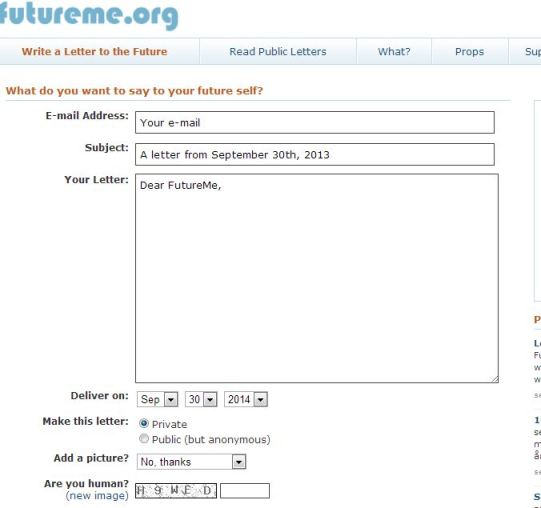
That’s because I discovered FutureMe.org

future me


It’s the most simple, brilliant idea ever. You write yourself an email and schedule it to be delivered to yourself some time in the future.

You might think it’s dumb to write yourself because you’re soooo smart that you’d never forget what you wrote to yourself in the first place, so duh, who cares if you get an email saying stuff you already knew.

Nope. I completely forgot that I wrote that email. Given, I forget to put on real pants some days, but I’m willing to wager that most people totally forget (the email, not their pants). And more importantly, everyone probably forgets what they actually wrote. The content will be a surprise. Wheee!

Think of how helpful this could be. You could:

  • write yourself monthly emails with your plan and motivations for taking care of yourself.
  • write a letter and schedule it to arrive the morning of a day you anticipate will be challenging. Like the first day of a dog training class you’re afraid of going to with your poopy-pants dog. Or a difficult anniversary.
  • write yourself a caring letter of encouragement, to be read on any random day in the future. You might be surprised at how good it feels to hear kind words, even when they’re your own.
  • write yourself random reminders like: Look Down. Are You Still Wearing Pajama Pants?


I really think this might be a good thing. I want you to do it. So let’s try it together. I’ll call it the Team Future Us Challenge.

This week take a few minutes to write yourselves a letter of encouragement. No beating yourself up. Keep it above the belt. Just write a few sentences to give Future You a boost.

Not sure what to write? Think of some area of your life that you’re struggling with and give yourself a pep talk. For example:

If you have a dog that is experiencing some challenges right now, like they lose their marbles every time a dog farts within 50 miles of your house, you could list a few things that you really love about your dog and a few ways that you’re pretty swell too, such as: Despite the fact that walking my dog is torture some times, I really do love him. He’s a world-class foot warmer, a champion floor cleaner, and an excellent karaoke audience. Also, I should give myself credit for trying so hard and stop comparing myself to everyone around me. I’m doing a really good job. Me and my dog RULE.

Or if your dog is perfect and cooks you brunch on the weekends, maybe you could write about some other aspect of your life where you feel a little less than perfect. Think about what Future You might need to hear. Be kind.

So here’s the Team Future Us Challenge part (that is dangerously close to being Team FU, huh?):

  • This week, write yourself a letter of encouragement.
  • Schedule the email to arrive two months from now on November 30th, 2013. That’s Thanksgiving Day weekend. I bet a lot of us could use a little bit of encouragement around the holidays, right?
  • In two months, we’ll all get an email from Past Us. I’ll post a blog here, so that those of us who want to can check in and celebrate our awesomeness together. Because sometimes peer pressure  a community can help motivate you to do something nice for yourself.


What do you say? Let’s go be nice to ourselves.

See US in two months!

Your Picks for DINOS-Friendly Veterinarians

Earlier this month on Facebook I asked Team DINOS (that’s you guys):

“Do you have a trusted veterinarian that goes above and beyond to create a positive experience for your fearful, anxious, or aggressive dog? Are they compassionate about your dog’s needs, rather than judgmental? Are they skilled at handling your dogs using low-stress techniques and/or knowledgeable about behavior modification? “

You guys did not disappoint. So many of you shared your faves that it took me a bazillion and half hours to organize, alphabetize, and link your responses. But I finally have a list to share!

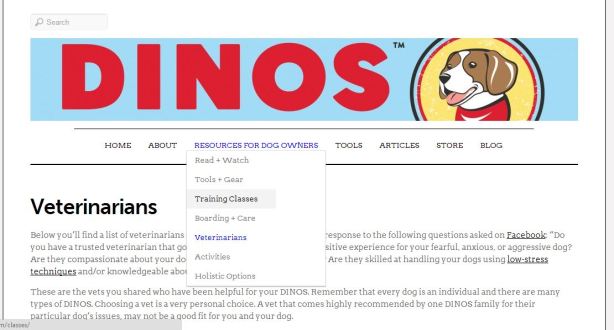
I posted the whole thing over on the Dogs in Need of Space website so you can always find it:

vet capture


Go on over and check it out.

But keep this in mind: picking a vet is so, so personal. A vet that comes highly recommended by one DINOS family might turn out not be the best match for your dog. It happened to me.  One person loves a particular vet, the next person hates them. It’s just the way it seems to go. So, the list is a really great reference, but you won’t know if a vet is the right match until you meet with them. Annoying. I know.

Ok, now go and look!


Walking and Reading: 9|20|13

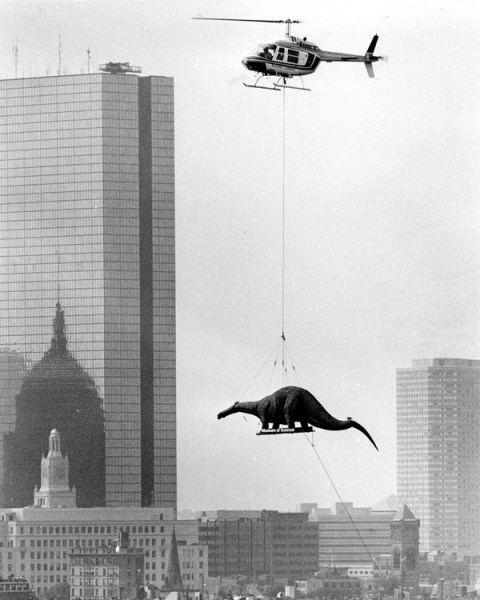
dinosaur delivery

Delivering dinosaurs for exhibit at the Boston Museum of Science. Arthur Pollock, 1984.


For the Dogs: Teaching my dog to “touch” has been pretty handy (pun intended) and I use it often with the dogs I walk. Here’s a Whole Dog Journal piece all about targeting if you want to give it a shot.

I’ve been sad to read that many of my fellow bloggers have recently had to say goodbye to their beloved dogs and cats. If you’ve lost a family member, go easy on yourself as you grieve.

Stuff like this makes me really glad I live in Maine these days. And I heart humane education. Also, not enough dogs are named “Garry.”


For the Humans: 10 things you should know if you want to be happier. Who couldn’t stand to be a little happier now and then? Go for it.

I bet these two read those 10 tips. This is some happy shit. I cannot stop looking at this lady’s face. I’d like to be her when I grow up.


For the Laugh: Have you read this yet? If not, you should. Warning: if you own anything with the word “Namaste” on it, you will probably hate this.


And Offline: I’m reading American Gods by Neil Gaiman and Turning the Mind Into an Ally by Sakyong Mipham.

What about you guys? 

Interview with Patricia Smith: Founder of the Compassion Fatigue Awareness Project

I recently wrote about my experience with Compassion Fatigue (CF) and burnout while working at an animal shelter. To learn more about CF, I reached out to Patricia Smith, founder of the Compassion Fatigue Awareness Project.

The mission of the Compassion Fatigue Awareness Project is, “To promote an awareness and understanding of Compassion Fatigue and its effect on caregivers.” Patricia is a certified Compassion Fatigue Specialist with more than 20 years of training experience. She writes, speaks and facilitates workshops for all caregiving professions.

The interview focuses mainly on CF in the animal sheltering world, but Patricia’s thoughtful answers are relevant to many of you.

Before we get rolling with the interview, let’s go over CF and burnout:

Compassion Fatigue is a secondary traumatic stress disorder resulting from caring for and helping traumatized or suffering people or animals. It is a reaction to the ongoing demands of being compassionate and effective in helping those that are suffering.

Compassion Fatigue is not the same as burnout, though they can co-exist. Burnout can happen to anyone, in any profession. It’s a cumulative process marked by emotional exhaustion and withdrawal associated with increased workload and institutional stress. It is not trauma-related. CF is specific to those who are working with a traumatized or suffering population.

If you work as a caregiver you may experience either CF and/or burnout. Compassion Fatigue has a more rapid onset while burnout emerges over time. The good news is that we can rebound from CF if we address and manage the symptoms (it’s more of a challenge to make a comeback from burnout).

Patricia writes in her book To Weep for a Stranger: “Compassion Fatigue is a set of symptoms, not a disease.”

Some of the symptoms of CF are:

  • Bottled up emotions
  • Loss of sense of humor
  • Chronic physical ailments such as gastrointestinal problems and recurrent colds
  • Substance abuse used to mask feelings
  • Sadness, apathy, no longer finds activities pleasurable
  • Poor self-care (i.e., hygiene, appearance)
  • Recurring nightmares, flashbacks, intrusive thoughts or images
  • Relationship issues and co-worker disputes
  • Poor decision making and problem solving skills
  • Voices excessive complaints about administrative functions

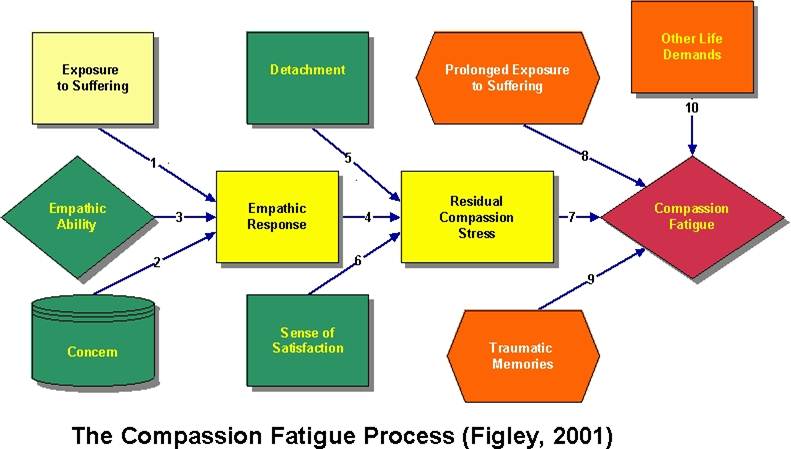
Compassion-Fatigue-Diagram


– Interview with Patricia Smith –


Jessica: Are the professional challenges that animal welfare workers face different than those in other helping professions (nurses, social workers, EMTs, etc)?

Patricia: While many people wouldn’t agree, I definitely believe animal welfare workers have more difficult challenges. This is due to the fact that most animal caregivers go into the work carrying a true love for animals in their hearts. They certainly don’t choose the work because of the extraordinary benefits or high salaries.

I found in my work as training and development manager at a shelter that people enter this field very idealistic, really hoping to make a difference in the way animals are cared for and treated. Unfortunately, it doesn’t take long for that bubble to burst. Working with an uninformed public only magnifies how little most people know about the human/animal bond. In the shelter where I worked, the turnover rate was extremely high. It didn’t take long before new employees figured out how disrespectful society is toward not only the animals, but shelter workers as well.

In other helping professions such as health care, social services, law enforcement, teaching or firefighting, the workers are respected and even idealized. This is not the case with shelter workers. Most people believe they are part of the problem since they euthanize animals.

Most often, animal caregivers leave shelter work beaten down and disillusioned. The ones who stay grow the proverbial “thick skin” in order to deal with the negativity they face, day in and day out.


J: I can’t help but think that if compassion fatigue and self-care were taken more seriously in animal sheltering, employee retention rates might be higher, which would allow for staff to stay in the field longer, gaining additional skills, and contributing at a higher level. Any thoughts on employee turnover in relation to compassion fatigue?

P: You have hit the nail on its head! As I mentioned in the first answer, yes, turnover rates are extremely high most likely due to compassion fatigue, so are Worker’s Comp claims and high absenteeism among staff.

I firmly believe when the majority of workers in an organization suffer the symptoms of compassion fatigue, the organization itself takes on the symptoms of organizational compassion fatigue. This includes high Worker’s Comp claims, absenteeism, inability of staff and management to collaborate, inability of staff to follow rules and regulations, and lack of flexibility and adaptability among workers.

Eventually this all affects the bottom line and lack of funds creates another layer of challenges: paying decent wages and benefits, lack of quality in the care the animals receive, inability to retain talented workers – the list is endless.


J: Does management need to make self-care a priority in order for it to be taken seriously?

P: Yes! Turning around a shelter environment that is plagued with compassion fatigued workers is the job of management. Those in leadership positions need to understand and recognize the symptoms of compassion fatigue in themselves and their staff. They must educate themselves and others – that is the first step.

I have been working on creating a new hire guide to compassion fatigue that would be included in every single new hire’s orientation. That is where we need to start – in the schools and in the orientation. If that could happen, animal welfare workers could go into their new positions with eyes wide open. I believe that would make a huge difference in retaining people who care and want to make a difference in the lives of animals.


J: Neglecting self-care care can have negative consequences for the people and animals we care for. For example, compassion fatigue has been linked with ethical violations and impaired functioning. Have you found that compassion fatigue impairs our ability to do good work? If so, are we obligated to take better care of ourselves?

P: Authentic, sustainable self-care is the ONLY answer to healthy caregiving in the helping professions – but mostly in animal welfare. If we are “other-directed,” which means we care for others before caring for ourselves, it takes hard work to learn to become “self-directed” so we can be healthy caregivers. Self direction means that we have personal boundaries, we are able to say “no” without feeling guilty, we know our limitations and we honor them, and we practice self care daily. We need to heal our deep hurts and not allow ourselves to be re-traumatized by the work we choose to do.

We learn to focus only on the mission of the organization – which in animal welfare is to rehabilitate each and every animal to the best of our ability to prepare them for a successful adoption – without drama, without the symptoms of compassion fatigue directing our actions and behaviors. This takes work!!

I think the reason this is all so important in animal welfare work in particular is because the animals pick up on our feelings, emotions and actions. They are super-sensitive to us and how we react to our environment, to each other, and to them. A calm, peaceful environment when they enter the shelter, veterinary office, or animal hospital sets the tone. Nervous, unhappy, frazzled animal workers = nervous, unhappy, frazzled animals. And they deserve so much more!


J: Is there anything we can learn from other helping professions about support and self-care? For example, social workers often participate in clinical supervision or peer group supervision where they can have a safe place to talk about their challenges and learn from one another. 

P: While there is much to be learned within all areas of the helping professions, I don’t believe the necessary sharing is actually happening. And that could be that each profession has its own challenges, difficulties and unique environments.

The one thing I have seen in my 14 years of doing this work is the increased interest in compassion fatigue, its definition, symptoms and causes. I am asked to present workshops often and mostly from animal welfare organizations. I think this is due to necessity. Many shelters are suffering from decline in staff, decline in funding, and increased numbers of animals in their care – I think maybe we are hitting the tipping point. It is painfully obvious that something needs to be done.

My job as founder of the Compassion Fatigue Awareness Project is “to get the word out.” Since my background is in journalism, I write on the subject as often as possible to reach as many people as possible. Others are now doing the same. I helped edit a wonderful new book entitled When Helping Hurts: Compassion Fatigue in the Veterinary Profession by Kathleen Ayl, PsyD. She did an excellent job of explaining compassion fatigue and how it affects animal welfare workers. While it is aimed at the veterinary profession, every animal caregiver will benefit reading this book. You, too, are doing an excellent job with this blog to get the word out.

We’ll get there – I know we will. I urge anyone reading this blog to organize a group and begin the much-needed dialogue about compassion fatigue and how your organization can support self-care for staff and management.

greater good

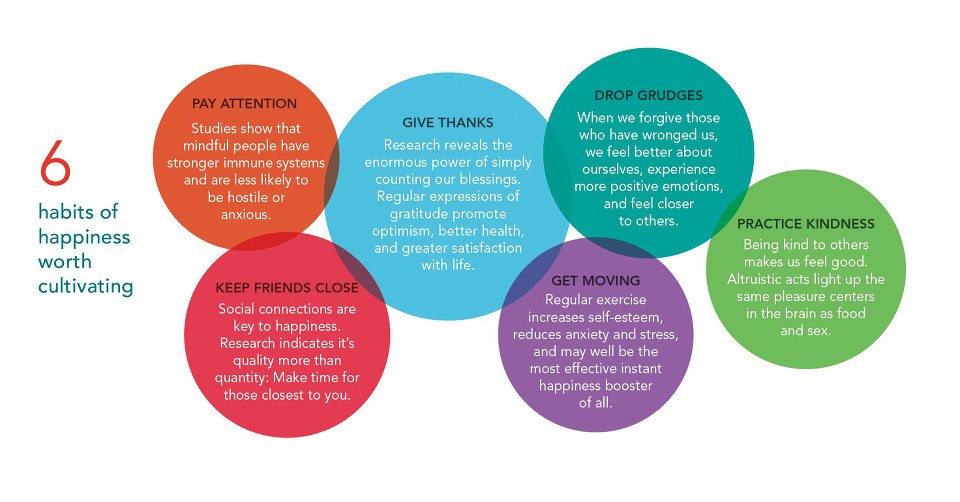
Engaging in regular self-care builds resiliency, which can help us bounce back from the stress of our jobs. The self-care tips above also cultivate happiness. Yay! Graphic from The Greater Good.


J: Some of my readers have started support groups for shelter workers or for families who are caregivers for dogs with behavior or medical issues. Do you have any tips for creating a successful support group?

P: This is excellent news. I have a number of tips to convey to your readers:

a) If you hold debriefing sessions following traumatic incidents at your organization, ask participants to share feelings and not details. Often when we are traumatized by situations such as animal abuse or animal hoarding, we want to give a voice to our pain and suffering. Unfortunately by doing that, we run the risk of re-traumatizing our fellow workers. Talk about how the incident made you feel – sad, frightened, alone, maybe even sick to your stomach. By sidetracking the gory details we are able to identify our feelings and, hopefully, apply our healthy coping skills to alleviate the pain and suffering we are feeling. Healthy coping skills include yoga, walking, massage, meditation, restful sleep, or seeking professional help if necessary. We can also turn to our animal companions for love, understanding and relief. Unhealthy coping skills include alcohol consumption, drug use, smoking, eating fast food, or isolating ourselves from others.

b) Select a facilitator who has both education and experience in managing a group. Managing traumatized/compassion fatigued people can be a challenge of the highest order. A good facilitator will be sure everyone knows the rules, everyone has a voice, and everyone is heard. Time management is also of the utmost importance.

c) Limit the number of participants. A group of 6-10 is ideal. Everyone deserves a chance to speak.

d) Never force a participant to take an active role if he/she declines. Some participants will be able to speak the first time, others will take longer. Be respectful of each person as an individual with specific needs and abilities.

e) Lay down the groundwork for success in the beginning by explaining the rules. If a participant shows an aggressive side or is disrespectful to others, the facilitator has the right to dismiss that person from the group.


J: Vet techs, rescue and shelter workers, animal control officers, individuals with pets who are suffering – compassion fatigue seems to touch so many of us. What can we do as individuals to reduce stress and avoid burnout?

P: You are exactly right. Compassion fatigue doesn’t play favorites.

First, are you at risk for compassion fatigue? One way to find out is to take Dr. Beth Hudnall Stamm’s Professional Quality of Life Self-Test (you can take the self-scoring test here). More than fifteen years ago, it was this test that revealed my own high levels of compassion fatigue. This knowledge led me on a path to healing, but it took quite awhile and a lot of education on my part.

I truly believe the number one thing we can do to reduce stress and avoid burnout is to be self aware. What causes our stress? What are the triggers? How do we manage our stress? Or do we?

Stress is too much – too much work, too much pressure, too many deadlines.

Burnout is not enough – not enough time, not enough resources, not enough energy.

When you add compassion fatigue to that mixture, you have a crippled individual – body, mind and spirit.

Self awareness begins with education. Not only learning about stress, burnout and compassion fatigue, but learning about ourselves. By creating a Personal Mission statement (what is my promise to myself?), and following up with a Self-Care plan (start with one goal and make yourself accountable), we can begin the path to healing that will make it possible to continue to make a difference in the lives of our wonderful furry little friends.


J: Beyond increasing awareness and education about Compassion Fatigue, what are a few concrete, everyday ways for shelter staff and management to incorporate and support self-care in their work place?

P: Beyond awareness and ongoing education about CF, individuals need to do the following six things:

  • Create work/home/me-time balance
  • Create a self care plan and make a commitment to yourself to follow through
  • Identify your triggers and stressors that create stress and burnout in your life/learn to manage them
  • Build a healthy support system
  • Take the CF self-tests regularly. CF is never healed and it can creep back into our lives.
  • Raise your Compassion Satisfaction levels.

Organizations can begin to help staff manage compassion fatigue by taking the following six steps:

  • Allow flexibility in work hours
  • Promote breaks and lunch time daily
  • Management must take part and have buy in. Staff learns by example; leadership leads by example.
  • Offer corporate/organization Wellness programs: yoga, exercise, Weight Watchers, smoking cessation programs, time management classes.
  • Hold debriefing sessions following traumatic events
  • Provide adequate pay, PTO, vacation time, and benefits. Make vacation mandatory.


Many thanks to Patricia for this interview and her invaluable work through the Compassion Fatigue Awareness Project! Please visit her Facebook page and website for more resources, including self-assessment tests. Her book To Weep For a Stranger is available on Amazon. If you’re exploring CF, this is a great place to start!


For further resources on this subject, please see:

The Humane Society of the United States has a collection of articles on CF

Vets and Vet techs: Continuing education in CF available here.

The American Veterinary Medical Association’s thoughts on CF in the workplace.

12 Self Care Tips for Helpers from Françoise Mathieu

For caregivers of reactive, fearful, or aggressive dogs: TACT resources

11/2014 note: I have a whole new website and more compassion fatigue resources here now!


Self-Care Is Not Optional: How Burnout Ended My Career at the Shelter

Four years ago on my birthday I gave my two weeks’ notice at the animal shelter where I worked. Quitting felt like defeat, guilt, and failure, wrapped in a heavy, wet blanket of numbed out exhaustion. But it was still a good birthday present to myself. I needed out.

I knew I was in trouble months earlier when I started crying as I drove into work in the mornings. Towards the end of my time at the shelter, I began to move through the morning routine in a sad trance. Tears would silently roll as I went about filling food bowls, walking dogs out to the yards for their morning bathroom break, and putting meds together.

I was sad. I was really angry. I was exhausted, mentally and physically, down to my core.  And I knew I wasn’t helping the dogs anymore. I was in such bad condition that I knew I wasn’t able to do my job effectively.

I was completely burned out.

So I left. I felt guilty that I was leaving my fellow co-workers behind in the trenches to do the work I couldn’t do anymore. I felt sick at the thought of abandoning the dogs that were still waiting for homes. But I knew I had to go.

It took months to start feeling better. Actually, if I’m being honest, I was so busted that I didn’t feel like myself for more than a year after I quit. No joke.

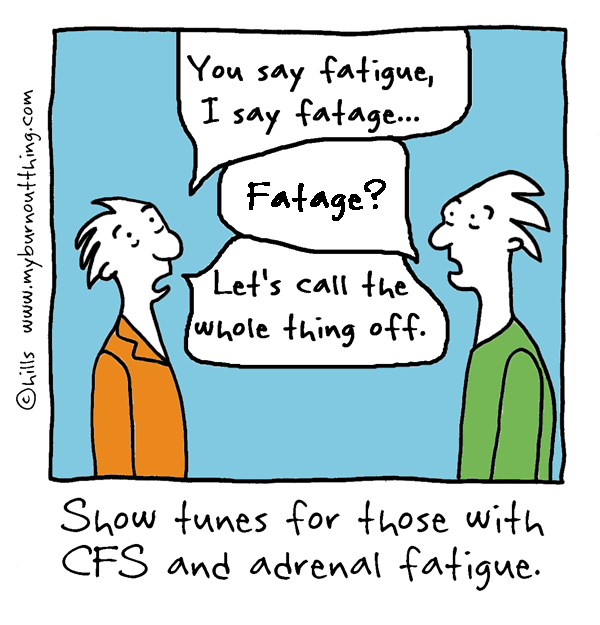
Fatigue Fatague cartoon

These days I’m still involved in animal sheltering, but from a distance. In addition to dog walking part-time, I do some writing for an animal welfare non-profit. So I’m still in the loop. And in my work I see a lot of advice geared towards shelter and rescue workers instructing them to be more positive, provide better customer service, to be less judgmental, more compassionate, and more understanding when working with the public.

It’s a reminder that in order to help the animals, we must also help people. We can’t hate people if we want to help animals. When I hear this advice I always nod in agreement. It’s the truth.

But a little voice – a voice from four years ago – always pipes up too: Remember, that’s easier said than done. Who is teaching shelter workers the skills they need to stay positive and open-minded with the public? Where is the compassion for underpaid, overworked shelter workers?

Because the truth is, the work is brutal. Caregiving is hard. All helping professionals struggle: nurses, firefighters, social workers, etc.

The nature of the job is a Catch-22. In order to do these kinds of helping jobs, you have to be empathic. But if you’re emphatic to a traumatized population, then you’re exposed to their suffering. The demands for your empathy are constant and often overwhelming, which leads to high residual stress levels. When this isn’t dealt with, it leads directly to Compassion Fatigue (CF). And that impairs your ability to be compassionate, positive, and helpful to the very population you serve.

Side note: there is one critical difference between all the other helping professions and shelter workers. We’re the only ones that sometimes have to kill those we are assigned to care for. As big as that is, let’s put euthanasia aside for the moment, because you don’t have to be a euthanasia tech in order to experience Compassion Fatigue (though it does correlate with high turnover rates). 

What is Compassion Fatigue? It’s exhaustion due to the stress and demand of being empathetic and helpful to those that are suffering. 

And this is what it looks like from the book To Weep For a Stranger, “When caregivers focus on others without practicing authentic, on-going self-care, destructive behaviors can surface. Apathy, isolation, bottled up emotions, substance abuse, poor personal hygiene, and emotional outbursts head a long list of symptoms associated with the secondary stress known as compassion fatigue.”

Untreated, Compassion Fatigue leads to Burnout. But Burnout is different than Compassion Fatigue.

“Clinicians can experience burnout, but burnout can be experienced by anyone who works too hard, too long, or under too much stress without being exposed to trauma or trauma survivors, as is necessary in a CF assessment. Burnout pertains to the work environment, whereas CF pertains to the emotional involvement of extending empathy to trauma survivors.” From Resilience as a Protective Factor Against Compassion Fatigue in Trauma Therapists.

Once you’re in burnout, you’re not likely coming back. You hate your job at this point. But when you’re dealing with the symptoms of Compassion Fatigue you can, with help, come back from the brink. And, even more importantly, you can protect yourself against Compassion Fatigue through regular self-care and building resiliency.

Sadly self-care doesn’t come naturally to most of us working in shelters and rescues. For me, I knew in theory how to take care of myself, but when the going got really tough I just couldn’t manage to make self-care a priority. I was so tired that all I could do at the end of the day was eat ice cream and watch TV. Many of the people around me at work were also exhausted or numbed out. I think we were all waiting for a break in the relentlessness of our jobs to “catch up” on caring for ourselves. But the break never really comes. I didn’t know how to care for myself in a long distance race with no finish line. Or why it was so important.

The truth is that in order to do this work well – to care for animals and people – you need to be able to care for yourself first. Just having the technical skills to do the job isn’t enough. It’s not enough to know proper sanitation protocols or disease management. Or how to do skilled behavior evaluations. Or know how to handle, socialize, and enrich animals. Or how to speak with potential adopters and counsel them on choosing the right pet.

All of those are skills you need, of course. But you won’t be able to use any of those skills if you’re falling apart. Compassion Fatigue takes away your ability to do good work. Feeling negative emotions and not having the skills to cope with them impairs our ability to connect with other people, think creatively, problem solve, and work well with others.

So all the advice in the world, all the finger wagging, the training seminars, the shaming comments about shelter workers needing to stop saying “I hate people” – none of that is going help them do a better job. Not unless we address Compassion Fatigue and Burnout, since that’s one of the root causes of why they’re not being effective at their jobs.

So why isn’t addressing Compassion Fatigue as important a part of the job training as how to do an evaluation or talk to an adopter? Why isn’t this a priority at every organization?

No one ever said the words “compassion fatigue” to me when I took the job at the shelter. I didn’t understand that what I was initially experiencing wasn’t the same as burnout from a tough job with long hours. It didn’t happen right away, but when symptoms of Compassion Fatigue hit me, I was deeply affected. I felt like no matter how many hours were in a day, I could never give the dogs at the shelter the level of care that I knew they deserved and needed. I worked so hard. But it never felt like enough. No matter how much I did in a day, I rarely felt like I had succeeded. It wore me down.

Of course, there were adoptions. Glorious, wonderful, heart-filling adoptions. I can’t tell you how good it felt to send a dog home with their new family. It was joyous and hopeful and…for me, increasingly scary.

Dogs would come back, returned by the families that had adopted them. That’s part of the job. It was disappointing, but not devastating. But then I encountered a really bad stretch. Dogs that I had personally adopted out were coming back to us abused, neglected, and damaged. Not a lot of dogs. Just a handful. But when you find out that a dog you cared for and sent home with a family that you thought was OK was later found dead or comes back to you 20lbs lighter and covered in scars, it only has to happen a few times to shake you. I started jolting awake at night, sick from nightmares about the dogs that had suffered.

My favorite part of the job – adoptions – felt tainted.

I felt like I couldn’t really trust myself or others. How would I know when a family was lying to my face, as some clearly had? Despite my training and adoption counseling skills, I could never really know if I was sending a dog to an abusive, neglectful home. I had to be ok with that uncertainty, but I felt vulnerable and afraid instead. Which made me feel shut down and negative towards the public.

If you’re reading this now and thinking: You shouldn’t have gotten so hung up on the negative – studies show that the majority of adoptions work out. Or you can’t control everything and wait for the perfect home. Or always keep your eye on the big picture, rather than getting stuck on a small percentage of adoptions gone wrong. You’d be right.

But here’s what I know now, that I didn’t know prior to doing direct care for the dogs:  the map is not the terrain.

You can give people the very best instructions, the most effective techniques, the most cutting edge tools and research – the maps– but they mean almost nothing when you’re dropped into the reality – the terrain – of being a caregiver in an animal shelter.

For example: A map can tell you the elevation of a mountain. But just reading the map while sitting on the couch isn’t the same as what you feel while navigating the terrain. Until you do it, you won’t know exactly when your leg muscles will start spasming as you try to scale that terrain.

The map tells you suggested questions to ask potential adopters. The terrain is filled with the bottled up pain of the dog you just euthanized minutes before meeting a potential adopter, the fear of repeating your past mistakes, and the confusion of being unsure if the person you’re talking to is a good home or not as you try to ask those questions. The map alone isn’t enough to help you get through the terrain.

If we actually want shelter staff to do a better job, to be more compassionate towards the public, to be more effective and to save more lives than we have to do more than give them a really good map filled with “how-to” instructions for how to technically do the job. We have to make self-care a priority so they can stay healthy enough to tackle this complicated emotional terrain.

I’m just going to stop for second to address those of you that are saying to yourself: There are plenty of shelter workers that are terrible. They hurt and abuse the animals in their care. They’re hateful to people. They don’t care about lowering euthanasia rates. Shelter workers ARE the problem.

I know that there are some truly awful shelter workers out there. There are also some amazing shelter workers out there that really don’t get bogged down by all the negative stuff and need little help navigating this difficult terrain. They’re the two ends of the spectrum. The really horrible and the really high functioning.

But the average shelter worker is just a regular person that falls somewhere in the middle. They’re trying (and sometimes failing) to do a good job. They love the animals. And they need compassion and resources in order to do a better job. They are exactly the same as the public and adopters in that regard.  If our goal is to help the animals, we have to care for and help people – and that includes people who are shelter workers.

We can’t ask them to do better work without addressing the coping skills they’ll need in order to do a job that can be emotional hell. Let stop for a second and consider what we’re really asking shelter worker to do: We’re asking them to provide constant care for animals in need, some of whom are traumatized. To experience having little control in where those animals ultimately wind up. To feel the fear that things might go badly in an adoption and to let it go. To (sometimes) kill those they’ve cared for. To be vulnerable, to stay open, and to remain positive in the face of what scares and stresses them.

Not an easy terrain to navigate. American Buddhist nun, Pema Chodren, writes in her book The Places that Scare You, “When we practice generating compassion, we can expect to experience the fear of pain. Compassion practice is daring. It involves learning to relax and allow ourselves to move gently towards what scares us.”

buddha 2

Shelter and rescue workers – just like the rest of us – aren’t Buddhist nuns. But that’s essentially what we’re asking them to be: comfortable being vulnerable in their compassion.  None of us – shelter workers to nuns – can do that without a lot of practice.

So what does help? Recent research shows that Resilience can protect against CF and burnout. Resilience is built through awareness and self-care. Self-care is when we commit to nurturing a life outside of work that can counterbalance the intensity of the job and the inevitable stress that comes along with it. When we take care of ourselves, we build the resilience we need to deal with the negative aspects of our job, as well as building job satisfaction. That helps us to feel positive and allows us to do our jobs better.

Self-care is about finding ways to restore a balance between the negative and the positive by cultivating aspects of our lives that support us when the going gets (and stays) tough. It’s about making a commitment to caring for yourself as deeply and seriously as you care for the animals. Because if you don’t, if you allow yourself to become mentally and physically run down, mired in negativity, sadness, and anger, then you can’t do your job all that well.

If you’re saying to yourself: “I don’t have time for self-care. The animals need me constantly!” I want you listen up:

Research shows that there is a correlation between ethical violations and Compassion Fatigue.  Which means Compassion Fatigue can cause us to cause harm to others.

That means: YOU ARE ETHICALLY OBLIGATED TO TAKE CARE OF YOURSELF.

When we disregard our own needs in order to keep giving to others it’s not just bad for us, it’s unethical.  So if you think that being a good caretaker means caring until you collapse you are wrong. In order to be a good caretaker, you must take care of yourself so that you can care for others properly. Otherwise, you have the potential to harm those that you are caring for.

Let me say this again: it is UNETHICAL TO NEGLECT SELF CARE. So it’s not indulgent to take care of yourself. It’s not a sign of weakness. It takes courage to commit to self-care. It’s the right thing to do. It’s not optional.

What does self-care even look like? It’s going to be personal for each one of us, but generally self-care and building resiliency looks like: setting boundaries, saying no, working less, exercising, eating well, going to therapy or a support group, cultivating friendships, monitoring our stress levels daily, stretching, journaling, having hobbies, breathing exercises, talking with a trusted friend at work, laughing, having interests outside of animal welfare, sleeping, allowing yourself to feel grief, dancing, meditating, practicing gratitude and positive thinking, and separating our work life from our personal life.

Regularly doing these acts of self-care builds resilience.  People who are resilient are able to bounce back from adversity, stress, and the heartache of getting a dog you loved returned to you abused and broken. It helps you bounce back from euthanizing animals.

Research shows us another key to building resiliency and fighting Compassion Fatigue: experiencing Compassion Satisfaction. All of us who have worked with animals have known Compassion Satisfaction (CS). That’s the joy in our job.

CS happens when you care for an injured animal until they are well again. CS comes from doing a wonderful adoption for a long term resident. CS comes from passing out peanut butter Kongs and listening to a choir of muffled, content slurps. CS is when you help a caring family keep the dog they love by connecting them to affordable resources. CS is what keeps us going, helps us balance out the negative, and see the big picture. But we can’t hold on to the positive aspects of CS without self-care.

If we really want to make progress in animal sheltering, then we have to make teaching and supporting self-care a foundation of our work. Entire organizations can be affected by Compassion Fatigue. And the organization itself can cause stressors for employees that contribute to fatigue and burnout, such as improper management, unclear protocols, lack of training, low pay, being understaffed, etc.

If we want shelter workers to do their best work, organizations and their management have to be aware of these issues and work to help staff and volunteers to identify healthy coping strategies and encourage them to build resiliency. We have to make this non-negotiable and as important as any other part of their training, since neglecting self-care has negative consequences for our work. It has to be a part of the culture of our profession: prioritizing self-care, so we can care for others.

If we want to save more lives, organizations will have to combat the plague of Compassion Fatigue and Burnout that wipes out entire groups of new, enthusiastic, caring, shelter workers before they even have a chance to make a lasting impact for the animals.

As a profession we have to prioritize caring for the caregivers by investing time and resources into this issue. We can’t just expect them to suck it up, stay positive, and do good work. I sure couldn’t. At the end the only way I knew how to help myself was to pick up the pen and write my resignation letter. The day I dropped it off on my mangers desk I knew, even though I felt terrible quitting, it was an act of self-care.


PDF Version for easy printing and sharing available here: Self Care is Not Optional

Despite being way too long, this blog only scratches the surface. For more concrete resources, please see my interview with Compassion Fatigue Awareness Project Founder Patrica Smith. 

Compassion Fatigue and Burnout affects professional caregivers of all kinds (as well as those that are caring for loved ones in their personal lives). This includes vet techs, individuals who live with challenging or sick dogs, dog trainers, animal control officers, and volunteers. What I wrote about here applies to all of us who are taking care of animals or people. Self-care is not optional for any of us.

And finally, because this had such an impact on me personally, this summer I became a Certified Compassion Fatigue Educator.  11/2014 note: I now have a whole new website and more compassion fatigue resources here, including online classes and webinars to help you be well, while you do good work.
Have Dogs, Will Travel: Vacation Rental Edition

Vacations are the best thing ever. Back in the day Mr. Dog Walker and I used to travel a lot and took some pretty sweet vacations. Lately we’ve been sticking closer to home due to some budget constraints brought on by a mix-up with The Publisher’s Clearing House Sweepstakes. They keep bringing that giant check to places that aren’t my house.

Anyway, that means that for the past few years we’ve skipped the plane rides and rented a cabin here in Maine. That’s turned out to be pretty awesome, because we get to take the dogs with us on our summer vacations and explore our new-ish home state together.

Renting a house is a really great idea if you want to vacation with dogs in general. If you have a reactive dog or a dog that doesn’t like being left at home for any reason, it’s the business.

We’ve rented three different houses with Boogie and Birdie, so I thought I’d share some things that have helped us enjoy our rentals. It’s not a complete list of everything you need to know. It’s just the weird stuff that helps us get our particular vacation groove on:

1. The Secret Password is Secluded: I use VRBO to search for rentals. When I find some that I like, I scour the descriptions and reviews from past renters for certain words: “secluded”, “private”, “in the middle of nowhere”,  or my personal favorite: “I didn’t have to close the blinds or curtains because there was no one around to see me getting undressed.” I immediately throw out any rental with reviews that say stuff like: “super friendly neighbors that drop by”, “the owners are right next door”, or “very dog friendly – everyone nearby had a dog.”

whoa sign

This is the kind of thing I like to see when I rent a place.


2. Lurk it Out: Then I look at the photos listed very closely. Most of the photos of the outside of the house will be strategically staged, so even the most packed-in cabins seem like they’re spaced far away from one another. But in the interior photos of the house, I can sometimes glean a little more info by looking at any windows pictured. Sometimes I spot the neighbors pressing their faces into the kitchen window. Or, more likely, I might spot a building right outside the bathroom window. Maybe it’s just a shed, but maybe it’s the house next door. If I’m still not sure how private the property is, I just ask the owners how close the nearest house is and tell them we’re looking for privacy because we’re hermits with a life threatening allergy to polite chit chat.

(Note: In the comment section a reader reminded me of another way to lurk: satellite maps! Those have been helpful for me in the past too, so check those out. Thanks Sara!)

3. Timing Is Everything: We always book our week at the very end of August/beginning of September. We do this to avoid the crowds, families with kids (they’re back in school by then), and other renters. Some of the places we’ve rented that have been very private were that way because the house next door was unoccupied/closed down for the summer. We’ve also found that by that time of the year (in Maine at least), many houses are empty Monday-Thursday, with just weekend visitors. So even if you have neighbors, it’s just for a couple of days. If you can be flexible about the times you travel, try aiming for shoulder season rentals.

4. Cover Up: After we arrive, we want to make sure we get our security deposit back. So we always pack 4-6 blankets/sheets to drape over all the couches and chairs in the house. Most rentals do not allow dogs on the furniture. I don’t know about you guys, but my dogs live on the furniture at home and it would confuse the pants off of them if they weren’t allowed to get on the furniture while on vacation. So instead of trying to explain it to the dogs or the owners, I just cover everything in sheets and let them sit where they want. At the end of the week, I take off the blankets and viola! No fur.

Also: I remove decorative pillows and throws from couches, etc. and put them in a closet. I take them back out when we go. A sticky roller never hurt either. I roll the place on the way out.

birdie rocks 3

Birdie rocks hard on vacation


5. Home Alone, In Stages: Leaving the dogs in the new house alone for the first time always makes me nervous, so on the first day we don’t really go anywhere. By day two or three, I usually have a pretty good sense of who might stop by (usually the owner or caretaker stops by the first day or so to say hello) and the dogs are settling into a routine. When we leave them alone in the house for the first time, we just do a short trip – like out to lunch – and come back to find out if they’ve had any trouble. By mid-week, we’re leaving them alone in the house all day while we do some major exploring.

Our dogs are comfortable being home alone normally, so this isn’t much of a stretch for them. I’m just making sure the new place doesn’t have any quirks,like ghosts of former vacationers, that might freak them out. But if your dog has accidents or is destructive in your own home, bring a crate.

6. Emergency Strange Dog Plan: Even the most secluded places will usually have a local dog or two that like to stop by to say “hi” to the new renters. This is a problem for us.

Here’s what we do if we spot a loose dog near our rental house: Mr. Dog Walker picks Boogie up and carries him into the house. I walk towards the unfamiliar dog to try to intercept them. Birdie plays mid-fielder. That sounds obvious right?

Here’s the rule that makes this handy: No Discussion. We don’t debate it. We see the dog, Boogie gets picked up and brought in the house. No discussion between us and no discussion with Boogie. Having this quick, no questions asked plan gives us peace of mind. Most of the time the plan is activated for nothing, but a few times it’s saved us from some really sticky situations.

When we’re far from the house, it’s a similar plan. One of us removes Boogie, while the other stays behind with Birdie to deal with the loose dog. This is also helpful in all kinds of random travel moments, like bathroom breaks in unfamiliar areas or even getting on and off a ferry. One person picks up and goes (or just walks the dog away), while the other stays put and handles the other dog. If you’re alone, here are some tips for dealing with loose dogs.

Also, it’s worth noting that a muzzle is a pretty awesome tool to use whenever you’re traveling and can’t be sure of what scenarios your dog might encounter. Ain’t no shame in the muzzle game. Be proud of being proactively safe.

boogie on the rocks

Boogie just wants to hike. He doesn’t want to say “hi” to your dog. It’s his vacation. He can do what he wants.


7. Pack Like a Scout: Finally, every vacation of ours has been made a little easier by packing a lot of extra toys, calming treats, their beds from home, two long tie-outs to use in the yard (there’s never a fence), and a bottle of Hibiclens to clean the inevitable scrapes and bumps that come with hanging out in the Maine woods. Also, booze for me.

Man, now I just want to go on vacation again. Why can’t we work one week a year and go on vacation the other 51? That seems like a way better deal.

How about you? What are some ways you’ve made vacation with your dogs, especially DINOS, a little easier? Share in the comments!

Oh, and here’s a couple more resources that might help you plan a fun dog-friendly trip: Go Pet Friendly! And a great blog with tips on vacationing with a reactive dog.