Skip to content

Step by Step, Oh Baby*

Hey! Did you guys know that you can buy an affordable 30 day online pass to read Dr. Sophia Yin’s Low Stress Handling, Restraint, and Behavior Modification of Dogs and Cats?

I didn’t! I’ve been pining over that book and dvd set for months – but at $150 it was a little steep for this needs-a-new-washer-dryer gal to spend. So there I was, sad that I couldn’t read her book, which I was sure would help me to help Boogie feel more at ease at the vet. And little did I know there was an affordable online version. Did anyone else miss this option? Go check it out!

dr. yin

This book is heaven for me because my little man Boogie is a scaredy-dog. Most new stuff, situations, and people freak him out. With a little time and a game of fetch, he’s good to go, but he needs a soft touch, especially at the vet. We’ve been lucky in the past and had a wonderful vet that understood how to approach and examine Boogie. But then she left for maternity leave and we lost her. After that, we had a really unpleasant experience in our search for a new vet for Boogie – despite good recommendations, multiple advance emails and discussions with the new clinic about Boogie’s needs – it was a disaster.

The vet visit last year went something like this: The vet throws Boogie treats for a few minutes while standing near him, stares at him, then, just as he’s starting to relax (sort of), she puts him on a metal rectangle on the ground and flips a switch so the table rises out of the floor. Boogie and I were both shocked. I had thought it was clear that she would examine him on the floor. Instead, she took a scared dog and put him on a moving metal monster. Then, standing behind him, she tried to examine his abdomen. No surprise here: Boogie growled at her, a lot.

I was doing my best to redirect his attention, asking him to look at me and giving him amazing treats, but every time he growled the vet sternly told him “NO” and scared him more. I was so stunned that I was having trouble advocating for Boogie (I still feel bad about that). But I kept trying to work with him, so she could finish the exam and then we could get the hell out of there.

Then this doctor stopped the exam to chastise me – she told me I had to stop rewarding him for growling and start telling him “NO” too. And that’s when I lost it. I told her I would never correct my dog for telling someone he was uncomfortable – that correcting away a growl was dangerous because we’d be taking away his attempt to communicate his fear and that leads to dogs biting without warning. If he’s scared, then the approach needs to change. She told me I was rewarding his bad behavior by treating him. I told her she was going to take him off the table that very second and examine him on the floor. She did. Then we left. I was pissed.

So now it’s time for his annual exam again and we’ve decided to try a vet that does home visits. This is good fit us for a lot of reasons:

1. we have five pets, so we have to go to the vet a lot. It would be nice if someone came to us instead of us schlepping our rag-tag zoo across the state.

2. one of our cats gets disgustingly car sick and poops his pants, then rolls in it in his crate while I drive. So every time I get to the vet, I run in yelling, “I need a room for Gus! He’s covered in poop!” and then I spend 30 minutes trying to clean up my 18 pound cat’s poopy pants.

3. Vet waiting rooms are stressful!

4. Boogie will feel more comfortable at home, where he can meet the vet outside and play ball with him before the exam. To top it off, the vet tech coming over is an old friend of mine who worked with me at the shelter and knew Boogie when he was there on the adoption floor.

In preparation of our upcoming visit, I’ve been doing a few things: getting Boogie more comfortable wearing a muzzle, doing lots of ear, teeth, and paw touching to mimic the exam, and trying to find some detailed help for preparing fearful dogs for exams. I found Dr. Yin’s book, but I couldn’t afford it. Behold my amazement when my speed reading eyeballs slowed down long enough for me to see the tab that said ‘online version’ and realized:

I could buy 30 days of online access to the book, videos, and handouts for just $25.

I couldn’t pay fast enough and spent all night reading the book and watching the videos. If you have a dog (or cat) that is fearful or aggressive at the vet or in any scenario, go do the same. While there is a ton of general advice out there on the interwebs for helping your dog get comfortable at the vet, it’s just that – general advice that’s pretty universal: stop by often, go slowly, lots of treats, etc.

But this book gave me exactly what I need: specific instructions on how I can restrain my dog for various procedures and how to train him, prior to the visit, so that he’s more comfortable getting injections, blood draws, ears cleaned.


Since I’ve worked in shelters, I do know how to restrain and vaccinate dogs. But no one really taught me how to do this – I just learned on the fly. So I wanted detailed instruction on the various holds, all with the goal of making the experience as low stress as possible, while still keeping everyone safe – and this book delivered. The chapter on “difficult dogs” was especially juicy and delicious.

I’ve been talking with my pal the vet tech, so I know that she plans on doing Boogie’s blood draw from his back leg. Wouldn’t you know it? Dr. Yin outlines how to do this exact procedure, specifically on a fearful dog. It involves a wall, my leg, a head harness, and a lot of calm stroking and head rubbing. My husband and I will practice these moves with Boogie prior to the exam. It feels really good to have such clear, easy to understand instructions – with lots of photos – to guide us.

If your dog is stressed at the vet, the groomers, at home during nail trims, or just fearful of things like novel objects or car rides, you’ll want to read this book and watch the videos. It’s just super user-friendly. And I’m pretty sure that even those of you that have a lot of experience with dogs will still pick up a new trick or two for handling dogs and cats – like different ways to roll them on their sides or how to use a gentle leader to control a dog’s head while you examine them by yourself.

I wish more people who work with dogs professionally were required to read and implement these techniques. I don’t know about you guys, but I often encounter vet techs that have great handling skills, but they work with vets that are as graceful and comforting as Dr. Frankenstein:

These vets have all the book smarts, but no bedside manner. That would be fine, just book smarts, if they never had to touch the dogs and the vet techs could do all the handling, but vets have to touch the dogs. So why aren’t more of them taking a few hours here and there to read this book and get educated? Why isn’t it a priority for vets to learn how to properly handle dogs and cats in order to make the experience a positive and safe one for everyone involved? I’m kind of peeved it’s not on everyone’s must read list.

If you work in a shelter and you need to do vet rounds, please ask your boss to buy you this book.


If they won’t, sign up for the 30 day online version. Not only will it help you do the medical tasks you have to do as part of your daily work, but it has great tips for stuff like: entering/existing kennels, how to safely approach and leash fearful dogs at the back of kennels, and how to avoid using a rabies pole. I wish I had this resource a few years ago when I was at the shelter.

And can I just say that I’m even more annoyed at the vet from last year after reading this book? It addresses the exact scenario I encountered: someone who thinks it’s wrong to reward a dog when they are afraid. This video shows how using treats can change the emotional response of the dog, even while they’re growling.

When I emailed the old clinic to ask for Boogie’s records, they wanted to know why I was leaving and if I was unsatisfied with my experience. I was too shaken up last year to say much – I truly felt like I had let Boogie down by allowing him to be handled so badly – but now was my chance to calmly explain why I was unhappy. This is what I wrote:

The vet techs at XYZ were really terrific, but I’m looking for a vet with better behavioral and handling skills.

I prefer a vet that is willing to alter their approach in order to help my dog feel more comfortable – for instance, sitting on the floor with him, rather than putting a terrified dog on a moving table and standing behind him, correcting him loudly with a “no” every time he growled.

Correcting a scared dog with a firm “no” every time he growls, as this vet did and asked me to do, only suppresses the growl, it doesn’t change how the dog is feeling – that they are uncomfortable with how they are being approached. Teaching a dog not to growl is extremely dangerous and leads to biting without warning.

Although I tried to explain that I was treating my dog after asking him to “look” at me, the vet misunderstood that I was rewarding him for growling. I was not. I was rewarding him for redirecting his attention to me (and trying to make the experience positive). I was deeply unhappy that she didn’t understand this and that she insisted I tell him “no” for growling. We have never had such a stressful exam.

I’d suggest she look into Dr. Sophia Yin’s Low Stress Handling Techniques: http://lowstresshandling.drsophiayin.com/

Hopefully, this vet will check out Dr. Yin’s resources. More professionals need to make this sort of continuing education a  priority. In the meantime, I’m studying the exercises we need to practice in order to make our home visits at the end of the month a more pleasant experience for Boogie. I’m sure it’ll still be a humdinger of a visit, but we’re going to try our best to make it less stressful for our wee man. Wish us luck and stay tuned for an update in September!

* You bet your sweet tuckus that’s a New Kids on the Block reference. Oh baby, gonna get to you girl.
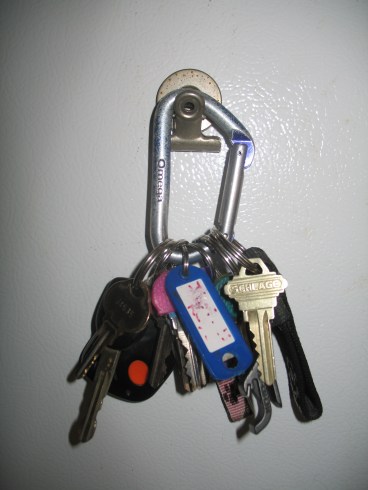
Goodbye Lucky ‘Biner

We’ve been together for 14 long years, attached at the hip since college. A dozen times a day, I reach down to give you a little pat and make sure you’re still there, always by my side. I never leave the house without you and when I lose sight of you, I panic.

You are my trusty carabiner. Holder of my keys, safety back up for all my dog outings, my loyal companion. I’ll never forget the day I bought you (with my employee discount) from the Ramsey Outdoor Store. I had no idea then, but you were to become one of my luckiest, most favorite tools for working with dogs.

Today, after many weeks of trying to ignore the signs that you were starting to slow down – getting stuck open, not snapping closed fast enough, totally silver with no traces of your old cobalt blue coating – you finally told me it was time to let you go.

For the first time in 14 years, you got stuck slightly open and I lost a set of my client’s house keys. It would have been irresponsible of me to continue making you work.

So, with a heavy heart, I bought a new carabiner and retired you to my desk drawer. This new guy isn’t the same. My keys don’t slide around him smoothly and, every time I have to shake the keys into place, so that I can clip the newbie onto my belt loop, I think of you old pal. No one did it better than you.

Thank you for an awesome 14 years lucky ‘biner. You were a dog walker’s dream.

My Lucky ‘Biner 1998-2012

How I Failed as a Rescuer: Lessons from a Sanctuary

This has been a heavy, heart breaking week in the world of animal welfare. A few days ago a formerly reputable sanctuary in Texas called Spindletop Refuge was raided by authorities. Close to 300 dogs, mostly pit bulls, were discovered living in terrible conditions. It was just one of many failures this week.

The reason why this particular case is so upsetting is that this was supposed to a “good” sanctuary. Rescue groups and families from around the country have been sending their dogs to live there, paying hefty boarding fees, in the hopes that the dogs would have a chance at another life out in Texas. Some dogs were adopted out, others lived at the sanctuary for life.

Apparently on the surface, this place seemed a like a good one. People have come forward to say that they visited Spindletop as recently as the first week of July and were satisfied that it was a safe, clean facility. Turns out they weren’t seeing the whole facility – only a small part of it.

The woman who ran the organization has a long and positive history in animal welfare and at one point, I believe this really was a good place for dogs, mostly pit bulls, that no one else would care for. But something went terribly wrong and the dogs kept coming and now rescues and families are scrambling in panic to get the dogs back.

They must feel beyond guilty for sending the animals that they love into this situation. I know I did.

Years ago in Philly I helped care for a small feral cat colony that had sprung up in a construction site across from the house of one of my dog walking clients. Not having much experience with ferals, I reached out for help and found a woman who would help me trap the cats. The construction site was rapidly tuning over into new luxury homes. The cats couldn’t stay there, so we had no choice but to remove them. The short story is that we trapped the kittens and I adopted them out. But the adult females were a different story. They were truly feral and suffering in the home of the trapper, an experienced feral handler. We came to the agreement that cats were miserable in her house, despite her best efforts, and we had to do something. We couldn’t return them to their former “home” – it was now the foundation of a townhouse. We couldn’t take them to the city shelter. They would be caged, stressed, then killed for being feral. So we looked into a sanctuary and found one in western PA.

The kittens from the feral colony all got adopted, but their moms weren’t so lucky.

We were as diligent as we thought was necessary about checking out a place that was a day’s drive away. I had multiple phone calls with the owner. We spoke to other people who had transported cats out there and seen it in person and they swore it was a safe, clean, enriching place for cats to live out their lives, if they were not adopted out. Desperate not to put these two cats to sleep (one of them now named “Dolce” after me), we arranged for a volunteer to drive them out to the sanctuary.

Those of you in animal welfare might be wondering: Yes, it turned out to be the infamous Tiger Ranch. A few years after we brought our two feral cats there, authorities raided this sanctuary and found dead cats and neglected animals everywhere.

I was sick that I had contributed to this and that’s when I knew: you’re only rescuing an animal if you see it through all the way to the end, whatever that end may be.  I had passed the buck onto someone else. And failed to take full responsibility for the lives I had “saved.”

Even though I was afraid it might be dangerous to send them to a sanctuary (and I knew I wasn’t doing my due diligence inspecting the property personally), I was more afraid to make the other choice – euthanasia.

Here’s what I know now, having worked at a shelter and in rescue: All animals deserve love at the end of their lives. Sometimes the most loving thing we can do is to provide a peaceful death. And a peaceful death comes from a human taking full responsibility for the life of that animal. I wish I had done that for those two cats.

Shipping animals off to live in sanctuaries, many of which are not being run particularly well (there are exceptions), is not necessarily saving them. It’s often the beginning of a life sentence. Time and time again, we hear about sanctuaries that started off ok, but due to a variety of circumstances the sanctuary falls apart and the animals suffer. It’s often the case that something like: terminal illness, natural disaster, financial ruin, mental illness etc. pushes the sanctuary over the edge and the animals pay the price.

Before you raise your pitchforks at the owner’s of these sanctuaries to call them monsters, I ask you to look at the whole picture. Where are these animals coming from?

From people like me: everyday people who “rescue” animals and desperately reach out for help once they realize they’re in over their heads. From no-kill rescue groups and shelters that don’t want to euthanize pets they’ve taken into their care, but have run out space or do not have resources for long-term housing. From families that for whatever reason cannot care for their pets.

We all keep pushing down the chain. Individuals reach out to shelters, shelters plead with rescues to pull dogs, rescues can’t place all the dogs, so they board hard-to-place dogs in sanctuaries.  

We’re all begging for someone else to give us the happy ending we so desperately want for the animals we love. If people deny us, we lash out that no one will help. If a shelter isn’t no-kill, we refuse to donate to them. We keep pushing and pushing until someone will take this painful, difficult situation off of our doorstep.

 We all push until we find sanctuaries who say yes.

Can you blame them for saying yes? How long could you say no for, when the world is banging down your door to help just “one more” innocent animal? The pressure on these people to say “yes” is enormous. No doubt about it – they should be responsible and limit their intakes and their behavior, in the case of Tiger Ranch and other similar scenarios, is criminal. But in reality their failure to be responsible comes at the end of a long line of people who failed to make responsible choices. We can’t turn the spotlight on their mismanagement and recklessness, without turning it back on ourselves.

We are so invested in the misunderstood idea of “no kill” that we will do anything to postpone the death of the animals we care for. And so the dogs and cats get shipped out across the country or driven across the state, packed with their paperwork and all of our hopes that there really is a happy ending out there for every single animal. And then they wait. In kennels and cages for months, then years. 23 to 24  hours a day in their kennels. No family to call their own. Warehoused and tucked away from the world.

Alive. But not living. 

We’ve passed the work onto someone else. And then, when those people crumbled under the weight of the pile we have swept upon them, we turn our fingers on them and say they’re the monsters.

I’ve come to think that we’re all just different parts of one dangerously ill body.

One part of this sick body is the public and our expectations of what no-kill sanctuaries can do for our pets. If you own a pet that you feel you cannot keep, please know this: you are your pet’s best resource. Very few people will care more than you about the outcome of your pet’s life than you. Invest your time and energy into properly managing, training, or seeking vet care for your pets. If that does not work, think very hard about whether or not your pet will be able to withstand the intense stressors of life in a lonely kennel, particularly if you are looking at a sanctuary. There are no easy answers or quick fixes out there.

I believe that the most loving thing we can do for animals is to stand with them until the very end. Sometimes the end is providing excellent life-time management, sometimes it’s rehoming them, sometimes it’s finding a good shelter or rescue that has a committed staff or volunteers, but sometimes the end is death. Putting them to sleep, in your arms, can be the greatest act of love you give to your pet. You are giving them an end with dignity. We need to consider this as part of our responsibility to our pets.

Before I go on, I’d like to make this clear: I believe in shelters and rescues and I support the “no kill”  approach as long as it’s done with the quality of an animal’s life in mind. I believe many, many places are doing good, responsible work and that the public should be encouraged to bring their pets to these places, if they cannot care for them any longer, so that the pets have a chance at a new life. I’m not trying to scare anyone away from surrendering a pet to a shelter or rescue. I am not saying that all animals are better off dead than at a shelter. What I’m talking about in this blog is our responsibility to animals, how we all contribute to this mess, and the misunderstood idea that saving an animal means just keeping them alive.

If you are a rescuer: saving an animal doesn’t end at pulling them off the euthanasia list or picking them off the street. If you cannot commit to the process of housing, managing, adopting out, and providing owner support to the pet that  you are “rescuing”, then you need to examine what it means to “save” an animal. The glory of pulling a dog from the “to be killed” list isn’t the end zone. The real success comes when the pet is in a home that you or your group is providing ongoing support for. If you can’t do that, do not point fingers that no one will help you. You committed to caring for this animal, once you saved it, so the animal is now your responsibility. See it through, even if in the end, there is no glory.

Cats and dogs live in the moment. They are not burdened with thinking about the future. That is our load, as humans, to bear for them. Instead of passing their suffering along to someone else, in an attempt to relieve ourselves of the psychological pain of euthanizing an animal or the physical discomfort of having to do the difficult work of management and foster care, I beg you to carry the weight for them. Do the hard work. But, if you cannot place them in another home, if you cannot provide the care they need to stay sane and healthy in a long term, no-kill shelter environment, if you cannot manage them safely around others, if they are suffering, you must take responsibility for their life: Love them until the very last minute and let them go.  

I don’t know what the solution to this huge, complex problem is, but we are all part of this problem: the shelters, the public, the rescues, the animal welfare organizations, the families, the sanctuaries. And we all need to work together to fix it. Every time we save a life, we have to commit to providing a level of care for that animal that makes their life worth living. It takes a lot of work. And a ton of resources. And it might mean saving fewer animals, but we’ll be providing a higher level of care for the ones that we do save. Simply keeping them alive, at any cost, is not a humane solution.

I know the rescues and families that sent dogs to Spindletop are beside themselves with regret and sorrow. And I’m sure this week’s events will have a profound effect on them. My heart is with those folks and the dogs they tried so hard to save.

I’m still so sorry for the suffering that I contributed to when I made the choice to pass the responsibility of the feral cats to someone else. I’ve never done that again. It means I’ve rescued fewer pets, but the ones that I have, I’ve seen through to the end – sometimes it’s been putting them to sleep and sometimes there are happy endings. Either way, I’m committed to taking responsibility for the animals I rescue, no matter what the outcome.

There are worse endings than humane euthanasia. Spindletop, Tiger Ranch, and all the others proved that to be true. May we all find a way to do the hard work, for the sake of the animals.

Color Me DINOS

In the last couple of weeks I’ve seen a post called Swedish Yellow Dog making its way across social media. It encourages dog owners to use a little yellow ribbon on their dog’s leashes to indicate that their dog needs space. People really seem to dig the idea.  And for good reason – it’s a smart idea!

Yellow-Dog

On this side of the pond, my buddies over at Dog Flags introduced a handy color coded system for dogs that covers a variety of messages, from “Friendly” green flags to “Ask Before Approaching” red ones.


red


I’m a big fan of any system that helps people communicate with each other (especially from a distance), so that their dogs don’t have to deal with unwanted encounters. It’s a great way to “talk” to other people about your dog’s needs, without having to say a word.

Dog training centers, dog parks, pack walks, dog competitions and other dog groups have been using the color system to communicate their dogs needs for a long time, typically using red as the color for dogs that should not be approached without permission.

The DINOS logo dog (inspired by my Beagle mix Birdie) is wearing a red bandana for this very reason:

But there’s a little problem: only the doggiest of dog people know what these colors mean.

And only polite dog people care enough to respect the color system.

That’s why they work so well in closed groups, like pack walks or dog camps. Every one is on the same page and working towards creating a positive experience for all dogs. It’s responsible dog ownership and interaction at its best.

It seems that the only way a color coded system will work out in the wilds of the public is if there’s a huge PR campaign launched to educate the average person about the meaning behind the color system and what to do when they see a red or yellow flag.

Oh, and we have to settle on a color. I’m all for red, for DINOS, obvs.

This campaign would need to cross all sectors of the pet industry: dog trainers, vet offices, humane groups, boarding and grooming, pet publications, retail, etc. and would need to be promoted uniformly in a variety of mediums. The message would need to be clear, concise, and consistent. If various companies marketed their own color coded products and kept changing the messaging, it would confuse the public.

And even then, we’d have to be content with the fact that despite a big push, only a small portion of the public will internalize and respect the color system.

We know this because: half of us walk around with t-shirts that say “Keep Back” while our dogs are wearing bright orange flak jackets that read “GET AWAY FROM ME!” and shoot off warning blasts, but yet…people still come over to pet them, while commenting about their ritzy coats. Sigh.

And a color system won’t even put a dent in one of our biggest problems: off leash dogs that are not under voice control or are roaming unsupervised.

It’s a battle we’ll never fully win.

But should we try anyway?

If more people were aware that a dog wearing a red bandana, Dog Flag, or ribbon on their leash needed space and knew they needed to ask permission before approaching, I have no doubt that some dogs would be spared some unwanted interactions with other dogs and/or people.

But I don’t think that any dog should have to wear a color-coded item in order to be treated with respect by others. I’d rather teach everyone to be respectful of ALL dogs. 

So what do you think? Is it time for a color coded PR blast? Will people really get the message or is it just another layer of confusion in this dog-avoids-dog world? Have you tried a color system? Are there down sides to this idea?

December update: The color debate is an international conversation with many pros and cons. At this time DINOS™ is not officially associated with any color system. You can read more about the yellow ribbon idea here.


The Vet’s Office: Waiting Room or Dog Park?

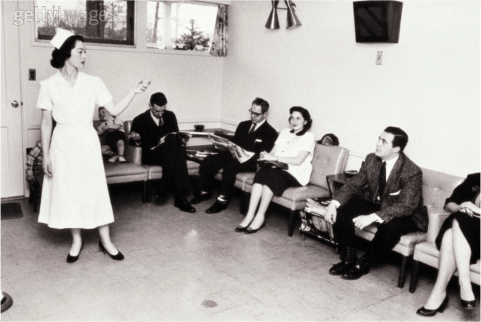
I love going to the doctor. It’s my absolute favorite place to meet new friends.

I especially like meeting new friends at the doctor’s when I feel really sick or have a painful injury. I like to shove the icky, hurty part of my body in stranger’s faces, so they’ll poke at it, while slapping me on the back.

Sometimes I’m just there for an annual check up and I feel fine physically, but I’m nervous. I’m worried that I’m going to sit in the waiting room all day and be late for work. I’m anxious that I’m going to get a mean doctor that will pinch me and talk to me about my BMI again.

When I’m really stressed, that’s when I like to look around to see if there are any people I can make friends with in the waiting room. And when I feel this way, there’s nothing I enjoy more than when other patients run up to me and ask me to do a few Zumba moves with them before it’s my turn to see the doctor.


Yep, I love being sick and nervous, in a tiny space, with no way out, and meeting new friends at the same time.

And see that quiet lady in the corner who’s nervously eating a 100 calorie pack of almonds and trying not to make eye contact with me? I asked her to arm wrestle while I was waiting to pay my bill, but she said “No thank you”.  The nerve!

So you know what I did? I turned to the receptionist and I said, in my best stage whisper, “Some people are so MEAN. I guess that patient’s not friendly, huh?”  I sure showed her how rude she was for telling me no.

SCRREEEEECH! Hold the phone. This is bananaballs, right? No one wants to do group aerobics in the waiting room at the doctor’s. No one goes to the doctor’s to meet a new BFF.

So why are so many people doing this with their dogs in the waiting room at the vet’s office?  If there’s ever a place where dogs need space from each other and the dog owners need to ask permission before their dog approaches another, it’s the vet’s office.

Seriously, why do I have to even explain this? But I do, because this happens constantly, every day, to DINOS owners at the vet.

Lots and lots of people seem to think that socializing at the vet is a good thing and dogs who can’t do that are “bad dogs”. Is it me, or do we have some totally out of whack expectations for dogs when they’re at the vet?

Dogs at the vet are sick, injured, anxious, stressed, or just plain don’t wanna play. Almost every dog at the vet is a DINOS (at least temporarily). It’s not the dog park. It’s a doctor’s office for dogs (and other small animals stuck in their carriers).


Next time you’re at the vet, keep in mind how much you would hate it if every time you went to the doctor’s office, you had to deal with a parade of “friendly” people who invaded your space, touching and poking at you, and talking non-stop. You would hate it and rightly so.

Common sense rules for the vet:

Keep your dog on leash when entering, leaving, waiting, and paying. That’s everything except the exam room.

Lock your flexi-leads. Don’t let dogs wander around, scaring cats and upsetting other dogs.

Ask permission before you allow your dog to approach another dog.

If they say “No”, just accept it.

Don’t call the other dog owner or the dog “mean”.

Don’t passive aggressively whisper about how “unfriendly” that other dog is.

News flash: When you do that, YOU’RE THE MEAN ONE. People go home and cry about how mean you were to them and their struggling dog.

To the staff at the vet’s office: please require and enforce the rule that all dogs must be on leash. Require that all small animals be secured in carriers. Stand up for your clients when other’s treat them badly by reminding everyone that the waiting room is not a dog park and there are sick, injured, and stressed pets in the room – they have a right to their personal space. It’s just safer that way.

And a final note to DINOS families: If you can, wait outside or in the car with your dogs. Ask the staff to let you know when a room is ready, then go directly into the exam room. Ask if there is a back entrance (there usually is) that you can use, so you can avoid the waiting room entirely. Let the staff know ahead of time that your dog needs space – there may be a particular time of the day when it’s slow and you’re less likely to run into crowds.

Fair enough, right? We can do it folks. Respect, compassion, manners – we’ve got that.

That’s Cool Dog.

It’s really hot in Maine today, which means it’s scorching in the rest of the country. I’m worried that everyone south of New Hampshire is bursting into flames as I write this.

So for all of you with hot dogs out there, here’s a few ideas to keep them cool today (if you can’t smuggle them into a movie theater for an afternoon of popcorn and ice-cold air conditioning):


Kool Collar

Fill this collar with ice and keep your dog’s body temp down while you’re out in the sun or stuck  inside a stuffy apartment. Yes, you can wear one too.

KoolCollars_001

Hurtta Cooling Coat 

Soak this  coat in cold water, wring it out, then put it on your dog. Keeps them cool as the water evaporates and it protects them from the sun. RuffWear also makes a similar coat.

Kool Dogz Ice Treat Maker

Keep your dog busy and cool for hours with this hunk o’ ice and toys.  Perfect for shelter dogs in outdoor kennels. You can also make one with stuff around the house. Learn how from Animal Farm Foundation here.

Kiddie Pool

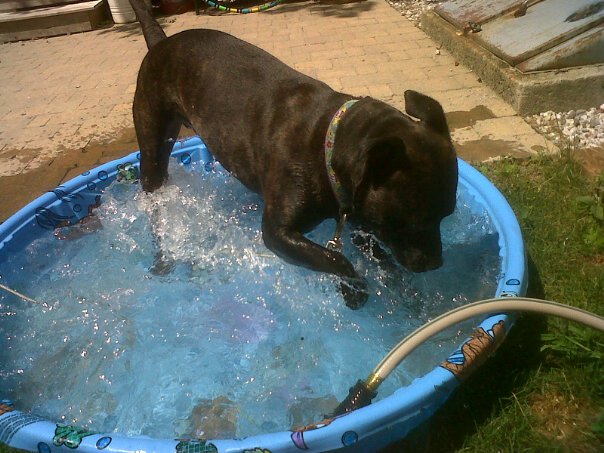
Boogie learned how to swim in a lake last summer, but we can’t get to a lake most days. For M-F swims, I’m all about the kiddie pool. Low tech. High fun.

Other low-tech ideas:

Freeze chicken or beef broth in ice cube trays for a tasty, cold treat. Put a cold, wet bandanna around your dog’s neck. Put some green beans or sweet potato slices in the freezer for a frozen snack. Feed them dinner from a frozen Kong.  Read the Polar Express out loud to them.

What are some of your favorite ways to keep your dogs cool on hot summer days? Do tell!


Speaking Dog with Photo Lab

I recently got a chance to contribute to a blog series about learning to “speak dog” hosted by my friends over at Photo Lab.

Here’s a little sneak peek of my guest blog, plus the fabulous photo they created to go with my post. You can read the rest over on their blog Tails from the Lab!

I’ve been dog walking for almost ten years…day after day, as I walk my pals, I encounter a real problem for us: many well-meaning people have no control over their dogs (or themselves). People allow their dogs to drag them across the street, forcing nose-to-nose greetings with strange dogs. Or they ignore leash laws and let their dogs run loose in designated on-leash areas.

When I encounter these scenarios I feel like I’m robbed of my ability to do what’s best for the dogs I’m walking. The dogs are telling me what they need – space – but I can’t always get it for them, because people aren’t respecting our boundaries. 

Read the whole post HERE.

DINOS in the House

So things are going to be a wee bit quiet in the land of dog walking and DINOS-loving for the next week or so. The gang and I are up to our wet noses in the insanity that is house hunting. Things are percolating with one house in particular – I don’t wanna say too much, since it’s a sure jinx. 

Things have been a *wee* bit busy. Like I’m under siege.

Anyway, what I wanted to tell you all is that every time I look at a house, I do it with DINOS in mind. How much space will my dogs have to run? How far away are the nearest neighbors? How much time should I spend sitting in my car, stalking this house, to see if there are loose dogs that run around these parts?


Yes, please.


As soon as things chill out, I’ll share how much living with DINOS (both my own and the dogs I walk) has impacted my home search and maybe we’ll spend some quality time talking about fences. Because I. can. not. wait. to have a fenced in yard. Gimme gimme.

Happy dog walking everyone!

Dog Bite Prevention Week: How to Safely Interact with Humans

Dog Bite Prevention Week is a favorite of mine –  every year there’s a ton of great advice floating through the interwebs.

Thanks to trainers, vets, and other dog pros, we know how to prevent dog bites: understand dog body language, manage dogs properly, socialize and train them, teach kids how to safely interact with dogs, don’t chain them in your backyard or let them roam unsupervised. Got it.

Here’s one more from me: Get fluent in human body language and communication.

Nothing for nothing, but is anyone else stunned at how often fellow humans completely ignore or miss huge, obvious cues from other humans who are trying to communicate on behalf of their dogs?

You know, the ones that are saying, “Please don’t come any closer!”

So, how come so many of us keep getting closer?

I feel like the dogs would benefit if we humans got better at communicating with each other. In that spirit, here’s my contribution to Dog Bite Prevention Week 2012.


How To Safely Interact with Humans and Their Dogs


Right there! Do you see it? It’s a human walking their dog.

In order to approach them safely, you must observe. Before you or your dog gets closer, let’s look at the human:

What can you tell from their body language and facial expressions?

Start with the eyes. Are they darting back and forth, looking for a way to escape? Are the human’s eyebrows furrowed and pinched? You’re witnessing signs of stress. Do not ignore them.

Scan their bodies and look at their hands. A human that is not comfortable being approached by a stranger will often raise one or both hands towards you. If you see body language such as an outstretched hand, palm towards you, this is a clear signal to stop!  Do not continue approaching.

http://www.flickr.com/photos/stevensnodgrass/3570379993/sizes/o/in/photostream/

credit: stevensnodgrass


Next, focus on their mouth. Is it open? Are sounds coming out? It is not unusual for a human who is feeling trapped to say: “Call your dog” or “My dog needs space.”

Occasionally, humans caught by surprise might have a hard time using their words. In that case, screams, shrieks, and expletives might be used.

Do not ignore these verbal warnings. Do not argue with the human. Do not tell them they are wrong and that it is ok for you to approach them because “All dogs love me” or “It’s ok, my dog is friendly“.

Listen to the exact words the human uses. This is a clear warning.

If you’re still not sure if you should approach, look closely at their feet. Are their feet facing towards you or have they turned to sprint in the opposite direction? When a human is running away from you, they are clearly signalling that they do not want to hang out.

Do not follow them across the street. This is not a game of chase.

In some cases, it can be difficult to read a human’s body language because it is so subtle. But the signs are always there, even if we don’t recognize them right away.

For example: you spot a human standing off to the side of a walking path. They may look relaxed, but study them at a bit closer. Are they standing in front of their dog? Are they giving their dog treats as you pass? These are signs that the human is busy working with their dog.

Tip: When someone sees you and then turns away from you, they’re just not that into meeting you.

But what if the human is hiding, you ask? Should I approach them then?

If you spot a human hiding behind a tree, car, or telephone pole. Do not make eye contact. Continue walking. Pretend that you do not see them and their dog. This human is cornered and making one last attempt to escape. If you approach you will be forcing them into a situation where they might feel trapped and bite you. Keep moving.


200255026-001

This person is not into you.


Sometimes we can’t help but have an encounter with humans and their dogs. If that happens to you, please do the following:

Do not flail your arms or shout.

Control your dog, so that they cannot approach them.

In a calm voice, always ask: “Can we meet your dog?” or “Is it ok if I say hello?”

Wait for the human to respond.

If they say no, do not force the situation. The human has clearly expressed a desire to be left alone. Do not ignore these signals.

Give them enough space to pass and keep moving.

Phew. That was close.


Well, there you have it folks. The last piece of the Dog Bite Prevention puzzle: Human Body Language. If we just pay a little more attention to each other’s signals and respect each other’s space, we’ll be doing our dogs a real solid.


Stuff Your Dogs Should Wear If…

I like to put stuff on dogs. I try to find real, legit reasons to put stuff on them, but sometimes, I just like to wrap dogs in towels and put their paws in my husband’s Doc Martins. So sue me. One of my favorite stuff-on-a-dog site is Trotterpup. Please enjoy it here.

All silliness aside, there are some really helpful things to put on your dogs.

So, in no particular order, here’s a list of  Stuff Your Dog Should Wear If…

They have a lot of energy: Backpack

If your dog is high energy and healthy enough to carry some weight, consider a backpack. Wearing a properly fitted backpack, loaded with a couple of soup cans (and by soup, I might mean beer), will help your uber energetic dog work twice as hard on the same stretch of terrain. That means you don’t have to work any harder, but your dog does. Nifty, eh? If you have one of those never, ever tired pups, the added weight will help them burn more steam and tire them out faster during your regular walks. Make sure to start off slow – introduce the backpack first, then add the weight gradually and top out at 25-30% of their body weight. Backpacks are also helpful: if your dog is calmer when they’re wearing their “working” gear, for turning your dog into a sherpa on hikes, and for carrying around litters of hitchhiking kittens.


They need a confidence boost: Thundershirt

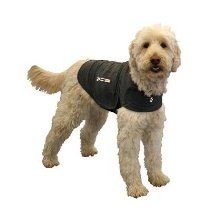
thundershirt

If your dog is afraid of thunderstorms then a Thundershirt makes a lot of sense, no? But these slim-cut tops are also good for helping dogs feel more secure, which makes them helpful for some reactive, anxious, and fearful dogs. So don’t keep the shirt on hold for storms and fireworks, go on and bust it out for daily dog walks too. Thundershirts are also helpful: if your dog needs some help during vet visits, for dogs that need barf bags during car trips, and for creating a svelte silhouette for dogs who are self-conscious about their pooch.


They need skin protection: T-shirt

If your dog sunburns easily, try covering them with a t-shirt (in addition to dog sunscreen) to give them some extra skin protection. Or if your dog has environmental allergies, consider putting them in a t-shirt for their trips outside. When you go back inside, take off their t-shirt and you’re taking off the pollen or whatever else they’re allergic to with the shirt (wipe them down with a damp cloth too). If your dog is really itchy or has a skin infection, try putting them in a t-shirt to protect their skin from their teeth or nails. Healing skin needs air too, so be sure to take it off and let them be nudists on the regular. T-shirts are also helpful for: telling people to back off, covering up big nips on mama dogs, and hiding a bad hair day.


They are your co-pilot: Doggles

If your dog likes to hang their head out of your car window, Doggles will protect their eyes from flying debris. That pretty much sums it up. Doggles are also helpful for: dogs that ride in side cars, dogs that are blind and walk into things (it protect their eyeballs), and for any dog that likes attracting a lot of attention at stop lights.


They are scratching themselves raw: Baby Socks

If your dog has bad allergies and they’re scratching themselves to pieces, try covering their paws with baby socks. Allergies can take a really long time to sort out (both the cause and the solution) and dogs who are itchy will sometimes scratch their skin into ribbons, causing secondary skin infections. Try covering their paws with baby socks (size 0-3 months with sticky tread on the bottom usually works), then secure the socks to their ankles with no-stick vet tape. They’ll still scratch, but their covered nails won’t cause so much damage. Baby Socks are also helpful for: dogs that chew their paws, broken toe nails that are healing, and for dogs that can’t stop reenacting that scene from Risky Business.


They just had surgery: Pro Collars

pro collar

If you have a dog that is recovering from surgery, the vet may send you home with the plastic e-cone of shame, but most dogs can’t stand them. It messes with their peripheral vision, scrapes against things, and freaks them out in general. Plus, it’s cheap plastic that probably smells and feels yucky. If your dog will need to wear a cone for a bit, like after ACL surgery, buy a Pro Collar. It looks like a hemorrhoid cushion or a neck rest for travelling (are those the same things?) but it works. The best part is that your dogs can still see in every direction, they can pick up toys and food, and it’s comfy for them to rest their heads on while they sleep. For dogs that are afraid of a regular cone, this is much less scary. Pro Collars are also helpful for: dogs that have rashes they shouldn’t be licking, little dogs that squeeze through fences, and dogs with hemorrhoids who need a soft cushion to sit on.


They need to get adopted:  Tutu

Peaches the Pit Bull Photo Credit: Keith Kendrick

If  you have a foster dog or a shelter dog that isn’t getting a lot of interest from adopters, put a tutu on them and take them out on the town. Ridiculous though it may be, that dog is about to get more attention in one walk than it has in a month of “adopt me” vest outings. Be sure to bring business cards with your dog’s photo and info to hand out to anyone who stops to swoon over your pup. Yes, this is for boy dogs too (who cares about gender? this is about getting attention!). Tutus are also helpful for: dogs in parades, dogs doing humane education work with kids, and dogs that dream of starring in the Black Swan remake.


And that’s not all! There are muzzles, wigs, boots, sweaters, and plenty of other stuff dogs can wear.  I already feel a Stuff Dogs Should Wear If (Part 2) coming on…

What stuff does your dog wear? I want to see photos of them wearing their favorite stuff, so post photos over on the DINOS Facebook page for me to squeal at. Please?!