Skip to content

Posts tagged ‘training’

Six Tips for Safer, Happier Dog Walking

It’s National Walk Your Dog Week and to celebrate, I got the chance to guest blog for a wonderful nonprofit called Found Animals Foundation.

The folks at FAF totally get DINOS. So they wanted to help spread the message that even though we’re all really excited about Walk Your Dog Week, we still need to remember to be respectful and responsible too.

I love it when the DINOS messages spreads to a new group of dog lovers!

If you’re looking for a polite way to talk to someone you know about their leash problems, my guest blog: Six Tips for Safer, Happier Dog Walking  is the perfect intervention.  Read it here now.

When you visit the FAF blog to read and share it, don’t forget to let FAF know you appreciate them spreading the DINOS message: DINOS are GOOD dogs, they just need space!

p.s. Need something polite and informative to give to strangers while you’re out dog walking? I got you. Check out my pocket-size handouts on Flickr and now available on Cafe Press.

Happy Boogie Day!

Today is Boogie’s Gotcha Day aka the day we adopted him. Well, sort of.

Today is actually the day when I went in to work on my day off,  back when I worked at the shelter, and said, “It’s my birthday, so my husband told me I could bring home any dog I wanted. And I pick Stoli.”  And then I loaded this worried little pit bull into my car and took him home to “foster” for a while. That was four years ago.

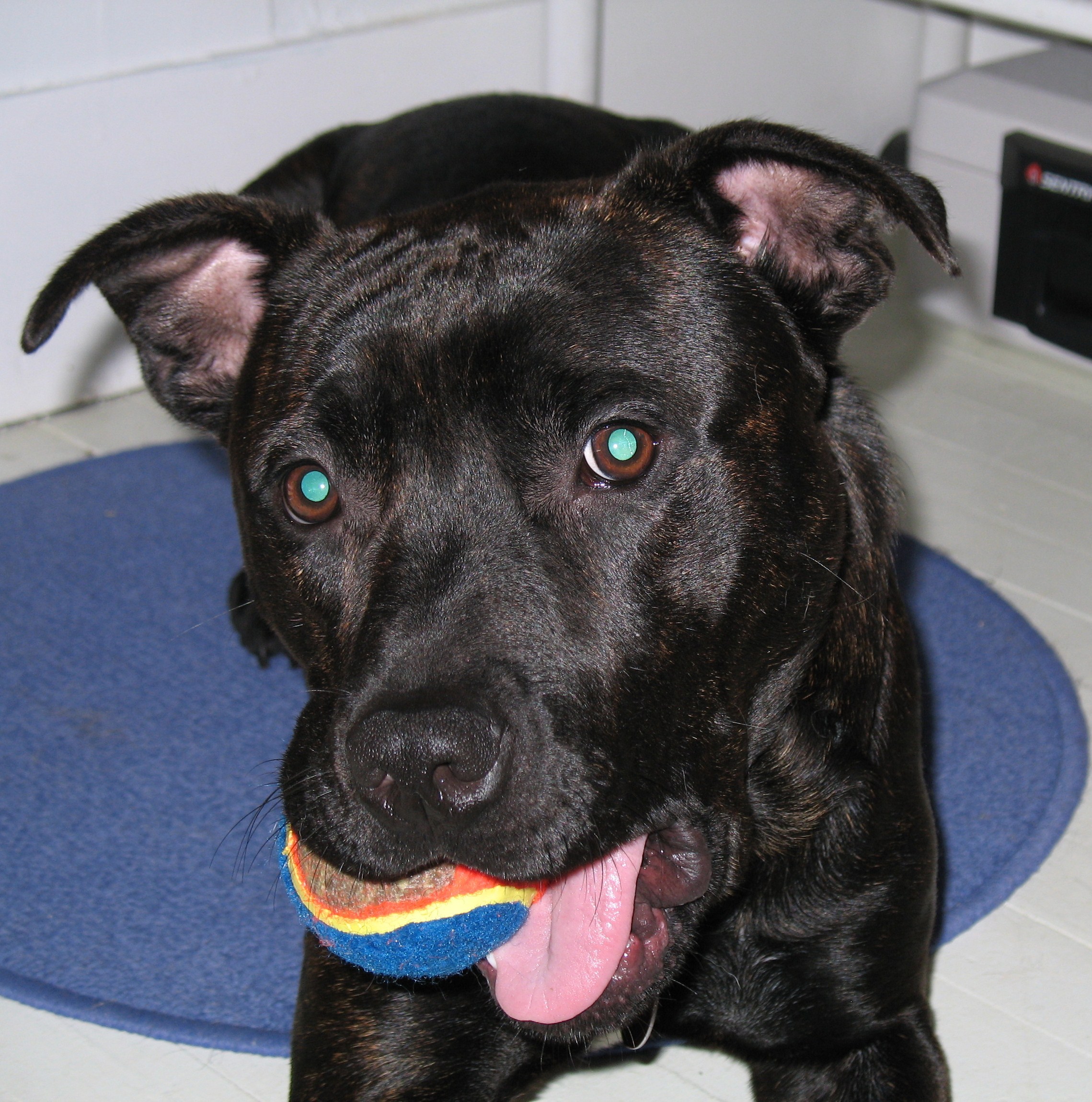
Here he is on his first day at home with what I would soon discover is the thing that makes him feel most safe in the world: a ball.

Ball = I’m OK

Back then, Boogie was really afraid of everything: cell phones, cameras, coffee cups, people dancing, the cats, strangers, other dogs…you get the drill. Despite all that, he was (still is) the sweetest, most handsome little man in the world.

And even though he turned out to be a DINOS , Boogie is such an easy dog in all the ways that matter most to us. He didn’t need to be potty trained. He’s gentle with our older dog Birdie. He’s not destructive and doesn’t mind being left home alone. He sweet on our three cats. He’s a couch potato, so he doesn’t need a lot of exercise (even as a youngster). And he’s happy to hang out on his bed, chewing a bone and entertaining himself all evening. All he asks is that we play ball with him for a little while every day.

I know a good deal when I see one, so we stopped “fostering” him and adopted Boogie that fall. Our little gang has been complete ever since.

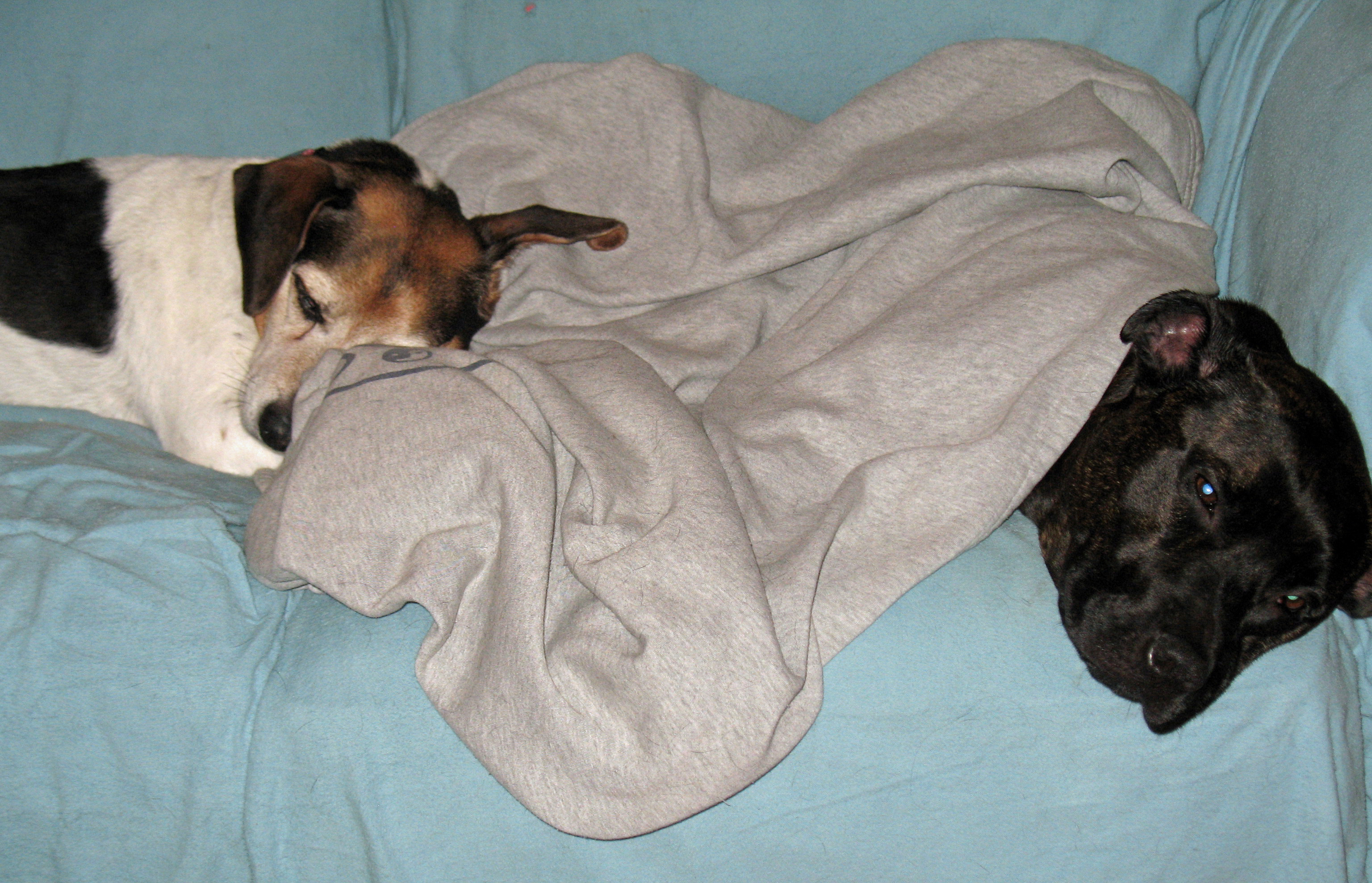
Boogie is a really happy dog at home. The world he lives in is on the small side, but he’s got Birdie, three cats, and the two of us to love on him every day. Plus two pet sitters that think he’s the bees knees, a gang of friends from all over the East Coast and a Grandma who looks forward to coming to stay with him. Plus lots of naps:

Here’s the thing. One of the reasons we’re all so happy is because Boogie’s world is purposely small.

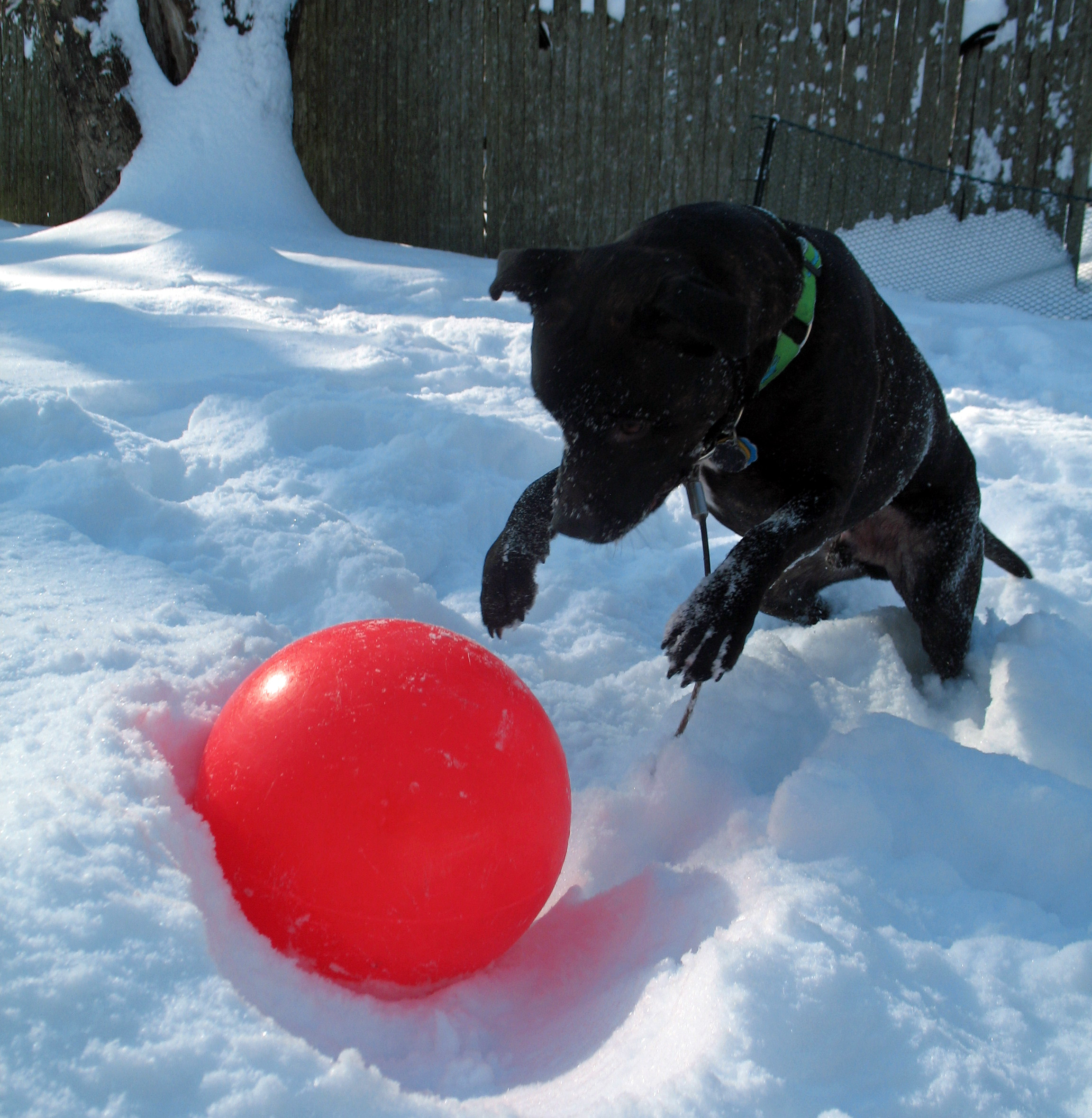
To be honest, I don’t do a lot of training with Boogie anymore, though there is stuff we’re working on. I’m kind of a slacker and I don’t really enjoy training dogs (I’ll do it, I’d just rather be doing something else). For example, we’re not constantly working on his leash reactivity, like we used to when we lived in a city together. The first couple of years, we got all of our exercise by walking on leash, so leash skills were a priority. But this summer we bought Boogie a two acre yard, so he can chase balls until the sun sets.

We live in the middle of nowhere now. Walks are for pleasure and we can choose when and where we want to go. They’re no longer a part of our daily exercise (that’s where a flirt pole comes in). So I’ve slacked on his leash skills. Yep, that means I’m a dog walker that doesn’t walk my dog every day.

I have no doubt that if I put in more effort, he would be less leash reactive, but on a day-to-day basis, everything is working for our family. I think that’s important for all us: find out what works for you and your dog, so that everyone is enjoying life and each other’s company. Then don’t feel bad about it if it’s not exactly the same as what the next person is doing. Is your dog safe and happy? Is everyone around your dog safe and happy? Then you’re doing something right. Plus, happy people tend to keep their dogs.

Do what you need to do to set your dog up to succeed at his own pace and try not to make yourself miserable either. That might look different depending on your individual dog or the environment you live in. For Boogie, that means he hangs out at home some days, while we take Birdie on more public adventures.  For other dogs, it might mean lots of training classes and regular walks with a social club. Figure out what works for you and your dog.

I don’t have anything to brag about – no titles or certifications. Except that we’re all really happy together and Boogie isn’t stressed out. It’s a simple life for our little man and it works for all of us. And that feels like a success to me.

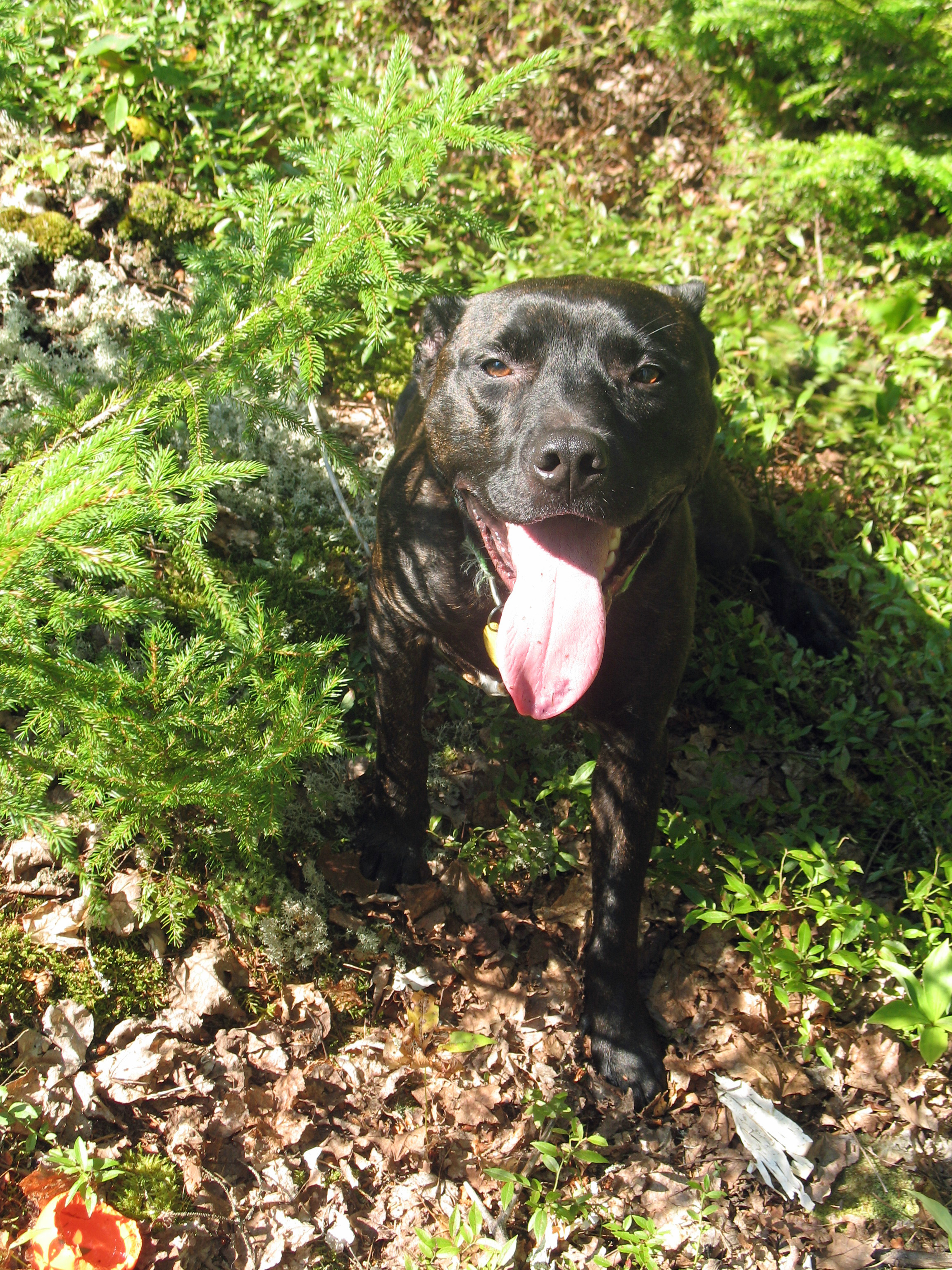
But just in case you think we lock Boogie in a closet all day: even though we keep things simple at home, it doesn’t mean we don’t have fun together or try new things! We just got back from our summer vacation in the woods.

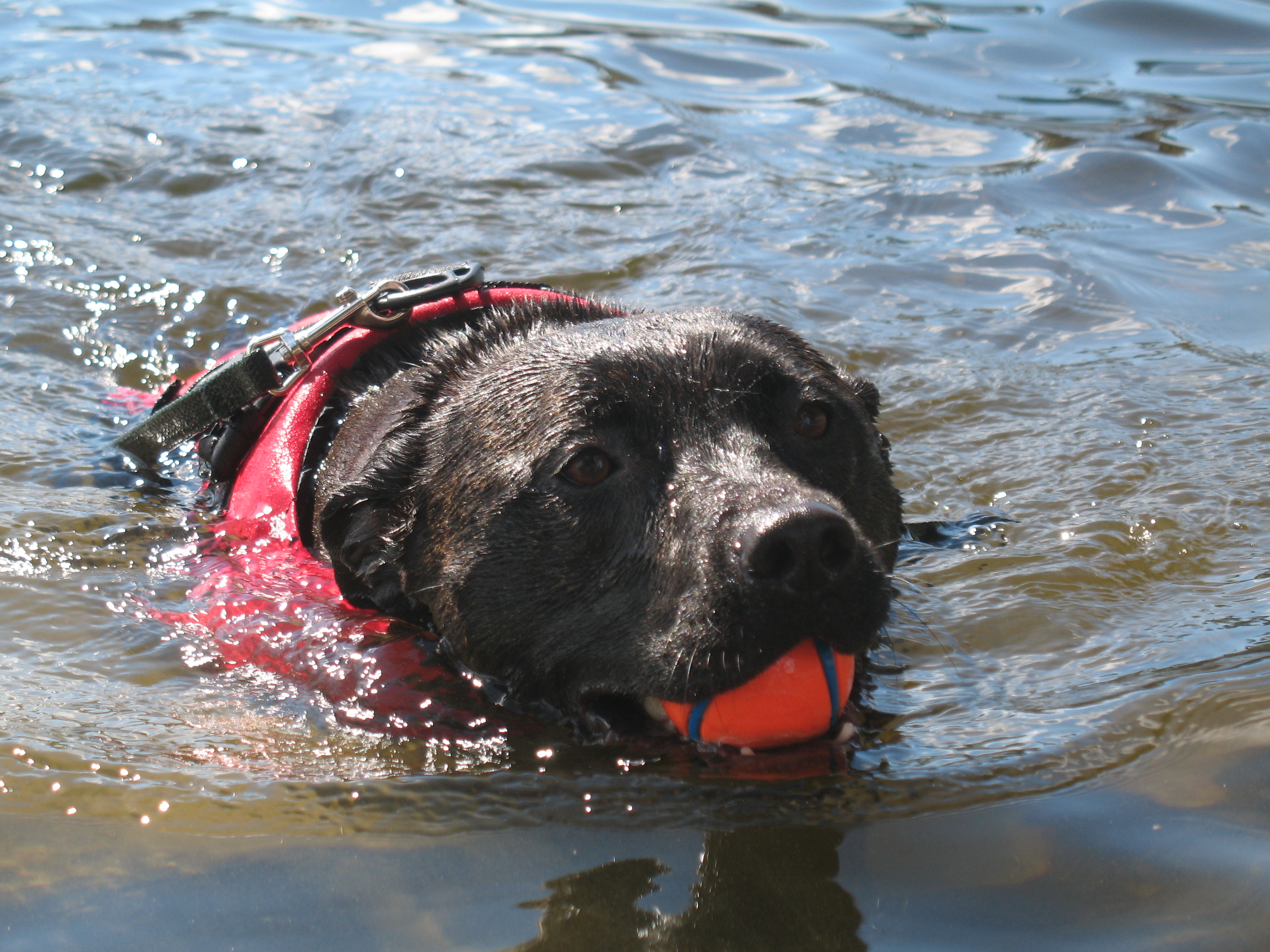
Last summer we taught Boogie how to swim. He was very scared of the water, but he went in because we were there to cheer him on and…his ball was in the water.  No ball will ever be left behind on Boogie’s watch!

This year, he got really brave and learned to jump off a dock. He was so scared and made such crazy crying noises as he watched his ball float away (it sounded like he had a rubber chicken stuck in his throat), that I thought the entire town was going to call animal control to help him.

Finally, he put his front paws on the top rung of the dock’s ladder and plopped into the lake like a little hippo bull. Next thing we knew, he was running and JUMPING off the dock, faster than we could even throw the ball.

Not every day is a dock diving day for us, but we make small steps, at our own pace, each week in the right direction. These days coffee cups, cameras, and overnight guests don’t scare Boogie. He’s almost five years old now and he’s a good boy. He makes me so happy.

Happy Gotcha Day Boogie. You’ll always be my very best birthday present.

The Inventor of Spray Cheese is My Hero.

Today I splurged and bought myself a veterinary house call.  It was time for Boogie’s annual exam and we’ve been searching for a new vet, so I figured that since we’re switching vets anyway, why not upgrade to an in-house visit?

Last year’s vet visit was a disaster (see: 2011 stink-a-thon) and we figured a visit at home would not only help Boogie feel more relaxed, but it would nice for us too: we have 5 pets and I’m tired of airing out my car for three months after my cats explode in their crates from car sickness. Dude, have you ever tried to get cat pee smell out of a car’s upholstery? Years. It takes years.

The vet was just here this afternoon, so I figured I’d give you guys an update, for anyone following the saga of the wee Boogie.

We didn’t take this vet visit lightly. Prior to today, we’ve been practicing different restraints and approaches to see what’s most comfortable for Boogie and trying to counter condition him to some stuff, like blood draws. Many fearful dogs prefer a blood draw from their rear leg, because it’s scary having people up front, near their heads, but after a lot of counter conditioning (per Sophis Yin’s great resource), Boogie wasn’t getting any more comfortable with it. So we knew we needed to practice restraints for a front leg and maybe a jug draw.

Earlier today, as the clock ticked closer to lift off, I gave Boogie a wheelbarrow of calming treats and exercised him for an hour right before they arrived.

Ok, so picture this: the vet pulls into the driveway.  We started off out in the yard. Boogie was freaked out when the vet and the vet tech (Hi Denise!) arrived. This is something we used to deal with a lot, but in the last year, thanks to lots of practice, he’s started to enjoy meeting new people in the yard. So it was a bummer that it was a rocky start. I’ll chalk it up to being in a new house, since we just moved in a couple of weeks ago and these were our first visitors. 

To let him cool off, we let him hang out with his ball and focused on our other dog, Birdie, for a few minutes.  Birdie loves meeting new people and wanted to show the vet the new cyst she grew on her head. She was really proud of it.

Then we went inside and put Boogie’s basket muzzle on. Boogie needed vaccinations, a blood draw, and a lump inside his ear examined. While he was lying on his bed, getting fed a steady stream of Easy Cheese by me, the vet looked in his ear and gave him one shot, then I picked him up (he was too nervous to leave his bed, but we had to get him on all fours) and placed him between my legs. I loosely restrained him and gave him some distracting-noogies on his forehead while the vet gave him another vaccination in his hip.  Lastly, we restrained him for a front leg (!) blood draw. I rubbed his forehead a lot, feed him more cheese, and told him he was a champ. 


Did I ever tell you, you’re my hero?


Did Boogie growl during the exam? You bet.

Did he struggle or try to get away? Nope.

Did he eat half a can of cheese? Oh yeah. I heard the nozzle sputter and cursed myself for not having a spare can of cheese on hand (rookie mistake). Luckily I had a Lickety Stick handy. Mental Note: don’t cheap out on the spray cheese next time. Buy a case.

After the examination, we took Boogie’s muzzle off and he approached the vet and vet tech with a wagging tail. Not a bad way to end the visit.

Wanna know one of the very best parts? Start to finish, I think they were here for 15 minutes. Normally, going to the vet takes 2 hours (packing them up, driving them there, waiting in the car, the exam, and return trip. Plus post-car vomit, poop, and pee detail.  And then a stress-induced coma nap.

So the fact that I’m writing this to you all right now, while my husband picks up some Thai food, is a victory in and of itself.

But back to Boogie. I really appreciated that, rather than scold Boogie for growling, the vet just kept examining Boogie while I fed him treats. Hopefully, that approach will begin to change Boogie’s emotional response to being handled by a vet. One of these days, Boogie will need more vet care than just an annual exam, and I’m hoping we can start making it a more positive experience for him.

What was the most helpful thing we did in preparation for the visit?  Hands down it was teaching Boogie to love his muzzle.

All the other stuff helped a wee bit, but the most helpful counter conditioning that we did, prior to this visit, was teaching Boogie that his muzzle is the best thing ever. We started by letting him use it as a giant ice treat (aka the Kuzzle), then had him wear it for very short periods, and then eventually for longer lengths of time and during pretend exams, all while being hosed by Easy Cheese.  We’re talking many, many weeks of cleaning cheese out of his muzzle. It wasn’t overnight.

So the end report: Home visits are super great. Get one. It’s like going to spa, only there’s a stool sample involved. And this new vet is welcome back any time. Most of all – muzzles are really handy. Teach your dog that it rains cheese or peanut butter or liver when they wear one.

Oh, and now for the really good news: tomorrow we leave for a  family vacation with the dogs. Boogie earned it and we can’t wait to take him swimming. Here he is on last year’s summer vacation:

See you all in a week!

Dog Bite Prevention Week: How to Safely Interact with Humans

Dog Bite Prevention Week is a favorite of mine –  every year there’s a ton of great advice floating through the interwebs.

Thanks to trainers, vets, and other dog pros, we know how to prevent dog bites: understand dog body language, manage dogs properly, socialize and train them, teach kids how to safely interact with dogs, don’t chain them in your backyard or let them roam unsupervised. Got it.

Here’s one more from me: Get fluent in human body language and communication.

Nothing for nothing, but is anyone else stunned at how often fellow humans completely ignore or miss huge, obvious cues from other humans who are trying to communicate on behalf of their dogs?

You know, the ones that are saying, “Please don’t come any closer!”

So, how come so many of us keep getting closer?

I feel like the dogs would benefit if we humans got better at communicating with each other. In that spirit, here’s my contribution to Dog Bite Prevention Week 2012.


How To Safely Interact with Humans and Their Dogs


Right there! Do you see it? It’s a human walking their dog.

In order to approach them safely, you must observe. Before you or your dog gets closer, let’s look at the human:

What can you tell from their body language and facial expressions?

Start with the eyes. Are they darting back and forth, looking for a way to escape? Are the human’s eyebrows furrowed and pinched? You’re witnessing signs of stress. Do not ignore them.

Scan their bodies and look at their hands. A human that is not comfortable being approached by a stranger will often raise one or both hands towards you. If you see body language such as an outstretched hand, palm towards you, this is a clear signal to stop!  Do not continue approaching.

http://www.flickr.com/photos/stevensnodgrass/3570379993/sizes/o/in/photostream/

credit: stevensnodgrass


Next, focus on their mouth. Is it open? Are sounds coming out? It is not unusual for a human who is feeling trapped to say: “Call your dog” or “My dog needs space.”

Occasionally, humans caught by surprise might have a hard time using their words. In that case, screams, shrieks, and expletives might be used.

Do not ignore these verbal warnings. Do not argue with the human. Do not tell them they are wrong and that it is ok for you to approach them because “All dogs love me” or “It’s ok, my dog is friendly“.

Listen to the exact words the human uses. This is a clear warning.

If you’re still not sure if you should approach, look closely at their feet. Are their feet facing towards you or have they turned to sprint in the opposite direction? When a human is running away from you, they are clearly signalling that they do not want to hang out.

Do not follow them across the street. This is not a game of chase.

In some cases, it can be difficult to read a human’s body language because it is so subtle. But the signs are always there, even if we don’t recognize them right away.

For example: you spot a human standing off to the side of a walking path. They may look relaxed, but study them at a bit closer. Are they standing in front of their dog? Are they giving their dog treats as you pass? These are signs that the human is busy working with their dog.

Tip: When someone sees you and then turns away from you, they’re just not that into meeting you.

But what if the human is hiding, you ask? Should I approach them then?

If you spot a human hiding behind a tree, car, or telephone pole. Do not make eye contact. Continue walking. Pretend that you do not see them and their dog. This human is cornered and making one last attempt to escape. If you approach you will be forcing them into a situation where they might feel trapped and bite you. Keep moving.


200255026-001

This person is not into you.


Sometimes we can’t help but have an encounter with humans and their dogs. If that happens to you, please do the following:

Do not flail your arms or shout.

Control your dog, so that they cannot approach them.

In a calm voice, always ask: “Can we meet your dog?” or “Is it ok if I say hello?”

Wait for the human to respond.

If they say no, do not force the situation. The human has clearly expressed a desire to be left alone. Do not ignore these signals.

Give them enough space to pass and keep moving.

Phew. That was close.


Well, there you have it folks. The last piece of the Dog Bite Prevention puzzle: Human Body Language. If we just pay a little more attention to each other’s signals and respect each other’s space, we’ll be doing our dogs a real solid.


Stuff Your Dogs Should Wear If…

I like to put stuff on dogs. I try to find real, legit reasons to put stuff on them, but sometimes, I just like to wrap dogs in towels and put their paws in my husband’s Doc Martins. So sue me. One of my favorite stuff-on-a-dog site is Trotterpup. Please enjoy it here.

All silliness aside, there are some really helpful things to put on your dogs.

So, in no particular order, here’s a list of  Stuff Your Dog Should Wear If…

They have a lot of energy: Backpack

If your dog is high energy and healthy enough to carry some weight, consider a backpack. Wearing a properly fitted backpack, loaded with a couple of soup cans (and by soup, I might mean beer), will help your uber energetic dog work twice as hard on the same stretch of terrain. That means you don’t have to work any harder, but your dog does. Nifty, eh? If you have one of those never, ever tired pups, the added weight will help them burn more steam and tire them out faster during your regular walks. Make sure to start off slow – introduce the backpack first, then add the weight gradually and top out at 25-30% of their body weight. Backpacks are also helpful: if your dog is calmer when they’re wearing their “working” gear, for turning your dog into a sherpa on hikes, and for carrying around litters of hitchhiking kittens.


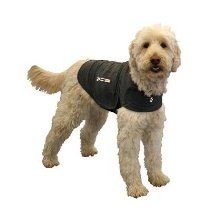
They need a confidence boost: Thundershirt

thundershirt

If your dog is afraid of thunderstorms then a Thundershirt makes a lot of sense, no? But these slim-cut tops are also good for helping dogs feel more secure, which makes them helpful for some reactive, anxious, and fearful dogs. So don’t keep the shirt on hold for storms and fireworks, go on and bust it out for daily dog walks too. Thundershirts are also helpful: if your dog needs some help during vet visits, for dogs that need barf bags during car trips, and for creating a svelte silhouette for dogs who are self-conscious about their pooch.


They need skin protection: T-shirt

If your dog sunburns easily, try covering them with a t-shirt (in addition to dog sunscreen) to give them some extra skin protection. Or if your dog has environmental allergies, consider putting them in a t-shirt for their trips outside. When you go back inside, take off their t-shirt and you’re taking off the pollen or whatever else they’re allergic to with the shirt (wipe them down with a damp cloth too). If your dog is really itchy or has a skin infection, try putting them in a t-shirt to protect their skin from their teeth or nails. Healing skin needs air too, so be sure to take it off and let them be nudists on the regular. T-shirts are also helpful for: telling people to back off, covering up big nips on mama dogs, and hiding a bad hair day.


They are your co-pilot: Doggles

If your dog likes to hang their head out of your car window, Doggles will protect their eyes from flying debris. That pretty much sums it up. Doggles are also helpful for: dogs that ride in side cars, dogs that are blind and walk into things (it protect their eyeballs), and for any dog that likes attracting a lot of attention at stop lights.


They are scratching themselves raw: Baby Socks

If your dog has bad allergies and they’re scratching themselves to pieces, try covering their paws with baby socks. Allergies can take a really long time to sort out (both the cause and the solution) and dogs who are itchy will sometimes scratch their skin into ribbons, causing secondary skin infections. Try covering their paws with baby socks (size 0-3 months with sticky tread on the bottom usually works), then secure the socks to their ankles with no-stick vet tape. They’ll still scratch, but their covered nails won’t cause so much damage. Baby Socks are also helpful for: dogs that chew their paws, broken toe nails that are healing, and for dogs that can’t stop reenacting that scene from Risky Business.


They just had surgery: Pro Collars

pro collar

If you have a dog that is recovering from surgery, the vet may send you home with the plastic e-cone of shame, but most dogs can’t stand them. It messes with their peripheral vision, scrapes against things, and freaks them out in general. Plus, it’s cheap plastic that probably smells and feels yucky. If your dog will need to wear a cone for a bit, like after ACL surgery, buy a Pro Collar. It looks like a hemorrhoid cushion or a neck rest for travelling (are those the same things?) but it works. The best part is that your dogs can still see in every direction, they can pick up toys and food, and it’s comfy for them to rest their heads on while they sleep. For dogs that are afraid of a regular cone, this is much less scary. Pro Collars are also helpful for: dogs that have rashes they shouldn’t be licking, little dogs that squeeze through fences, and dogs with hemorrhoids who need a soft cushion to sit on.


They need to get adopted:  Tutu

Peaches the Pit Bull Photo Credit: Keith Kendrick

If  you have a foster dog or a shelter dog that isn’t getting a lot of interest from adopters, put a tutu on them and take them out on the town. Ridiculous though it may be, that dog is about to get more attention in one walk than it has in a month of “adopt me” vest outings. Be sure to bring business cards with your dog’s photo and info to hand out to anyone who stops to swoon over your pup. Yes, this is for boy dogs too (who cares about gender? this is about getting attention!). Tutus are also helpful for: dogs in parades, dogs doing humane education work with kids, and dogs that dream of starring in the Black Swan remake.


And that’s not all! There are muzzles, wigs, boots, sweaters, and plenty of other stuff dogs can wear.  I already feel a Stuff Dogs Should Wear If (Part 2) coming on…

What stuff does your dog wear? I want to see photos of them wearing their favorite stuff, so post photos over on the DINOS Facebook page for me to squeal at. Please?!


Meet the Kuzzle

Boogie isn’t a huge fan of going to the vet (we’ll save that story for another day). In order to make vet visits a little less stressful for everyone, I’ve been working on getting Boogie more comfortable wearing a muzzle, just in case he needs it. And while he already tolerates wearing his basket muzzle, I’d like for him to have a more positive association with it.

A few months ago I read about “muzzle-cicles” in Grisha Stewart’s BAT book (she has all kinds of great muzzle related advice – check it out) where she describes filling a basket muzzle with food, freezing it, and using it like a Kong.

I figured Boogie would enjoy sticking his snout into the basket to enjoy some crazy-good snacks and doing so just might help him fall in lust with his muzzle, bearer of frozen delights.

I thought I’d give that a try. Here’s how:

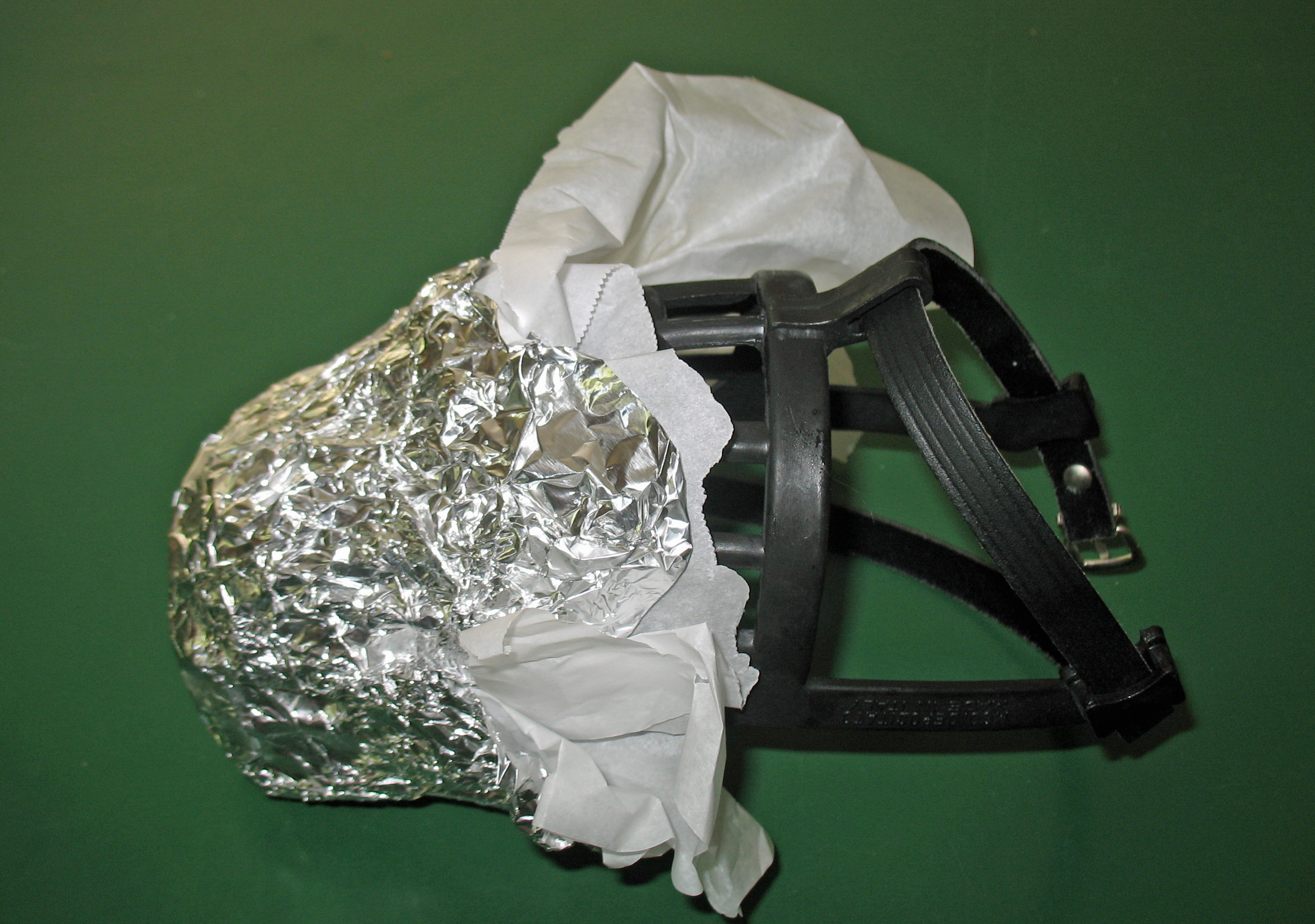
First, wrap the outside of the muzzle in plastic wrap to form a barrier, so the food doesn’t fall out of the sides. I was out of plastic wrap, so I used a piece of wax paper, then covered that in tin foil so I could smush it on there real good (highly technical, no?):

Then I filled it with apple slices at the bottom and a mixture of kibble and wet food. To guild the lily, I spread some peanut butter at the opening. And freeze!

Behold the Kuzzle. 

Or maybe it’s a Mong?  Either way, you’ve got yourself a frozen Muzzle/Kong type treat:

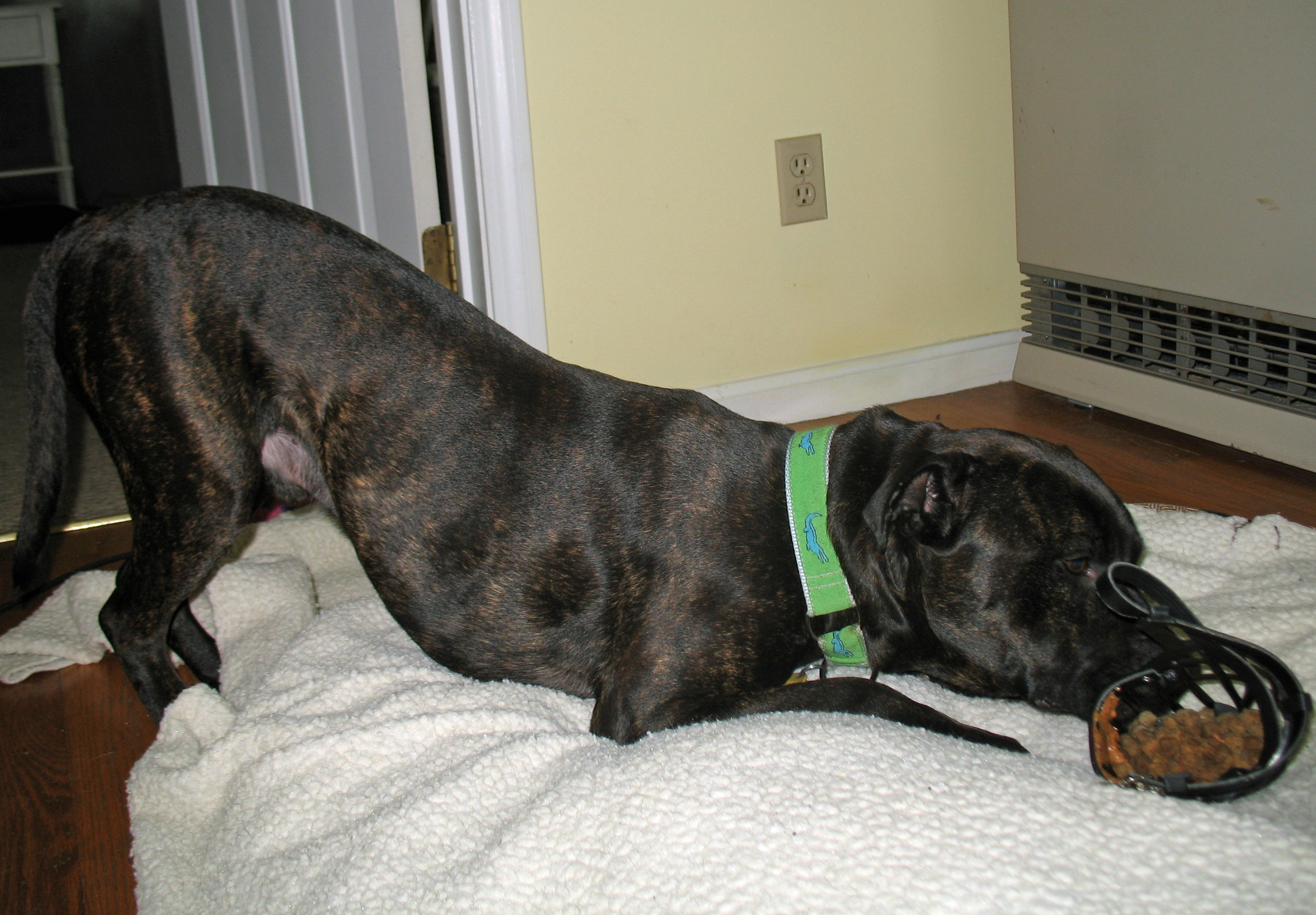
Boogie was wary of it at first, as he is with all novel objects. He licked the outside of the Kuzzle for a while, keeping his tush in the air, just in case he needed to make a quick escape from this odd duck.

Eventually, he settled down on his bed and enjoyed the Kuzzle in all its glory. After lying down and licking away, he stood back up to get some traction so he could score the last bits of food.

He ate it all, then tried to eat the Kuzzle itself.  So my advice is to carefully watch your dogs if you do give this a try. It’s a quick jump from frozen treat to new rubber chew toy.

I’m not sure if this will pay off in the long run, but I’m going to give it a try a few more times in the hopes that Boogie will get all wiggly at the sight of his new favorite treat dispenser.

By the way, Boogie is camera shy, so taking photos of him didn’t exactly help him feel comfortable. Next time, he’ll get to romance the Kuz in private – no paparazzi.

Update: Boogie loves his basket muzzle and wears it happily these days. Huzzah for the Kuzzle!


What about you guys? Anyone do some creative Kuzzling or muzzle tricks at their house?

Looking for muzzles, the BAT book, and more? Check out the Resources on the Dogs In Need of Space website!

kuzzle (1)

How to Score a Dog Bite: The Joggers and Bikers Edition

Hi there. You look really fit. All tan and muscle-y and stuff. Oh, it’s because you’re a jogger. You look like a long distance kind of dude. And you’re a cyclist too? Well aren’t you the picture of health.

What was that? I’m sorry, I don’t think I heard you right. Did you just say you really want to get bit by a dog?

You did. Um, you know that’s crazy right? No one likes dog bites. They kinda hurt. Ok, ok. You really want to get bit, huh?

Well, since you asked…

So You Wanna Get Bit By a Dog: The Joggers and Bikers Edition

If you really want to get bit by a dog while you’re jogging:

Scout out a narrow trail, filled with pedestrians and dog walkers. With no audible warning, sprint up behind a dog, passing it so closely that your personal gust o’ running wind parts their fur.

The surprised dog, startled by a total stranger rushing them from behind, will likely be one of the following: scared, threatened, excited, or spun around and confused.

You’ve increased your chances of getting bit. Well done. If you aren’t too busy bleeding, don’t forget to check over your shoulder. You may not have scored that dog bite you’re bent on getting, but you’ll get a good chuckle at the dog walker who is now struggling to calm her startled dog. Score!

Did you see me scare the crap out of that dog? High five bro!

Not into doing it from behind? Try sprinting at a strange dog head on! When you spy a dog strolling on leash, pick up your pace and run right at the dog. Most dogs will think you’re coming to hurt them, hurt their human, or play with them.

Either way, you’ve got their attention now! Bravo. Look forward to lunging and barking. Fingers crossed for that dog bite you’re obsessed with getting.

Like riding bikes? Why not do it on a crowded sidewalk or walking trail, filled with pedestrians and dogs? There’s nothing that screams, “I want a dog bite!” like speeding past a dog who has no room to escape you and your hot wheels.

For extra points, scream at the dog walker for not getting out of your way. What do they think they’re doing walking on that sidewalk? They should stay out in the road with the cars….where it’s safe!

Obviously, I’m kidding here. Don’t ever do this stuff. Stop it right now.

For real: Can we talk about how crazy it can be negotiating bikes and joggers with our dogs?

They way they charge at our dogs is like some special brand of stupid. They’re just begging for a dog bite.

And I happen to know that they can’t stand us either. I love checking the search terms that people plug in to find my blog. I’ve gotten a bunch of search terms that go something like this: ‘”I hate dogs while I’m jogging” and “I want to run over dog walkers with my bike and then back up and do it again, while ringing my dumb bell.”

Ok, not the second one so much, but I do see the first one a lot – joggers don’t like dealing with our dogs any more than we like dealing with joggers.

If we’re both miserable, why can’t we call it a truce and end this perpetual Fight Club we’re in with each other?

Here’s what I propose:

Joggers: if you see a dog, go wide. Do not run directly into, up to, or past a strange dog. Exit the sidewalk and run in the street. For like 10 feet. Then you can get back on. No biggie. If you’re trapped on the path, slow down and walk. I can hear you guys now: “Walk?! I’m a runner!” Fine.

At the very least, say something clear and understandable from a distance, like “INCOMING JOGGER BOMB ON YOUR LEFT!” or whatever you think will be the best way to alert a dog walker that you are coming up from behind and they need to move over. Please don’t heavy breathe a polite, quiet, “excuse me”, at the exact same time you’re passing us. That doesn’t give us enough time to react. I’m usually thinking about my next snack while I’m dog walking. Please give me enough time to snap out of my cupcake cloud and move over.

That’s all we want, really. The chance to move out of your way. Cuz we like our space.

And if you run with your dog, keep them close to you. Don’t let them run right up to, squeeze by, or surprise strange dogs.

Bikers: Get off the sidewalks. Period. Unless you’re in elementary school, it’s time to suck it up and ride in the streets. It’s just not fair that pedestrians have to contend with bikers on sidewalks. Especially on crowded city streets. This actually has nothing to do with dogs. I’m saying this for all of us: dog walkers, senior citizens, children, people who dislike being run over.

If you think it’s too dangerous to ride in the streets (I feel you on this, by the way – I was terrified to ride my bike in the city), take the subway. And don’t you dare give me lip if I’m in your way and don’t move over fast enough. These aren’t called bikewalks.

The City of Evanston gets it. Those people look really happy.

Dog walkers: We need to behave too. Don’t let your dogs lunge at or jump on joggers and bikers, if you can help it (meaning – you weren’t caught completely off guard). If they’re giving you space, be thankful and control your dogs. Keep your dogs on leash. Retract your flexi leads.  At home, contain your dogs in your yards by fence or lead, so that they can’t chase people.  Get off the phone and take off the headphones, so you can hear what’s going on around you. Be good, responsible dog owners.

That’s not so bad, is it?

No one wants to get bit. No one wants their dogs to bite someone. Instead of creating the prefect storm for a dog bite: charging and startling an unfamiliar dog, let’s work together to set dogs and humans who like to sweat in public up for success. We can do it – this whole being polite and giving each other space thing – I just know it.

(p.s. I know you guys know this already, but don’t be silly about what you read here. That stuff in the beginning was a joke. You will not hold the author of this blog responsible for any incidents related to the materials published here. www.notesfromadogwalker.com assumes no liability or responsibility for your actions.)

The Flirt Pole: Dog Toy or Life Changer?

I’m headed out for a week of pet sitting in a neighborhood that’s overflowing with loose, sometimes aggressive dogs. I’m not worried. Here’s what I’m packing:

Why the flirt poles? Because in addition to driving out of the neighborhood to walk in a safer area, I also want a fun way to exercise the dogs I’m caring for…without having to leave their fenced in yard. Sometimes walks just aren’t all they’re cracked up to be. I know you feel me on this.

Guys, I want you to meet your new BFF. Introducing the The Flirt Pole:


flirt pole


The flirt pole is what you’ve all been waiting for. It’s a an easy DIY toy (that you can also buy for under $30 bucks, if you hate making stuff). It not only helps your dog work on their basic manners and impulse control, but it also gives them a rockin’ workout in just a few minutes.

And you hardly have to do a thing.

This is a great way to physically and mentally challenge your dogs, without leaving home.

Wanna know more about this magic pole?

Let’s do this in lists…ready?


How a Flirt Pole Works:

You drag the toy on the ground in a circle, they chase and tug, with rules.

Think Giant Cat Toy.


Why you want to use a Flirt Pole:

1. It totally and completely exhausts dogs in record time. But it doesn’t exhaust you.

2. You can use it as a fun way to practice the following commands: sit, down, look, wait, take it, leave it, drop it.

3. You’ll be working your dog’s rile/recovery skills. That means they’ll get to practice listening to you when they’re in a state of high arousal (chasing and tugging) and learn to cool off quick (drop it and lie down) when you say so. Handy for reactive dogs who are working on impulse control.

4. You can tire out your dog at home, before going on a walk, so they’re more relaxed.

5. You can tire out your dog at home, instead of going on a walk, so you’re more relaxed.

6. You can make a small flirt pole (half the regular size) and use it inside the house, if you don’t have a yard.

7. You can trick your cats into thinking they’ve shrunk, by telling them it’s their regular chase-it toy.


How to make a Flirt Pole:

1. For a medium to large size dog, buy a 4-6 foot long 3/4″ PVC pipe, 10-15 feet of rope, and a dog toy.

2. Thread the rope through the pipe and tie a knot at either end of the pipe, to keep rope from sliding in and out.

3. Tie a toy to the end of the rope.

4. Optional: buy fun colored electrical tape (finally an excuse to buy lime green tape!) and wrap the pvc pipe so it’s all fancy schmancy pants.


flirt pole meme


Where to Buy a Flirt Pole, if DIY isn’t your thing:

1. Outward Hound makes a lightweight one (a good option for smaller dogs or smaller yards):

2. Squishy Face Studio makes an awesome flirt pole:

flirt_pole_4__82304.1394318267.1280.1280


Flirt Pole Rules You Will Use:

1. Dog must lie down, look at you, leave the toy alone, and wait for you to release them, before playing.

2. When you tell them to “take it”, then they get to chase.

3. After a few passbys, reward them by allowing them to catch the toy.

4. Let them tug until you tell them to “drop it”.

5. Have them lie back down and wait until they are calm. Then start again.

6. Change direction every once in a while, so your dog isn’t always running one way.

7. If the dog grabs the toy before you say “take it” or is mouthy or jumping on you: take a time out and/or start over.


When to skip the Flirt Pole:

1. If your dog has bad joints or injuries that could be aggravated by quick changes of direction and jumping.

2. If your dog doesn’t know the following cues: wait, take it, leave it, drop it. Practice with treats first, then a tug toy, then move on to the flirt pole.

3. If you do not know the dog well. It’s not safe to rev up an unfamilar dog. While this is one of my all time fave tools for shelter dogs (it tires them out so fast!), they must know basic commands and you need to have a relationship with the dog, before getting them super psyched. Establish a working bond first – make sure you’re communicating with each other – then start off slow.

4. If this overstimulates your dog to the point that they can’t calm down after. You know your dogs. If this isn’t a good fit for them, just pass.

5. If your dog thinks it’s dumb. Some dogs just don’t dig it.


Everything I know about flirt poles, I learned from Pit Ed Camp hosted by the badasses at BAD RAP. If you learned something here, it’s because of them, so feel free to click on over there and donate some scrills to support their work.

In fact, here’s Tim from BAD RAP showing you exactly how to boogie down with the flirt pole:

Training Video: Flirt Pole Basics from BADRAP.org on Vimeo.


Are you using a flirt pole at home? Tell me about it!


Talking TACT

I just got back from a great weekend at the New England Federation of Humane Societies Conference where I had the chance to spend a couple of days learning about better ways to support the pets and people in our communities. As a bonus, I also got to attend a TACT seminar!

TACT, which stands for Touch Associated Clicker Training, is a behavior modification program for fearful dogs. Created by Julie Robitaille and Emma Parsons (author of Click to Calm, Healing the Aggressive Dog), TACT is, in their words:

TACT, Touch Associated Clicker Training creatively combines the science and art of learning theory, clicker training and massage therapy. This unique approach is used specifically to rehabilitate and prevent shy, fearful, reactive, and aggressive behavior in dogs and puppies utilizing positive training methods.

TACT utilizes a ritualized protocol designed with safety, structure and predictability.  TACT develops confidence and coping skills while changing the emotional response in fearful dogs.  TACT incorporates a detailed home management and real world exposure control program for owners to follow to coincide with their training protocol.

The seminar was geared towards working with dogs that are very fearful around humans (not other dogs). My understanding is that this program has been formulated for dogs that are specifically reactive to people.

Julie kicked things off with an introduction to TACT and how she incorporates ritualized protocols that are safe, structured, and super predictable. In each of the four learning stages, the individual dog’s triggers are broken down into the tiniest parts and the dogs are carefully and slowly exposed to their triggers. Through the counter conditioning process, TACT works to desensitize dogs to their fear of people, ultimately changing their emotional response.

Julie showed us some videos of her clients, that I wish I could show you. The early sessions began in an enclosed room with just the handler, the dog, and Julie. Each time they met, throughout each stage of progress, the same protocols and routines were utilized in order create and maintain predictable patterns.

So, the very simplified version of this might be: if a dog is reactive towards large men walking at 15 feet away, TACT starts with a small woman sitting in a chair at 20 feet away.  The work begins with the dog behind a visual barrier and just listening to the strange woman’s voice. Then, for example, the dog is brought out to see the woman and as long as the dog is calm and comfortable, the next step might be the woman turning her head to look at the dog, then turning away. It’s Baby Step Central.

The dogs are rewarded throughout this process by clicking and treating whenever they offer up certain foundation behaviors, such as looking at the person (similar to LAT), checking out novel items,  or eventually allowing brief touch.

Julie shared that through her work as a massage therapist she realized predictable patterns, more than anything else, reduced fear in the dogs she was working with. That realization was a game changing moment for her. So TACT is intentionally very ritualized and predictable. The predictability the dogs encounter through TACT, coupled with a positive outcome each time, helps calm the dogs and shapes their emotional response from fear to calm and confident around unfamiliar people they encounter.

There are many terrific counter conditioning protocols out there, but what makes TACT particularly unique is the addition of therapeutic touch. Julie shared a quote at the beginning of her talk: “When I first began my massage therapy practice I knew I would be massaging the body, the mind and spirit but I had no idea I would be massaging behavior.” Her work as a massage therapist helped her to discover that therapeutic touch was changing her client’s behavior even after the massage work was over. So she incorporated this into TACT’s training methodology.

As Julie pointed out, touch is subjective, so we have to let our dogs choose if they want to be touched. In TACT the dogs are eventually touched by Julie, through slow, measured steps and, if the dogs actively seek out more touch, she moves on to therapeutic body work.

Dogs are gradually exposed to new people and environments, so they can begin to generalize what they’ve learned. But in each stage, the ritualized protocol work is repeated (the dog moves through it faster), so that they know what to expect.

The method itself isn’t complicated, but Julie made it clear that TACT takes time, effort, commitment, and hard work. She very wisely reminded the group that the work isn’t determined by what you want – it’s shaped by what the dog needs and that often means we have to slow way down, taking small steps that will add up to success over time.

Oh and there’s still NO CURE.

No matter how much progress you make, there’s no “cure” for reactivity or aggression. Julie pointed out that there are two crucial comments to TACT: Management and Training. In order for TACT to be successful (or any other program, in my opinion) you need to always be doing both.

You can go to her website to learn more about the specifics of TACT (since I’m not a trainer, I’m not fluent in training-ese and she can tell you more than I can).  You can also order her DVD and workbook package from Clean Run, so you can learn the steps in detail. From what I understand Julie and Emma are the only two certified TACT professionals (though a TACT certification program is coming soon) and they’re both in Massachusetts, so if you’re in their area, it might be worth doing private sessions with them.
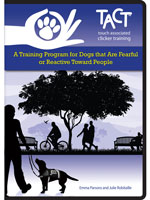
tact_dvd

After listing to the presentation, I’d say that TACT could be of real help for some of your dogs, especially if you have the time and are committed to doing the work. It’s not a quick fix and you must have people who you trust to help you with the ritualized work.

I’m not exactly sure how I would implement this in the hustle and bustle of a shelter environment, but this would be a great program for anyone fostering a fearful dog. As for my own DINOS, Boogie, he’s more reactive with dogs than people (strangers scare him, but only briefly and he’s gotten much better over the years), so I’m not planning on trying TACT at home. But if your dog is aggressive or reactive towards humans, this is worth checking out.

Whether or not TACT is right for your dogs, Julie did have some good management ideas and tips that all of your dogs can benefit from:

Create a Safe Space in your house. Visitors to the house can be a really stressful (potentially dangerous) time for your dogs, so create a safe space in your home for your dog. Ideally this would be a separate room with a door you can close. When guests come over, have your dog go to their safe space BEFORE your guests arrive (not when the doorbell rings). Turn on soft music or a white noise machine and let them relax in their safe place.

To get them ready for this new routine, teach your dog to go their safe space and get comfortable. Have them stay in the their new safe space for up to 20 minutes before you release them. Practice this often, so that when your guests do visit, your dog is already comfortable with this set up.

Home should be Fun! Our dogs are often stressed and uncomfortable out in the real world. Make your home a safe, fun environment for your dogs by taking a look at their environment. If they’re sound sensitive, invest in a white noise machine to block out the sounds. If they’re visually overstimulated, cover windows that they perch near. Most importantly, spend time on enrichment that stimulates them mentally, so they can drain down their batteries, through puzzles, interactive toys, etc.

Real World Management Since people are everywhere (don’t we know it!), management will always play a big role in living with a fearful or reactive dog. Julie recommends:

Always use a leash, even if your dog has an awesome recalltraining_vest_sm
Desensitize your dog to a muzzle, so if they ever need it, they’re comfortable wearing one.

Practice the “Let’s Go” command, so you can make quick getaways

Drive around to look for less crowded public places to walk your dogs

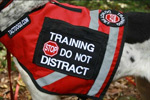
Have your dog wear a vest that tells people they are training.

What I really appreciated about the seminar is that Julie recognizes the incredible emotional toll that living with a reactive dog can have on their people. It’s stressful and frustrating and sometimes sad. Julie gets this – she’s been there – and developed the TACT Caregivers Fatigue Program. If you’re feeling burned out or at the end of your rope, I highly recommend you check this out. There are support groups online and if you’re in the Massachusetts area, there’s even an in-person support group, both are run by Anne Lindsay, a professional counselor.

Overall, a really positive seminar and I hope that those of you with dogs that are reactive to people will check it out to see if it might be a good match for your dogs.

Have any of you tried TACT?  What are your thoughts on the program? Let me know!
5 Ways A Carabiner Could Save Your Dog’s Life

Carabiners might be my favorite dog walking tool of all time.  Why? Because no matter what equipment you use to walk your dogs – accidents happen and equipment fails.

I’ve seen dogs slip their shoulders out of Easy Walk Harnesses, whip their heads out of Gentle Leaders, back out of collars, and prong collars pop wide open. And when that happens…your dog is loose. Yikes.

That’s where carabiners come in. If you slap on a ‘biner, that failed equipment will still be attached to something else on the dog’s body (usually a flat collar) and your dog will still attached be to you and the leash. Carabiners are rad little dudes.


Here’s 5 ways to use a carabiner:

Connect the flat/martingale collar to the Easy Walk Harness or other body harness

Connect the flat/martingale collar to the Gentle Leader or other head halter (try a small carabiner, if the regular size is too heavy)

Connect the flat collar to the Martingale Collar

Connect the flat/martingale collar to the prong collar

Connect the leash to your belt loop or wrap the leash around your waist and secure with the ‘biner (it’s an extra layer of protection if you ever drop the leash when your dog decides to break dance at another dog).


To be more specific: Slide the carabiner through the ring on your dog’s flat (or martingale) collar and through the ring on whatever piece of equipment they are wearing, let’s say: the front ring on a body harness. Attach your leash as you normally would to the front of the harness.

Like this:


Now, if the dog gets out of the harness: your leash will still be attached to the harness (now dangling loose), because it’s attached by the carabiner to the flat collar. So your dog will suddenly have an extra few inches of “leash” in that failed harness, but ultimately, you and the leash are still attached to the dog via the carabiner clipped to the flat collar.


Another view (FYI: Boogie’s collar looks loose because he’s wearing a martingale collar – I coulda/shoulda connected the carabiner to the D ring of the martingale and his collar would then be snugger in this scenario):


If a carabiner doesn’t work with your equipment or you don’t have one on hand, at a minimum, you can try clipping your leash to both pieces of equipment. You can even buy a leash with a built-in carabiner from Ruff Wear.

So head over  to a camping store and buy a good one – spend a few bucks – and it will last you forever. I have a lucky carabiner that I’ve been wearing for 14 years. I’ve lent it to people during dog training classes and afterwards, chased them down the street to get it back. I mean business when it comes to my biner.

*Team DINOS fan tip: choose a carabiner that locks (like the one on the Ruff Wear leash) for an added layer of safety. Thanks Rachael M.!

And one more reason to use a carabiner:

You can keep your keys on one and tell people you’re a janitor or prison warden, like I do:

Happy and Safe Dog Walking Everyone!