Skip to content

Posts tagged ‘dogs’

Team Future Us Challenge

This morning I got a surprise email from someone I know really well. It made me laugh and then my face leaked a little. Even though it was only three sentences long, the email left me feeling cared for and encouraged.

The message ended with:

p.s. you will figure this out!

Who’s writing me such nice emails? Who knows how much time I spend trying to figure it out (“it” being a synonym for my life/my career/the fate of the world/the plot of Homeland)? And that I need to be confident in myself and then learn to let it go?

I’ll tell you who: Me.

Yep, not only do I walk around talking to myself all day, but now I write to myself too.

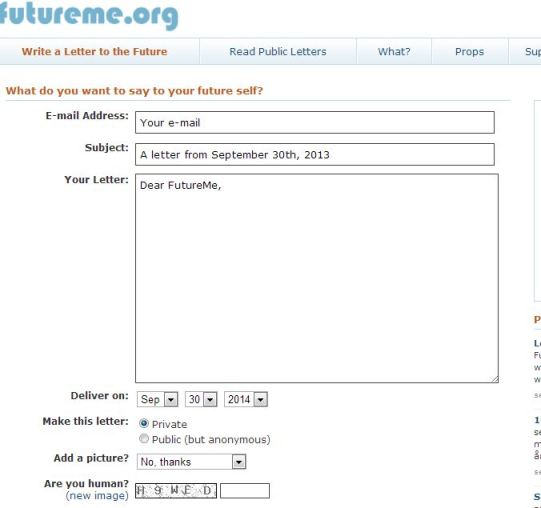
That’s because I discovered FutureMe.org

future me


It’s the most simple, brilliant idea ever. You write yourself an email and schedule it to be delivered to yourself some time in the future.

You might think it’s dumb to write yourself because you’re soooo smart that you’d never forget what you wrote to yourself in the first place, so duh, who cares if you get an email saying stuff you already knew.

Nope. I completely forgot that I wrote that email. Given, I forget to put on real pants some days, but I’m willing to wager that most people totally forget (the email, not their pants). And more importantly, everyone probably forgets what they actually wrote. The content will be a surprise. Wheee!

Think of how helpful this could be. You could:

  • write yourself monthly emails with your plan and motivations for taking care of yourself.
  • write a letter and schedule it to arrive the morning of a day you anticipate will be challenging. Like the first day of a dog training class you’re afraid of going to with your poopy-pants dog. Or a difficult anniversary.
  • write yourself a caring letter of encouragement, to be read on any random day in the future. You might be surprised at how good it feels to hear kind words, even when they’re your own.
  • write yourself random reminders like: Look Down. Are You Still Wearing Pajama Pants?


I really think this might be a good thing. I want you to do it. So let’s try it together. I’ll call it the Team Future Us Challenge.

This week take a few minutes to write yourselves a letter of encouragement. No beating yourself up. Keep it above the belt. Just write a few sentences to give Future You a boost.

Not sure what to write? Think of some area of your life that you’re struggling with and give yourself a pep talk. For example:

If you have a dog that is experiencing some challenges right now, like they lose their marbles every time a dog farts within 50 miles of your house, you could list a few things that you really love about your dog and a few ways that you’re pretty swell too, such as: Despite the fact that walking my dog is torture some times, I really do love him. He’s a world-class foot warmer, a champion floor cleaner, and an excellent karaoke audience. Also, I should give myself credit for trying so hard and stop comparing myself to everyone around me. I’m doing a really good job. Me and my dog RULE.

Or if your dog is perfect and cooks you brunch on the weekends, maybe you could write about some other aspect of your life where you feel a little less than perfect. Think about what Future You might need to hear. Be kind.

So here’s the Team Future Us Challenge part (that is dangerously close to being Team FU, huh?):

  • This week, write yourself a letter of encouragement.
  • Schedule the email to arrive two months from now on November 30th, 2013. That’s Thanksgiving Day weekend. I bet a lot of us could use a little bit of encouragement around the holidays, right?
  • In two months, we’ll all get an email from Past Us. I’ll post a blog here, so that those of us who want to can check in and celebrate our awesomeness together. Because sometimes peer pressure  a community can help motivate you to do something nice for yourself.


What do you say? Let’s go be nice to ourselves.

See US in two months!

Self-Care Is Not Optional: How Burnout Ended My Career at the Shelter

Four years ago on my birthday I gave my two weeks’ notice at the animal shelter where I worked. Quitting felt like defeat, guilt, and failure, wrapped in a heavy, wet blanket of numbed out exhaustion. But it was still a good birthday present to myself. I needed out.

I knew I was in trouble months earlier when I started crying as I drove into work in the mornings. Towards the end of my time at the shelter, I began to move through the morning routine in a sad trance. Tears would silently roll as I went about filling food bowls, walking dogs out to the yards for their morning bathroom break, and putting meds together.

I was sad. I was really angry. I was exhausted, mentally and physically, down to my core.  And I knew I wasn’t helping the dogs anymore. I was in such bad condition that I knew I wasn’t able to do my job effectively.

I was completely burned out.

So I left. I felt guilty that I was leaving my fellow co-workers behind in the trenches to do the work I couldn’t do anymore. I felt sick at the thought of abandoning the dogs that were still waiting for homes. But I knew I had to go.

It took months to start feeling better. Actually, if I’m being honest, I was so busted that I didn’t feel like myself for more than a year after I quit. No joke.

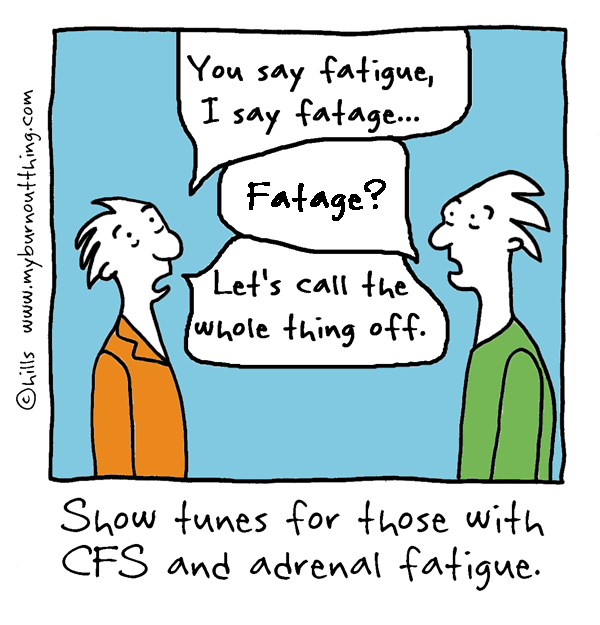
Fatigue Fatague cartoon

These days I’m still involved in animal sheltering, but from a distance. In addition to dog walking part-time, I do some writing for an animal welfare non-profit. So I’m still in the loop. And in my work I see a lot of advice geared towards shelter and rescue workers instructing them to be more positive, provide better customer service, to be less judgmental, more compassionate, and more understanding when working with the public.

It’s a reminder that in order to help the animals, we must also help people. We can’t hate people if we want to help animals. When I hear this advice I always nod in agreement. It’s the truth.

But a little voice – a voice from four years ago – always pipes up too: Remember, that’s easier said than done. Who is teaching shelter workers the skills they need to stay positive and open-minded with the public? Where is the compassion for underpaid, overworked shelter workers?

Because the truth is, the work is brutal. Caregiving is hard. All helping professionals struggle: nurses, firefighters, social workers, etc.

The nature of the job is a Catch-22. In order to do these kinds of helping jobs, you have to be empathic. But if you’re emphatic to a traumatized population, then you’re exposed to their suffering. The demands for your empathy are constant and often overwhelming, which leads to high residual stress levels. When this isn’t dealt with, it leads directly to Compassion Fatigue (CF). And that impairs your ability to be compassionate, positive, and helpful to the very population you serve.

Side note: there is one critical difference between all the other helping professions and shelter workers. We’re the only ones that sometimes have to kill those we are assigned to care for. As big as that is, let’s put euthanasia aside for the moment, because you don’t have to be a euthanasia tech in order to experience Compassion Fatigue (though it does correlate with high turnover rates). 

What is Compassion Fatigue? It’s exhaustion due to the stress and demand of being empathetic and helpful to those that are suffering. 

And this is what it looks like from the book To Weep For a Stranger, “When caregivers focus on others without practicing authentic, on-going self-care, destructive behaviors can surface. Apathy, isolation, bottled up emotions, substance abuse, poor personal hygiene, and emotional outbursts head a long list of symptoms associated with the secondary stress known as compassion fatigue.”

Untreated, Compassion Fatigue leads to Burnout. But Burnout is different than Compassion Fatigue.

“Clinicians can experience burnout, but burnout can be experienced by anyone who works too hard, too long, or under too much stress without being exposed to trauma or trauma survivors, as is necessary in a CF assessment. Burnout pertains to the work environment, whereas CF pertains to the emotional involvement of extending empathy to trauma survivors.” From Resilience as a Protective Factor Against Compassion Fatigue in Trauma Therapists.

Once you’re in burnout, you’re not likely coming back. You hate your job at this point. But when you’re dealing with the symptoms of Compassion Fatigue you can, with help, come back from the brink. And, even more importantly, you can protect yourself against Compassion Fatigue through regular self-care and building resiliency.

Sadly self-care doesn’t come naturally to most of us working in shelters and rescues. For me, I knew in theory how to take care of myself, but when the going got really tough I just couldn’t manage to make self-care a priority. I was so tired that all I could do at the end of the day was eat ice cream and watch TV. Many of the people around me at work were also exhausted or numbed out. I think we were all waiting for a break in the relentlessness of our jobs to “catch up” on caring for ourselves. But the break never really comes. I didn’t know how to care for myself in a long distance race with no finish line. Or why it was so important.

The truth is that in order to do this work well – to care for animals and people – you need to be able to care for yourself first. Just having the technical skills to do the job isn’t enough. It’s not enough to know proper sanitation protocols or disease management. Or how to do skilled behavior evaluations. Or know how to handle, socialize, and enrich animals. Or how to speak with potential adopters and counsel them on choosing the right pet.

All of those are skills you need, of course. But you won’t be able to use any of those skills if you’re falling apart. Compassion Fatigue takes away your ability to do good work. Feeling negative emotions and not having the skills to cope with them impairs our ability to connect with other people, think creatively, problem solve, and work well with others.

So all the advice in the world, all the finger wagging, the training seminars, the shaming comments about shelter workers needing to stop saying “I hate people” – none of that is going help them do a better job. Not unless we address Compassion Fatigue and Burnout, since that’s one of the root causes of why they’re not being effective at their jobs.

So why isn’t addressing Compassion Fatigue as important a part of the job training as how to do an evaluation or talk to an adopter? Why isn’t this a priority at every organization?

No one ever said the words “compassion fatigue” to me when I took the job at the shelter. I didn’t understand that what I was initially experiencing wasn’t the same as burnout from a tough job with long hours. It didn’t happen right away, but when symptoms of Compassion Fatigue hit me, I was deeply affected. I felt like no matter how many hours were in a day, I could never give the dogs at the shelter the level of care that I knew they deserved and needed. I worked so hard. But it never felt like enough. No matter how much I did in a day, I rarely felt like I had succeeded. It wore me down.

Of course, there were adoptions. Glorious, wonderful, heart-filling adoptions. I can’t tell you how good it felt to send a dog home with their new family. It was joyous and hopeful and…for me, increasingly scary.

Dogs would come back, returned by the families that had adopted them. That’s part of the job. It was disappointing, but not devastating. But then I encountered a really bad stretch. Dogs that I had personally adopted out were coming back to us abused, neglected, and damaged. Not a lot of dogs. Just a handful. But when you find out that a dog you cared for and sent home with a family that you thought was OK was later found dead or comes back to you 20lbs lighter and covered in scars, it only has to happen a few times to shake you. I started jolting awake at night, sick from nightmares about the dogs that had suffered.

My favorite part of the job – adoptions – felt tainted.

I felt like I couldn’t really trust myself or others. How would I know when a family was lying to my face, as some clearly had? Despite my training and adoption counseling skills, I could never really know if I was sending a dog to an abusive, neglectful home. I had to be ok with that uncertainty, but I felt vulnerable and afraid instead. Which made me feel shut down and negative towards the public.

If you’re reading this now and thinking: You shouldn’t have gotten so hung up on the negative – studies show that the majority of adoptions work out. Or you can’t control everything and wait for the perfect home. Or always keep your eye on the big picture, rather than getting stuck on a small percentage of adoptions gone wrong. You’d be right.

But here’s what I know now, that I didn’t know prior to doing direct care for the dogs:  the map is not the terrain.

You can give people the very best instructions, the most effective techniques, the most cutting edge tools and research – the maps– but they mean almost nothing when you’re dropped into the reality – the terrain – of being a caregiver in an animal shelter.

For example: A map can tell you the elevation of a mountain. But just reading the map while sitting on the couch isn’t the same as what you feel while navigating the terrain. Until you do it, you won’t know exactly when your leg muscles will start spasming as you try to scale that terrain.

The map tells you suggested questions to ask potential adopters. The terrain is filled with the bottled up pain of the dog you just euthanized minutes before meeting a potential adopter, the fear of repeating your past mistakes, and the confusion of being unsure if the person you’re talking to is a good home or not as you try to ask those questions. The map alone isn’t enough to help you get through the terrain.

If we actually want shelter staff to do a better job, to be more compassionate towards the public, to be more effective and to save more lives than we have to do more than give them a really good map filled with “how-to” instructions for how to technically do the job. We have to make self-care a priority so they can stay healthy enough to tackle this complicated emotional terrain.

I’m just going to stop for second to address those of you that are saying to yourself: There are plenty of shelter workers that are terrible. They hurt and abuse the animals in their care. They’re hateful to people. They don’t care about lowering euthanasia rates. Shelter workers ARE the problem.

I know that there are some truly awful shelter workers out there. There are also some amazing shelter workers out there that really don’t get bogged down by all the negative stuff and need little help navigating this difficult terrain. They’re the two ends of the spectrum. The really horrible and the really high functioning.

But the average shelter worker is just a regular person that falls somewhere in the middle. They’re trying (and sometimes failing) to do a good job. They love the animals. And they need compassion and resources in order to do a better job. They are exactly the same as the public and adopters in that regard.  If our goal is to help the animals, we have to care for and help people – and that includes people who are shelter workers.

We can’t ask them to do better work without addressing the coping skills they’ll need in order to do a job that can be emotional hell. Let stop for a second and consider what we’re really asking shelter worker to do: We’re asking them to provide constant care for animals in need, some of whom are traumatized. To experience having little control in where those animals ultimately wind up. To feel the fear that things might go badly in an adoption and to let it go. To (sometimes) kill those they’ve cared for. To be vulnerable, to stay open, and to remain positive in the face of what scares and stresses them.

Not an easy terrain to navigate. American Buddhist nun, Pema Chodren, writes in her book The Places that Scare You, “When we practice generating compassion, we can expect to experience the fear of pain. Compassion practice is daring. It involves learning to relax and allow ourselves to move gently towards what scares us.”

buddha 2

Shelter and rescue workers – just like the rest of us – aren’t Buddhist nuns. But that’s essentially what we’re asking them to be: comfortable being vulnerable in their compassion.  None of us – shelter workers to nuns – can do that without a lot of practice.

So what does help? Recent research shows that Resilience can protect against CF and burnout. Resilience is built through awareness and self-care. Self-care is when we commit to nurturing a life outside of work that can counterbalance the intensity of the job and the inevitable stress that comes along with it. When we take care of ourselves, we build the resilience we need to deal with the negative aspects of our job, as well as building job satisfaction. That helps us to feel positive and allows us to do our jobs better.

Self-care is about finding ways to restore a balance between the negative and the positive by cultivating aspects of our lives that support us when the going gets (and stays) tough. It’s about making a commitment to caring for yourself as deeply and seriously as you care for the animals. Because if you don’t, if you allow yourself to become mentally and physically run down, mired in negativity, sadness, and anger, then you can’t do your job all that well.

If you’re saying to yourself: “I don’t have time for self-care. The animals need me constantly!” I want you listen up:

Research shows that there is a correlation between ethical violations and Compassion Fatigue.  Which means Compassion Fatigue can cause us to cause harm to others.

That means: YOU ARE ETHICALLY OBLIGATED TO TAKE CARE OF YOURSELF.

When we disregard our own needs in order to keep giving to others it’s not just bad for us, it’s unethical.  So if you think that being a good caretaker means caring until you collapse you are wrong. In order to be a good caretaker, you must take care of yourself so that you can care for others properly. Otherwise, you have the potential to harm those that you are caring for.

Let me say this again: it is UNETHICAL TO NEGLECT SELF CARE. So it’s not indulgent to take care of yourself. It’s not a sign of weakness. It takes courage to commit to self-care. It’s the right thing to do. It’s not optional.

What does self-care even look like? It’s going to be personal for each one of us, but generally self-care and building resiliency looks like: setting boundaries, saying no, working less, exercising, eating well, going to therapy or a support group, cultivating friendships, monitoring our stress levels daily, stretching, journaling, having hobbies, breathing exercises, talking with a trusted friend at work, laughing, having interests outside of animal welfare, sleeping, allowing yourself to feel grief, dancing, meditating, practicing gratitude and positive thinking, and separating our work life from our personal life.

Regularly doing these acts of self-care builds resilience.  People who are resilient are able to bounce back from adversity, stress, and the heartache of getting a dog you loved returned to you abused and broken. It helps you bounce back from euthanizing animals.

Research shows us another key to building resiliency and fighting Compassion Fatigue: experiencing Compassion Satisfaction. All of us who have worked with animals have known Compassion Satisfaction (CS). That’s the joy in our job.

CS happens when you care for an injured animal until they are well again. CS comes from doing a wonderful adoption for a long term resident. CS comes from passing out peanut butter Kongs and listening to a choir of muffled, content slurps. CS is when you help a caring family keep the dog they love by connecting them to affordable resources. CS is what keeps us going, helps us balance out the negative, and see the big picture. But we can’t hold on to the positive aspects of CS without self-care.

If we really want to make progress in animal sheltering, then we have to make teaching and supporting self-care a foundation of our work. Entire organizations can be affected by Compassion Fatigue. And the organization itself can cause stressors for employees that contribute to fatigue and burnout, such as improper management, unclear protocols, lack of training, low pay, being understaffed, etc.

If we want shelter workers to do their best work, organizations and their management have to be aware of these issues and work to help staff and volunteers to identify healthy coping strategies and encourage them to build resiliency. We have to make this non-negotiable and as important as any other part of their training, since neglecting self-care has negative consequences for our work. It has to be a part of the culture of our profession: prioritizing self-care, so we can care for others.

If we want to save more lives, organizations will have to combat the plague of Compassion Fatigue and Burnout that wipes out entire groups of new, enthusiastic, caring, shelter workers before they even have a chance to make a lasting impact for the animals.

As a profession we have to prioritize caring for the caregivers by investing time and resources into this issue. We can’t just expect them to suck it up, stay positive, and do good work. I sure couldn’t. At the end the only way I knew how to help myself was to pick up the pen and write my resignation letter. The day I dropped it off on my mangers desk I knew, even though I felt terrible quitting, it was an act of self-care.


PDF Version for easy printing and sharing available here: Self Care is Not Optional

Despite being way too long, this blog only scratches the surface. For more concrete resources, please see my interview with Compassion Fatigue Awareness Project Founder Patrica Smith. 

Compassion Fatigue and Burnout affects professional caregivers of all kinds (as well as those that are caring for loved ones in their personal lives). This includes vet techs, individuals who live with challenging or sick dogs, dog trainers, animal control officers, and volunteers. What I wrote about here applies to all of us who are taking care of animals or people. Self-care is not optional for any of us.

And finally, because this had such an impact on me personally, this summer I became a Certified Compassion Fatigue Educator.  11/2014 note: I now have a whole new website and more compassion fatigue resources here, including online classes and webinars to help you be well, while you do good work.
Walking and Reading: 8|10|13

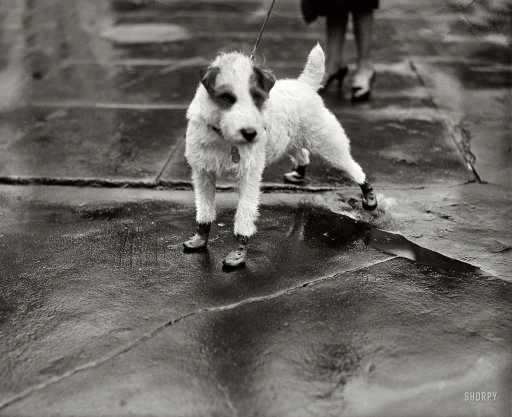
Feb. 9, 1928. Washington, D.C. "Peter Pan, wire-haired terrier pet of the personal secretary to President Coolidge and Mrs. Edward T. Clark, arrived at the White House today attired in 'flapper galoshes'." (source)

Feb. 9, 1928. Washington, D.C. “Peter Pan, wire-haired terrier pet of the personal secretary to President Coolidge and Mrs. Edward T. Clark, arrived at the White House today attired in ‘flapper galoshes‘.” (source)


For the Dogs:

So many of us are waiting for veterinarians to catch on to the idea that they can (and should) make exams less scary, less stressful, and more compassionate for our pets. Thank you Dr. V for writing about Fear Free Vet Practices.

Architecture for Dogs  (Isn’t that Bark-i-tecture? Ugh. Sorry). The “Wanmock” might be a real hit.

You may want to think twice about signing for an unexpected package if you live in Brunete, Spain. Warning: poop ahead.


For the Humans:

If you love books, animals, and libraries, this amazing collection of great reads and the paper art they inspired will make you giddy.

Our failures of kindness may be our greatest regrets. George Saunder’s advice to graduates has (rightly) gone viral. It hit me square in the chest.


For the Laugh:

Suzanne Clothier posted this Cookie Monster video as a reminder to teach your dogs self control. It may be the best dog training/dance song/puppet advice ever produced. I can’t stop watching it: Me Want it, But Me Wait.


And Offline: I finally finished On Looking – really good! I’ve also been reading an amazing book I picked up at an antique store called “Our Town and City Animals” which was published by the ASPCA in 1937 as part of their humane education program. As soon as I’m done, I’ll share some of it with you!


Peace in the Yard: 7 Ways To Dog Proof Your Fence

Oh sweet, sweet fences.  How much do I love thee? Let me count ways:

  • Fences Keep Dogs Inside. My dogs are off leash, safe, and free to roll in dead stuff without getting tangled in long leads.
  • Fences Keep Others Out. Except for a family of Whistle Pigs and one mole with a grudge, no one is cutting through our yard.
  • Fences Provide Privacy. It is my right as an American to wear my pajamas all day and not have my neighbors see me slob out.


So clearly, fences are rad. They’re awesome management tools. Not only do they keep everyone safely contained, but they also allow you to do all kinds of fun stuff at home in your yard. Playing at home is super handy if you have a DINOS and need a break from walking your dog or you need to exercise them prior to a walk.


As you probably know, there are many different kinds of fences to choose from. Go check ’em out:

Solid Wood

Chain Link

Farm Fence

Iron or Aluminum 

Invisible (I have some thoughts on those)

Vinyl

Plastic (affordable option alert!)

In the end, what you choose will come down to your personal needs in these areas: Privacy, Finances, Function, and Aesthetics.

As soon as we bought out first home last year, we hired some pros to install a fence. We have a few acres, but could only fence in part of the yard. We chose six foot, solid wood fencing for the portion of our yard that faces the street. The rest is six foot, 2”x4” galvanized, no climb, horse farm fencing from RedBrand. The majority of our fence is the wire farm fencing. This allowed us to save a ton of money, but also provides unobstructed views of the rest of our property. This is a good option if neighboring dogs/properties aren’t an issue.

Farm Fence

Boogie’s first time off leash in our newly fenced in yard. It was a good day.

No matter what type of fence you choose (or what you already have, thanks to your landlord or the person who lived there before you), you’ll probably have problems with it. That’s the way life rolls.

Maybe your dogs are fence fighting with the neighbor’s dogs or kids are sticking their hands through the fence and you’ve been finding tiny fingers in your lawn clippings. Or your dog is a jumper, a digger, or a Chris Angel impersonator. Maybe your dog screams at passing skateboarders or the ice cream truck.

Luckily, there are some ways to prevent these common dog-related fence problems (escaping, reacting, being tormented):

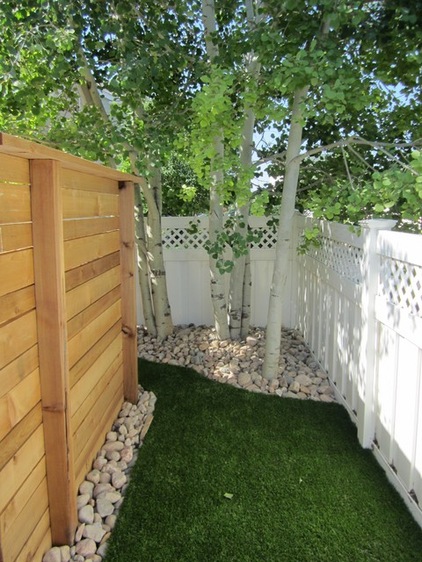
1. Landscaping: If you have a dog that is a jumper or likes to patrol the fence line, consider using landscaping as a way to keep your dogs away from the fence. By planting dense shrubs, like Boxwood, along the fence line, you’ll force your dogs to back up, making the jump further (aka harder). And if you have a patroller, the landscaping will make the buffer zone between the fence and your dog a few feet wider, which might help your dog take the day off from guard duty. Just remember to check in between the shrubs on the regular to make sure the dogs haven’t created a secret tunnel to Naughtyville.


2. Bamboo/Reed Rolls, Garden Fencing, and Slats: If you have a chain link fence and you find that your dog is reacting to stuff he sees on the other side of the fence, try zip-tying rolls of reed fencing onto the inside of your chain link fence. It looks nice, it’s cheap, and it’ll give you a lot more privacy (note: it’s not 100% opaque). The reed fencing comes in 4 or 6 foot high panels and can be cut easily. Bamboo looks nicer/is much sturdier, but is also more expensive.

bamboo or reed fencing

Or, you can feed plastic slats through your chain link fence. They even come in “hedge” (!) style. Either option will also stop others from putting their hands/snouts through the fence.

If style isn’t your thing, but function is, you can try a black plastic construction fence as a visual block.

And if you have a fence that your dog is able to stick their head through, but you don’t care about privacy, try adding rolls of garden fencing to your fence to block ‘em in!


3. L-Footer:  If you have a digger, consider an L-Footer. That’s wire fencing laid down against the base of your fence and bent perpendicular (90 degree angle) to it. You know, like an “L”. You can bury this fencing underground, but it doesn’t have to be buried to work. Some people just lay it on top of the grass and maybe add some rocks and garden gnomes to hold down the fort. This site explains it well (and has tons of other great tips). Also see Bad Rap’s rebar tip.

L Footer (source)

L Footer (source)

4. Concrete Footer: If you have a serious digger, consider pouring concrete along the perimeter of the fence line and sinking the bottom of the fence into the concrete before it dries.  It’ll take some work, but this is super effective.

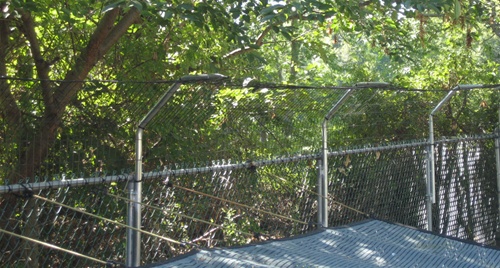
5. Coyote Rollers: If you have a jumper or climber, you can try these rollers, designed to make it impossible for coyotes to get a grip on the top of the fence (the bar spins). Think rolling pins at the top of your fence. You can DIY this with PVC pipe, if you’re handy.

6. Lean-Ins: Another option is to build lean-ins using farm fencing, so that the top of your fence is angled in a bit horizontal to the ground. It’s like adding a little awning of security. Here’s one to check out. It’s like a cat fence, only sturdier.

If your dog is a champion jumper, and none of this is enough, you may have to consider an expanded exercise area that is totally enclosed with a ceiling. Or a Bio-Dome (sans Pauly Shore, since you actually like your dog).

You can score this kit here

You can score this lean-in kit here


7. Redundant fences:  Redundant fences are the jam. I know of more than one family (mine included) whose backyard life got an extreme makeover when they put in one of these babies. So what is a redundant fence exactly?

It’s a fence within a fence. You can put up a secondary, internal fence on just one side of your yard – wherever the problems are occurring – or all four sides. Most people I know have it on just one side of their yard where they share a common fence with a troublesome neighbor, with a busy commercial building or street, or with a damaged or ineffective fence that can’t be changed for some reason (like when you rent or your neighbor owns the fence).

The idea is to manage the situation with a secondary internal fence, set back from the common fence line, thereby preventing your dog from making bad choices, rehearsing behaviors like fence fighting, or escaping easily. Plus it can help speed up training and will prevent other people/dogs from putting your dog in dangerous scenarios.

The redundant fence doesn’t need to be expensive.  We used to rent a house that had a rickety old wood fence that belonged to the next door neighbors. Since we couldn’t do any repairs to the fence, we put up a roll of green plastic fencing about 3 feet back from the common fence line to keep our dogs from poking their heads through the broken fence. We also used a plastic, staked-in-the-ground, corner piece at one point. Could I have trained them not to poke their heads through the broken fence? Sure. But putting up the cheap redundant fence was easy, cheap, fast, always effective, and did I mention easy?

Depending on what issue you’re trying to prevent and your dog’s personal kung-fu skills, the redundant fence may need to be as strong as the outer fence. For some dogs, just having the visual of light pvc fencing will work, for others, they’ll need a solid wood fence to contain them safely.

One more thing about redundant fences: do it. I think people feel funny about a fence inside a fence. It seems silly to have two fences, especially if you just paid to put up the first one! But the families I know that went for it are enjoying their lives again. So if you think it could provide you with some peace at home, just do it.

For more on redundant fences, please check out Puddin’s Training Tips for ideas and some examples. She loves them so much, she wants to start a double fence movement!


BONUS: here are two more ways to keep your dogs inside and safe:

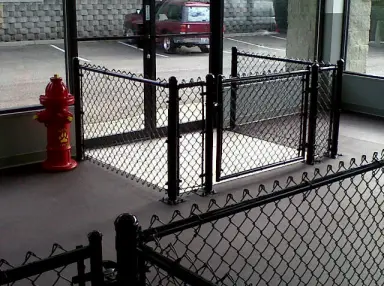
Airlocks: These are perfect for areas without a fence. You’ve probably seen airlocks at your local dog park or boarding facility. These handy gated areas are built in front of your main entrance, so that if the door opens and a dog escapes, they are still contained by the small gated area (the airlock) right outside the door. For some dogs, this may be as simple as adding a sturdy baby gate to the opening of your front porch. In other homes with other dogs, this may mean building a small fenced in area with a locking gate in front of your door. Grisha Stewart’s BAT book has some more tips, including adding a doorbell to the airlock, so that visitors have to wait outside the airlock (instead of at your front door) for you to let them in. We did something similar with our enclosed porch that leads to our front door (see here).

If you have kids, this one addition could mean the difference between being able to keep your dog and surrendering him to the shelter. I can’t tell you how many families brought in dogs to the shelter where I used to work because the dog was always escaping when the kids opened the door. If you have an escape artist or kids that let the dog out, add an airlock.

Airlocks are commonly used at doggy day cares (like this one)

Airlocks are commonly used at doggy day cares (like this one)


Locks: They keep your dogs in and other people out. We have 10’ swinging gates on our fence and after a few bad storms we discovered that the gates would sometimes blow open. We added a second lock (on the inside) to help keep those bad boys shut.

Depending on where you live, it’s not uncommon for people to let themselves into your fenced in yard. Maybe they wanted to cut through your yard and throw empty 40 bottles at your wind chimes (it happens). Whatever the reason, you don’t want people to be able to let themselves into your yard without your permission. So consider adding locks on the inside of your gates. It can be as simple as a big hook and eye.


All that being said, prevention is awesome, but supervision is always super important. Don’t leave your dogs unattended in your yard. Don’t. Especially if they fence fight or are canine Houdinis. Not only can they get into trouble sniffing snakes (I’m looking at you Boogie), but they’re likely to get bored. And bored dogs want to go on adventures. Give them a reason to stay inside the fence by hanging out with them and playing.

Of course, if nothing else, I’m a realist. So I know that most of us do leave our dogs unattended in the yard sometimes (even if it’s just for a minute) and that’s why all the above stuff should be considered. It’s our job to prevent, manage, supervise, and train…

So, training. Duh. Teach your dogs the skills they need to ignore dogs on the other side of the fence, to come when called, and to stop escaping. That’s really important too.

But all in all, training goes a lot faster when you can prevent your dogs from practicing naughty-pants behaviors like door dashing, tunnel crafting, and fence fighting. So no matter how much training you’re planning on doing, the solutions above will support your dog as they learn, keep them and others safe, and will only make things easier for you. And easy is my favorite.

Now go on and get! Hit the local hardware store and: Set your dogs up to succeed!


7 ways to dog proof fence

Walking and Reading: 7|19|13


Hey I’m on the road again! Here’s some weekend reading for youz guys:

For the Dogs:

Meet the “Carolina dogs” (and no, they’re not Tar Heel blue), otherwise known as “America’s Dingo.”

Old dogs are the best. Taking care of them at the shelter always broke my heart. A frat house is no place for a dignified senior. So I think this “Silver Hearts” project by the fab Lori Fusaro is the tits.

My dog Birdie tore her ACL the other week, so there’s lots of talk about pain management going around here. Have any of you seen/used this wacky looking thing? Apparently Lil Bub swears by it and she’s always right.


For the Humans:

This is what it means to be the “living change.” I dare you to not be inspired by this trio. In fact, I love this story so much that this is the only post in this category.


For the Laugh:

Photobombs are funny. Check these 15 out.


And Offline: I’m still reading On Looking (do you guys ever hit a roadblock where you can’t read anything more than a magazine for a few weeks? That’s where I’m at right now. So I’m reading This Old House Magazine. Who needs me to tear out their old toilet?). Plus I’m listening to Juliet, Naked by Nick Hornby in the car while I tool around the Northeast this weekend.

Stay cool out there everyone!


Mom Was Right: It’s Not What You Say, It’s How You Say It

A good friend of mine is about to bring home her very first dog. As you can imagine, I want to give her buckets of advice to help make this an awesome experience. I want to tell my friend everything I know, so that she can avoid all the mistakes anyone has ever made in the history of owning a dog.

I bet you guys can relate. If you’re involved in animal welfare or a pet-related business you’re probably doing a lot of knowledge dropping. From trying to explain the problem with puppy mills to trying to convince someone to leash their dog, we all want to get others to listen to us. It’s not easy!

It got me thinking: How can we share information with others in a way that’s truly helpful and well received? How do we keep the conversation going and create the right conditions for learning?

Over the years, I’ve picked up some tips that have helped me to get better at talking with others about stuff that I’m passionate about.


Here’s one thing I know for sure:

Being right is not enough. What good is being right if no one sticks around to listen?

How we give people information is as important as the information itself. Mom was right when she told us, “It’s not what you say, it’s how you say it!”


These are the four nuggets that I try to keep in mind, so that I’m not just talking to my cats:

  1. Avoid Information Overload
  2. Personal Experience is King
  3. Help Them Save Face
  4. Small Steps Deserve Big Cheers


Avoid Information Overload

You can’t know too much, but you can say too much. – Calvin Coolidge

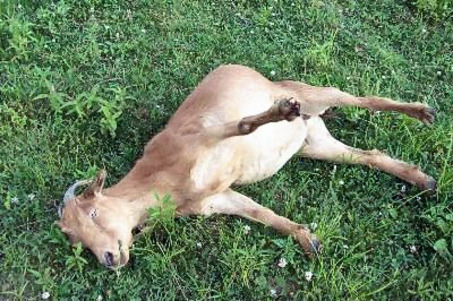
When sharing information, particularly with a newbie, we have a tendency to blast the pants off of them with information. One sure way to kill a learning buzz is to overwhelm someone. When I’m overloaded, I just shut down. Like a fainting goat.

Myotonic fainting goat

too. much. information. (source)


One of the hardest lessons for me to learn back when I was working at the shelter was that adopters can only take in so much information at once. I wanted to tell them EVERYTHING they might ever need to know right then, while I had them in my clutches sight. So I would start burying them in information: health and medical needs, behavior and training advice, favorite toys, treats, tools, books, what the dog’s poop looked like, and a brief history of how man domesticated the dog.

What they wanted was to get their hands on the dog in front of them and experience it for themselves. They could only absorb a tiny smidgen of what I was saying.

So, I learned to tell them just the most important information and then put a cork in it. This was excruciating. Cutting to the chase is not my strong suit (see: this blog). But I knew that if I wanted them to hear the really important bits, I had to cut back on what I said overall.

Avoid overloading your listener. They don’t need to know everything all at once. Try to let the newbies – whether they’re new dog owners or new to a challenging experience or an animal welfare issue –  get their footing before you slam them with everything you know.

Keep it simple, give them a few concrete actions steps, and send them home with stuff to read later. Patricia McConnell says so. If the situation allows for it, make yourself available for a follow up. The follow up is important because…


Personal Experience is King

“There are three kinds of men. The ones that learn by readin’. The few who learn by observation.
The rest of them have to pee on the electric fence for themselves.”
― Will Rogers

I have to pee on the fence. So do many adopters, clients, advocates, and probably your uncle Larry too.

We learn by doing and we’re not the only ones. Remember learning to drive?  No matter how good the manual may be, it’s not the same as actually driving a car. Once you have some time behind a wheel, then the manual suddenly makes a whole lot more sense. Oh, you think as you hit your first patch of black ice, that’s what skidding feels like. Which way do I turn the wheel again?!

It helps to acknowledge this need for experience, so you can let go a little.

At the shelter I learned that people needed to experience living with the dog before they could truly make sense of the resources they’d received.

Before: it was me yammering at them while their brains were hijacked by shmoopy-faced dogs. What I was saying couldn’t compete and didn’t feel relevant in that moment.

After: they had experienced the shmoopy-faced dog taking a dump on their rug and it became real (and smelly). They could put what I had said about house-training into context. It was suddenly personal, relevant, and really believable!

Once I understood this need for experience, I did two things: I incorporated hands-on learning during the adoption counseling (ex: I would have them put the harness on the dog themselves to learn how it fit) and I made myself available for help after they brought the dog home.

Is that lady saying you need to crate train me? She's crazy. I'm perfect and I never poop.

Is that lady saying you need to crate train me? Don’t listen. She’s crazy. I’m perfect and I never poop.


Until we’ve experienced something for ourselves and figured out how it’s relevant to us personally, it’s tough for us to understand something new or believe it to be true. There’s a kinesthetic learner in all of us.

That’s why it’s such an a-ha moment when someone lives with a reactive dog for the first time. Suddenly, they understand everything anyone has ever yelled at them, like “my dog needs space!” because now they’re living the DINOS-dream for themselves. It wasn’t real until then. Personal experience is king.

I don’t mean to say we shouldn’t try to help others understand things in advance. Anyone who is a little further along in the journey should try to put down gutter bumpers to help newbies do the right thing and prevent anything truly bad or dangerous from happening. But we also have to accept that people need room to do some learning on their own. Which means that mistakes are inevitable…


Help them Save Face

“At the end of the day people won’t remember what you said or did, they will remember how you made them feel.” ― Maya Angelou

When people make mistakes, your job (if you want them to learn anything) is to protect their dignity. Help them save face, so they’ll stay in the conversation.

In other words, try not to shame the shit out of them. If you do, you’ll lose them in a heartbeat.

Years ago I met my now-BFF while she was working in a Philly pet store that sold only very high quality food. The brand my family had fed my childhood dog (it rhymes with Defiance Riot, which is also the name of my imaginary hardcore band) wasn’t for sale. I mentioned that the food must have been OK, since we bought it from our vet.

My friend, who probably wanted to vomit all of her holistic health and nutrition knowledge at me, simply said, “Yeah, it’s not so great.” And she causally pointed to a book Food Pets Die For, if I was interested in learning more. The book was also her way of saying, it’s not just my opinion. Check out this expert.

Her super laid back brilliance allowed me to absorb this surprising new knowledge while maintaining my dignity. I was privately embarrassed that I knew so little about dog food. My friend, who wanted me to learn more, helped me to see where I had room to improve in such a generous way. She didn’t put me on the defensive. Instead, she opened the door a crack and gently suggested I take a look.

And I did, because I didn’t have to admit I was an idiot in order to do it.

So hard to do, isn’t it? I know. But we have to remember this isn’t about us showing off how much we know or how skilled or smart we are about a topic. It’s about helping someone else feel comfortable enough to check out what’s on the other side of the door.

Help others save face when they share something that you may not agree with or when they make a mistake.

If you blast them with negative information – telling them how wrong or dumb they are or how horrifyingly awful that product/trainer/idea is that they like – you’ll run the risk of shutting them down in embarrassment and shame. It doesn’t matter how right you are, if the person you were trying to reach has left the conversation because they hate they way you’ve made them feel.

I’m still learning how to do this, btw. It is hard.

side note: Have you guys heard about “spontaneous trait transference“? That’s the phenomenon where people spontaneously and unintentionally associate what you say about other people with you yourself. So if you’re talking about a certain dog trainer or co-worker’s negative qualities, guess what? The people listening are associating those negative qualities with you. It works in reverse too, thankfully.


Small Steps Deserve Big Cheers

“Nine tenths of education is encouragement.” Anatole France

So you’ve got someone who’s listening? Cool. Here’s my favorite way to keep people interested in learning: Be a cheerleader. Pom poms are optional, but kind of awesome.

Celebrate whatever it is that you want them to do more of – no matter how small – and build the foundation of a genuine and positive relationship with your adopters, clients, friends, and neighbors (maybe even your adversaries!). When people feel good, they stay engaged.

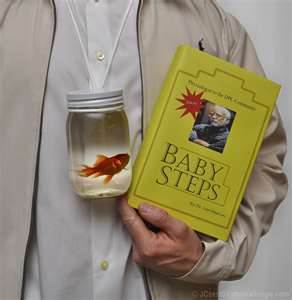
Don’t wait for them to get it all right before you start celebrating their accomplishments. Remember these words, spoken by the great sage Bill Murray in What About Bob?:  Baby steps.

Small steps deserve big cheers. Even if you’re dying for them to speed things up and get to the other side, keep rooting them on if they’re headed in the right direction (p.s. they may never get to the other side, so try to accept that not everyone will do things exactly as you do). They’ll appreciate your support and encouragement. It will make them feel good about themselves and their choices. And that will help them stay motivated to continue, even if things get more challenging. They may even allow you to continue on the journey with them.

baby-steps

“I feel good, I feel great, I feel wonderful.” – Bob


There’s tons more advice out there about how to effectively share what we know, but those are my guiding nuggets. The truth is that I still fail at all four of these steps all the time. But I’m always trying to improve, because every once in a while I really want to help someone learn something new or useful. I bet you do too.

So consider how you’re sharing what you know. If you don’t, you might get pegged as the Crazy Dog Lady. That’s an easy way for others to dismiss all the great stuff you have to share. And that would be a bummer for the dogs. They need you!


Walking and Reading 7|5|13

Oh, we're just hanging out in giant white drawers and scuba gear. How's your summer going? source

I’m just hanging out in giant white drawers and scuba gear. How’s your summer going? (source)


For the Dogs:

This week the world lost a very special dog to cancer. Grant the Library Dog was the embodiment of all my childhood favorites: dogs and books. Meet him here. And safe travels Grant. I hope that wherever you are, kids are reading your favorite stories to you.

A love letter to her dog – to all of our dogs – by Andrea Gibson. “My heart, my heart, my heart…” 

Most people prefer dogs, 18% of us want a dinosaur. Can’t we have both? Sheesh. And I’ll take #5 thankyouverymuch.


For the Humans:

In honor of July 4th (Happy Birthday America!), take a look these Life Magazine photos of American Cowgirls in the 1940s.

Truth: “You wouldn’t worry so much about what others think of you if you realized how seldom they do.” ― Eleanor Roosevelt. Or, Quit Pointing Your Avocado At Me. 

Life is too short not to own an Airstream. My neighbor has one and I stare at it a lot, trying to will it into my driveway. No luck…yet.


For the Laughs:

I live for Blooper Reels. Here’s the one from Bridesmaids.


And Offline: I just started On Looking: Eleven Walks with Expert Eyes by Alexandra Horowitz (of Inside of a Dog and the Dog Cognition Lab fame).


I Was a Teenage Gap Girl

UPDATE: As of October 2013, Amazon has banned all residents of the state of Maine from their affiliate program. It’s a gigantic pissing match between a giant corporation and our state government over the “unconstitutional Maine state tax collection legislation passed by the state legislature and Governor LePage…” (quote from Amazon). So the store still exists, but I no longer earn any commission on the products you purchase there. Fun times, right? Stay tuned for updates!

I want to warn you: This blog post is going to result in a shameless self promotion that may make me wealthy one day. And by wealthy, I mean not rich at all, but more like the kind of woman who owns multiple pairs of flip flops simultaneously, including a pair of “dress” flops. You should stop reading now if that makes you uncomfortable. No hard feelings. Promise.

Before we go any further: I have to tell you about working at the Gap when I was in high school. This was weird, because it was the 90’s and I didn’t look like I worked at the Gap. I dressed like a boy. A boy who alternated between farming (overalls and flannel shirts) and skating (huge jeans and ringer tees) and apprenticing at a funeral home (black, black, black, and Docs), while rapping on the side (puffy vests and Africa medallions – just kidding! I never wore a puffy vest).

But I was a teenager in New Jersey and that means the majority of the jobs available to me were at The Mall. When the Gap offered me five dollars an hour, how could I refuse?

So I worked at the Gap and I was a really, really good salesperson. I sold a lot of clothes because I told people not to buy stuff.

I always gave people my honest opinion about how they looked, which if you’ve ever worked a dressing room, you’ll know means I had to tell people they looked terrible a lot. For those of you who have never worked a dressing room, I’ll just say this: it’s never a bad idea to wear clothes in your actual size, not the size you wish you were or the size you were when you were three.

You might think that I got slapped a lot. Nope! People were tired of corny salesgirls telling them to “just cinch it!” and they appreciated my honesty. When I suggested different clothes, ones that looked good on them, people trusted my opinion.

I genuinely wanted everyone to look nice. Especially all the middle-aged ladies that were going on dates. I really wanted to help them because I thought they were super brave to be out there dating when they were so clearly vulnerable to breaking a hip. Looking back, these women were probably 26. But still. I wanted them to feel fierce (I can say “fierce” because it was the 90’s and RuPaul taught me everything I knew about being a woman).


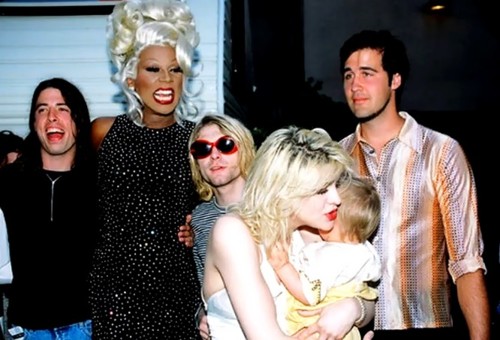
All of my teenage fashion influences, in one photo. (source)

Almost all of my teenage fashion influences are in this photo. (source)


This radical honesty, combined with my drag queen-like dedication to empowering women to look their best, led to loyal customers and many sales. Occasionally, it also led to people not buying anything. This annoyed my managers.

Shockingly, I never got fired. Not even when I showed up to work dressed like Columbo (brown wool pants, crumpled white button down shirt, cigar in my pocket). I’d like to think that was because the corporate offices at the Gap were monitoring my new approach to sales: honesty, empathy, and relationship building. But it was probably because I left for college a few months later, before my managers could come up with a plan to fire me without triggering a law suit (discriminating against an employee for being a Peter Falk impersonator is serious business).

So all of this is to say: I’m not comfortable selling stuff just for the sake of the sale. I have to believe that it’s really looking good on you/making your life a little easier/getting you laid on your date tonight.

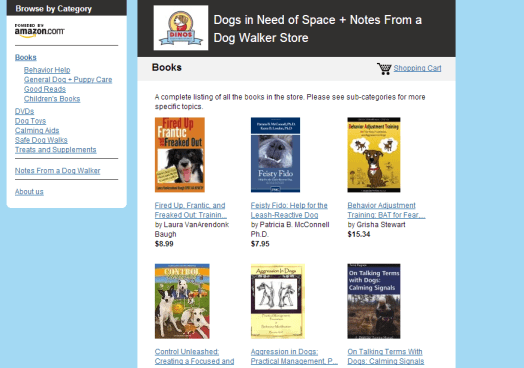
And the point of saying that is because: I wanted to tell you that I started an Amazon affiliate store filled with some of the stuff I mention here on my blog, as well as some of the stuff that you’ve told me is awesome, and I hope you’ll check it out some time. I thought it would be helpful to have some of the products I write about all in one place for easy browsing and linking.


Notes from a Dog Walker Store


Full (Monty) Disclosure: I earn a little advertising fee when you buy stuff in the store – it’s not so much that I can buy an Airstream, but it’s a little pocket change to go towards paying the bills. The less time I spend rolling pennies, the more time I have to write. Which, after reading this, you may or may not want me to do. (10/7/13: Not anymore. See update at the beginning of the blog).

I feel like I should say, just for the record: affiliates doesn’t change what I write about. I share stuff here that I think will be helpful and that I really like, whether or not it’s for sale in the store. Some of what I mention here is for sale in the store, some of it is for sale in other people’s stores, and some of it is being sold out of the back of a truck by that cousin of yours that no one mentions by name anymore. I like to spread the business around. 

No pressure to visit the store. I just felt like it was self-sabotaging to not even announce that I’d made one. So there:  I made a store

Phew!

p.s. It’s not your hips. No one looks good in a treat pouch. But, wear it anyway, because Supermodel, You Better Work.

Also, I know you want to watch this right now. I just did:


Walking and Reading 6|29|13

I’m back this week to report that no rotten vegetables were thrown at me for last week’s post about what I’ve been reading lately. Neat! Let’s do it again, shall we (the sharing links and not throwing tomatoes)?

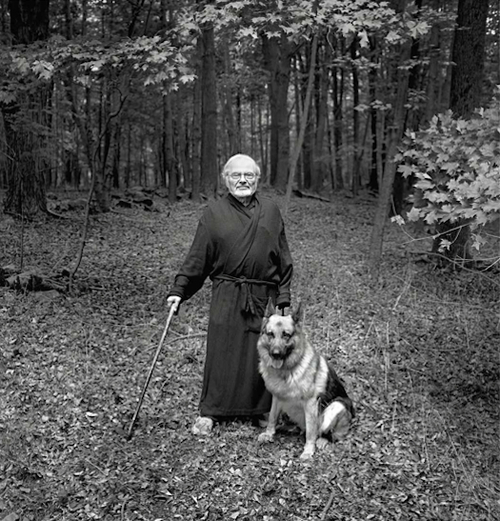
My favorite author, Maurice Sendak, with his dog Herman. Photographed by Mariana Cook (Source)

For the Dogs: 

The SPARCS 2013 International Conference is live streaming all weekend long. That’s the Society for the Promotion of Applied Research in Canine Science btw. If you’re a dog nerd you’ll want to get in on this free action!

Whoa. I might have to get a Poodle so I can do this.  Or maybe I’ll just grab some markers and draw a mustache on Birdie.

I love this blog. The artwork makes me smile. And it’s really helpful. Birdie and I are doing cookie reaches this afternoon to help increase her flexibility.


For the Humans:

Oh Italy. It’s been a while. Why can’t I be rich and go see you every year? Luckily Nat and Bill over at Photo Lab shared these gorgeous photos of their trip, so I can live vicariously through them. You can too.

Listen to James Gandolfini read Maurice Sendak’s In the Night Kitchen. I love this so much. I’m sorry we won’t get to see more from this talented man.

These photos of immigrants from the early 1900s, as they passed through Ellis Island, are stunning.


For the Laughs:

How is this real? How did I not see it sooner? Why am I not prancercising right this second? Stop talkin’ and do some walkin’!


And Offline: I’m reading Let’s Pretend This Never Happened by Jenny Lawson aka The Bloggess. If you like politically incorrect, foul mouthed, not at all comfortable, yet compassionate humor, this would be your jam.


Accepting Reality: I’m a Crazy Dog Lady

Well, it finally happened. Today I officially became a Crazy Dog Lady.  I’ve been teetering on the brink for years, but this afternoon I went ahead and jumped the shark.

Picture this: There I was, driving down the road with Mr. Dog Walker (aka the Snow Ninja).  I looked over to the right as we cruised by a sweet little house that we’ve passed before. Once or twice, I had spotted an old black Lab lying out in the driveway of this house, sunning himself.

Today as we approached the house I spotted my friend again. Thinking of him enjoying this sunny day, warming his senior bones on the blacktop, I felt my heart swell up a little.

“Aw, look,” I said to Mr. Dog Walker, “I love that dog.” I pointed towards the driveway as we passed in front of the house.

Mr. Dog Walker looked at the driveway and looked back at me. He was looking at me like he thought maybe I was having a mild stroke.

One glance at his face and I knew I had done something weird. Again. Let’s face it, I see this look on his face a lot.

So I slowed down and looked more closely at the dog, lying there in the warm mid-day sun. And to my utter horror I realized that this dog, the one who I thought was taking a peaceful snooze was actually a…

wait for it…

wait.

for.

it.


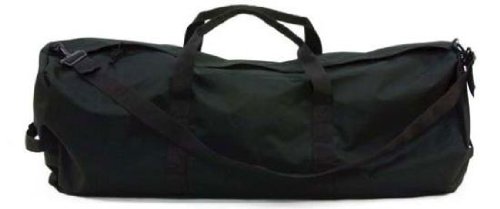
A duffle bag.


A black gym bag, if you will.  Some discarded luggage behind a parked car in a driveway.

Crap.

Yes, there had been a dog there in the past. But not today. My crazy dog lady brain had taken one look at this slouchy duffle bag and transposed the body of a resting dog.

Not only had I seen the dog instead of the bag, but I was moved by this bag. The sight of this bag at rest had made me feel all warm and fuzzy.

I was touched by a duffle bag.


black duffle bag


“Oh ha! It’s a bag,” I said to Mr. Dog Walker who was now laughing partly at me, partly in fear of me.

“There was a dog there before. I swear.”

Right. Like it mattered.

In one brief moment I had rocketed over the line from: Professional Dog Lover to Crazy Dog Lady. The kind of dog nut that sees dogs everywhere and in everything. The kind of person that is moved to the brink of tears by the sight of a Lab-shaped duffle bag “napping” in the sun.

Oh man. The first step is admitting you have a problem right?

So where do I register? Is there a certificate that I should apply for, so that I can make my new status as a Crazy Dog Lady official? Will the DMV stamp a turd-shaped stencil over my photo? Do I register with local law enforcement to warn them of who they’re dealing with if they encounter me on the loose?

Really, I do feel like I earned at least some sort of official acknowledgement.

I certainly reached a new level of…something.

Should I add CDL to the end of my name? Jessica Dolce CDL (Crazy Dog Lady).  Or like dog trainers, it could be CDL-KA for Crazy Dog Lady – Kraziness Assessed.

Maybe this was meant to be and I should roll with it. I can take inspiration from the “Lab” that changed it all aka my Heart-Duffle.

We recently bought some land, with a barn. Perhaps it’s time for me to open my own rescue. I could start by taking in small purses from last season. Maybe a clutch or two. Then move on to unwanted messenger bags, moldy gym bags, and backpacks. If I can secure 501c3 status, I might be able to raise funds to support a sanctuary for unwanted steamer trunks and unclaimed luggage.

They could live out the rest of their days in my fenced in yard, sitting in the sun, and capturing the eye of other Crazy Dog Ladies who drive by my house.

Sigh. Welcome to my new reality.

I mean well, I swear.

Yours Truly,

Jessica CDL