Skip to content

Archive for

Walking and Reading 6|29|13

I’m back this week to report that no rotten vegetables were thrown at me for last week’s post about what I’ve been reading lately. Neat! Let’s do it again, shall we (the sharing links and not throwing tomatoes)?

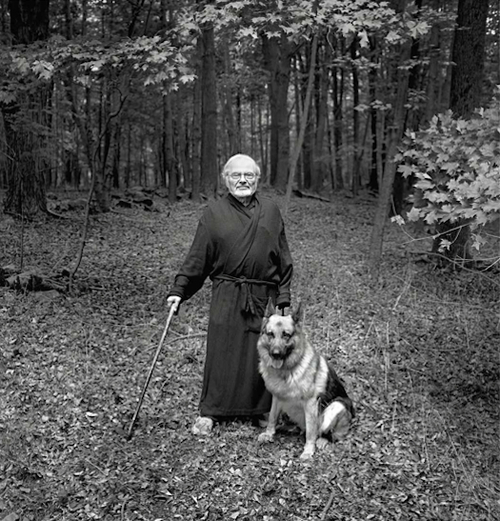
My favorite author, Maurice Sendak, with his dog Herman. Photographed by Mariana Cook (Source)

For the Dogs: 

The SPARCS 2013 International Conference is live streaming all weekend long. That’s the Society for the Promotion of Applied Research in Canine Science btw. If you’re a dog nerd you’ll want to get in on this free action!

Whoa. I might have to get a Poodle so I can do this.  Or maybe I’ll just grab some markers and draw a mustache on Birdie.

I love this blog. The artwork makes me smile. And it’s really helpful. Birdie and I are doing cookie reaches this afternoon to help increase her flexibility.


For the Humans:

Oh Italy. It’s been a while. Why can’t I be rich and go see you every year? Luckily Nat and Bill over at Photo Lab shared these gorgeous photos of their trip, so I can live vicariously through them. You can too.

Listen to James Gandolfini read Maurice Sendak’s In the Night Kitchen. I love this so much. I’m sorry we won’t get to see more from this talented man.

These photos of immigrants from the early 1900s, as they passed through Ellis Island, are stunning.


For the Laughs:

How is this real? How did I not see it sooner? Why am I not prancercising right this second? Stop talkin’ and do some walkin’!


And Offline: I’m reading Let’s Pretend This Never Happened by Jenny Lawson aka The Bloggess. If you like politically incorrect, foul mouthed, not at all comfortable, yet compassionate humor, this would be your jam.


Accepting Reality: I’m a Crazy Dog Lady

Well, it finally happened. Today I officially became a Crazy Dog Lady.  I’ve been teetering on the brink for years, but this afternoon I went ahead and jumped the shark.

Picture this: There I was, driving down the road with Mr. Dog Walker (aka the Snow Ninja).  I looked over to the right as we cruised by a sweet little house that we’ve passed before. Once or twice, I had spotted an old black Lab lying out in the driveway of this house, sunning himself.

Today as we approached the house I spotted my friend again. Thinking of him enjoying this sunny day, warming his senior bones on the blacktop, I felt my heart swell up a little.

“Aw, look,” I said to Mr. Dog Walker, “I love that dog.” I pointed towards the driveway as we passed in front of the house.

Mr. Dog Walker looked at the driveway and looked back at me. He was looking at me like he thought maybe I was having a mild stroke.

One glance at his face and I knew I had done something weird. Again. Let’s face it, I see this look on his face a lot.

So I slowed down and looked more closely at the dog, lying there in the warm mid-day sun. And to my utter horror I realized that this dog, the one who I thought was taking a peaceful snooze was actually a…

wait for it…

wait.

for.

it.


A duffle bag.


A black gym bag, if you will.  Some discarded luggage behind a parked car in a driveway.

Crap.

Yes, there had been a dog there in the past. But not today. My crazy dog lady brain had taken one look at this slouchy duffle bag and transposed the body of a resting dog.

Not only had I seen the dog instead of the bag, but I was moved by this bag. The sight of this bag at rest had made me feel all warm and fuzzy.

I was touched by a duffle bag.


black duffle bag


“Oh ha! It’s a bag,” I said to Mr. Dog Walker who was now laughing partly at me, partly in fear of me.

“There was a dog there before. I swear.”

Right. Like it mattered.

In one brief moment I had rocketed over the line from: Professional Dog Lover to Crazy Dog Lady. The kind of dog nut that sees dogs everywhere and in everything. The kind of person that is moved to the brink of tears by the sight of a Lab-shaped duffle bag “napping” in the sun.

Oh man. The first step is admitting you have a problem right?

So where do I register? Is there a certificate that I should apply for, so that I can make my new status as a Crazy Dog Lady official? Will the DMV stamp a turd-shaped stencil over my photo? Do I register with local law enforcement to warn them of who they’re dealing with if they encounter me on the loose?

Really, I do feel like I earned at least some sort of official acknowledgement.

I certainly reached a new level of…something.

Should I add CDL to the end of my name? Jessica Dolce CDL (Crazy Dog Lady).  Or like dog trainers, it could be CDL-KA for Crazy Dog Lady – Kraziness Assessed.

Maybe this was meant to be and I should roll with it. I can take inspiration from the “Lab” that changed it all aka my Heart-Duffle.

We recently bought some land, with a barn. Perhaps it’s time for me to open my own rescue. I could start by taking in small purses from last season. Maybe a clutch or two. Then move on to unwanted messenger bags, moldy gym bags, and backpacks. If I can secure 501c3 status, I might be able to raise funds to support a sanctuary for unwanted steamer trunks and unclaimed luggage.

They could live out the rest of their days in my fenced in yard, sitting in the sun, and capturing the eye of other Crazy Dog Ladies who drive by my house.

Sigh. Welcome to my new reality.

I mean well, I swear.

Yours Truly,

Jessica CDL

When I’m Not Walking, I’m Reading

I’m on the road this week, so I thought it might be a good time to share some of my favorite recent reads from around the web.

Do you care? I don’t know!

I figured I’d just share and you can ignore this post if it makes you grumpy. On the flip side, if you like this sort of thing, will you let me know? I’ll keep sharing what I bookmark, but only if makes you guys happy campers. Life is too short to share links no one wants to open, right?

Boogie and one of our cats, Gizmo,

Boogie and one of our cats, Gizmo. Boogie says, “I don’t care. I love it!” about this post.


For the Dogs:

Brindle is beautiful (and so are the other markings). Cartoons make everything more fun.

Fart jokes are funny. Fart science is interesting.

These photos are stunning and a little heartbreaking, plus the interview is fascinating (especially if you enjoy documentary photography).


For the Humans:

Pathological altruism. If you work in animal welfare, this is a must-read. Many of us will recognize someone we know. Maybe even ourselves, at some point? I know I did.

Humans can really stink sometimes. But more often than not, they totally rule. Humans of New York will help restore your faith.

I like easy. Sometimes we think we need to make things hard or they don’t count. Not true. Don’t resist easy.

Someone needs to buy me this t-shirt.


For the Laughs:

A sweet sounding gal gets drunk and tries to tell a joke to her husband.


And Offline:  I’m listening to Absurdistan by Gary Shteyngart in my car and reading Wild by Cheryl Strayed (the brilliant mind behind Dear Sugar from The Rumpus).

What’s on your nightstand?

The Nose Knows: State Farm’s Arson Dog Program

Did you know that Maine is home to the State Farm Arson Dog Program? Me neither! That’s why I was beyond excited when I got a rare invitation from Heather Paul of State Farm to observe the program in action. Let’s go check it out together!

First, some basics: The State Farm Arson Dog Program was established with direction from the Maine Criminal Justice Academy.  There are only two ways to become a certified Arson Dog. One is through the State Farm program in Maine and the other is the Bureau of Alcohol, Tobacco, Firearms and Explosives (ATF).

From State Farm, “To help combat arson fraud and increase community awareness of the problem, State Farm has been providing financial support for the acquisition and training of an arsonist’s worst nightmare: accelerant detection canines, better known as the arson dog. Since 1993, the State Farm Arson Dog Program has put more than 300 dogs and their partners to work in 44 states, the District of Columbia and three Canadian provinces.

Arson dogs are trained to sniff out minute traces of accelerants (gasoline, lighter fluid, etc.) that may have been used to start a fire. Each arson dog works and lives with their handler, a law enforcement officer or firefighter trained to investigate fire scenes. The canines and handlers are required to complete four weeks of training in Maine, training every day during those four weeks. The intensive training school is led by Paul Gallagher, Owner and Head Trainer of Maine Specialty Dogs.”
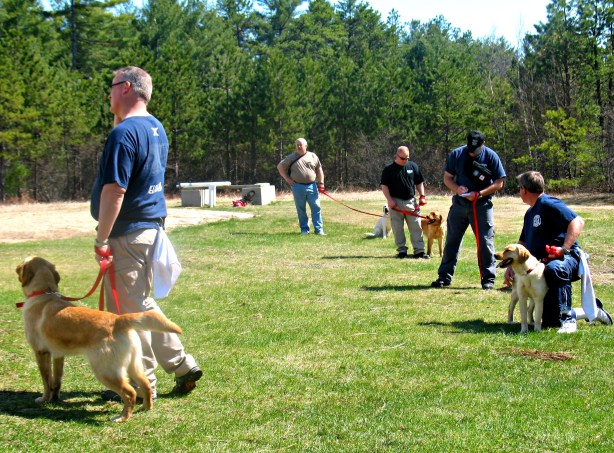
State Farm Arson Dog Spring Training 2013

State Farm Arson Dog Spring Training 2013


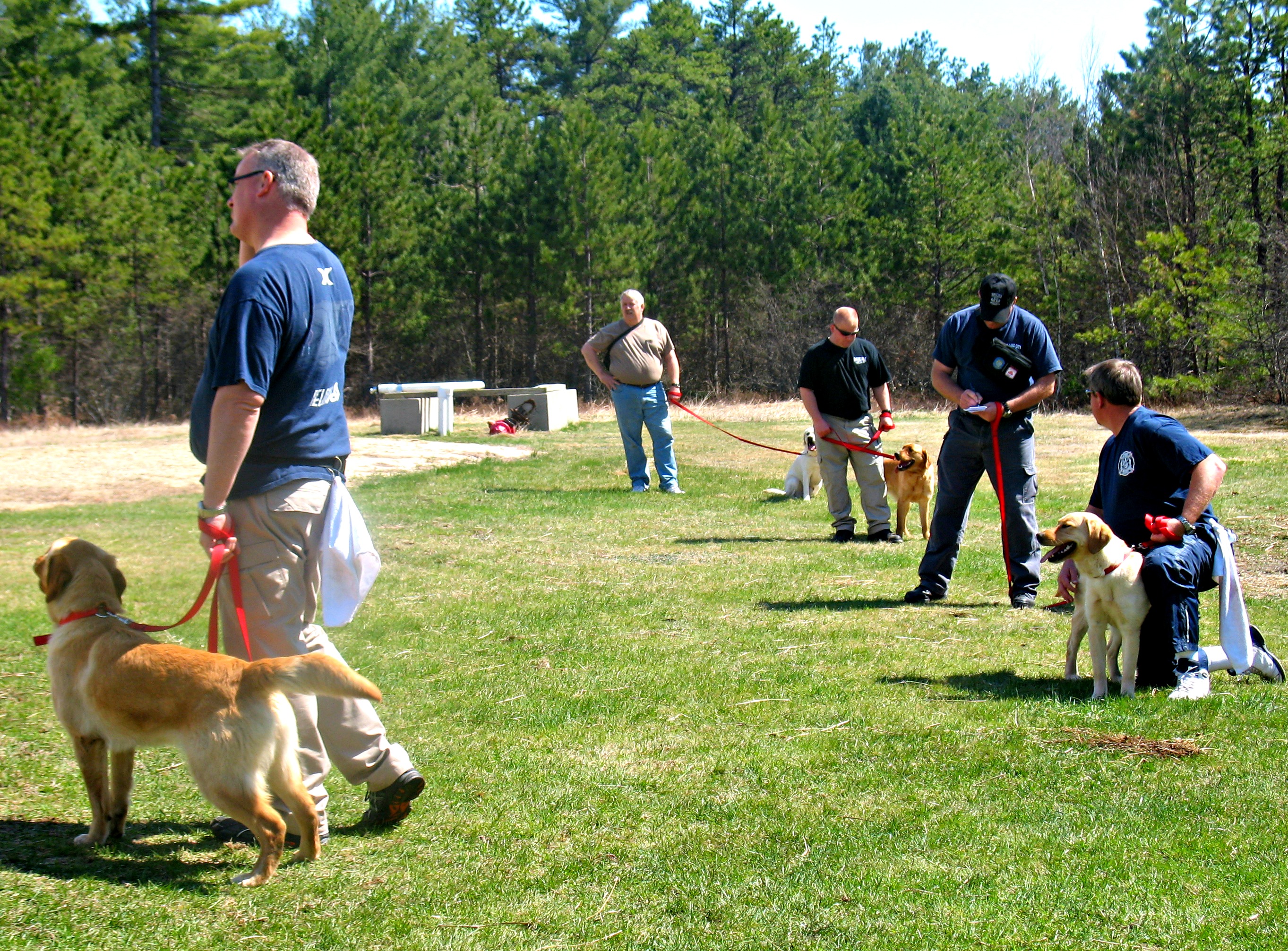
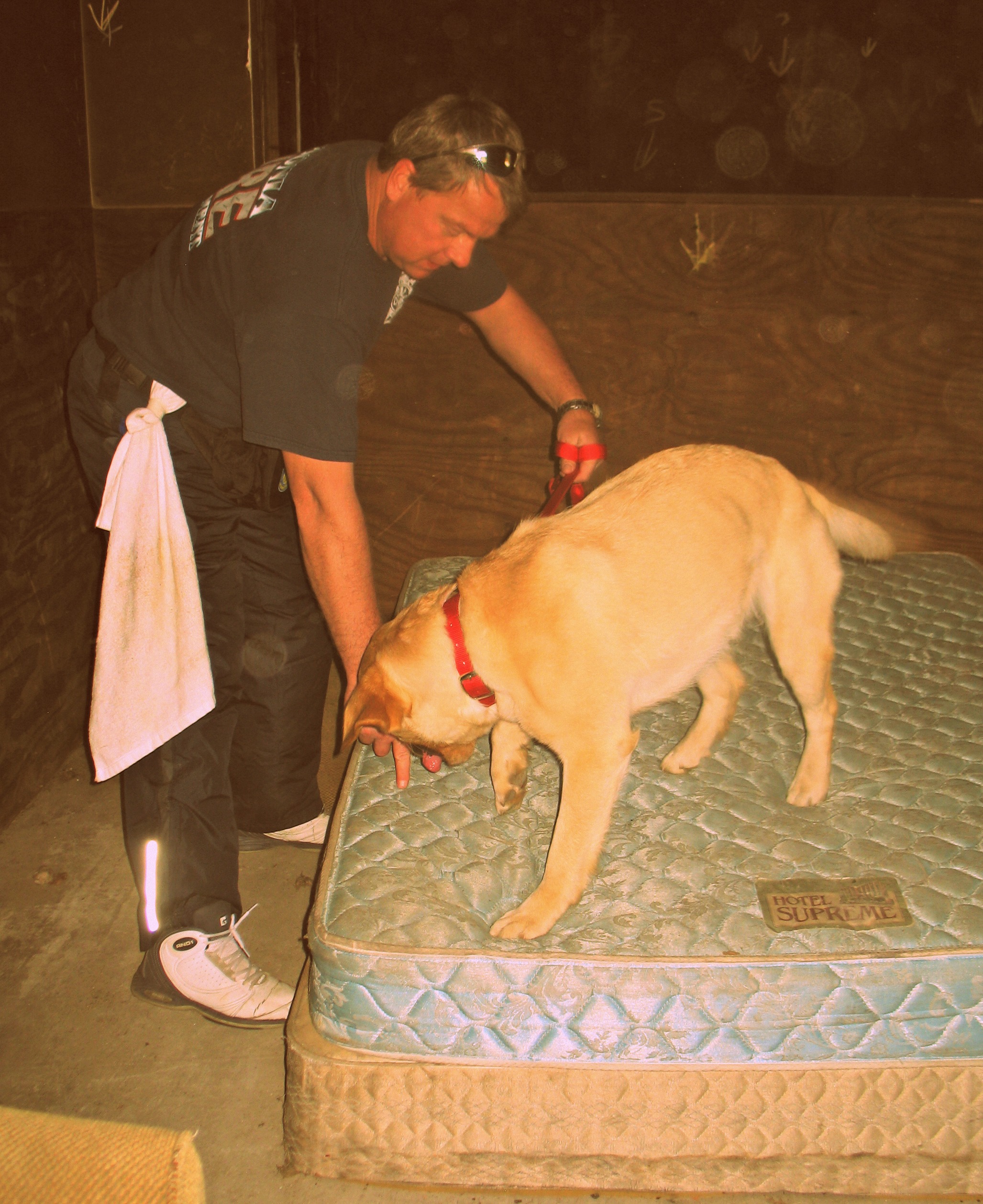
I was invited to observe one day of the 2013 Spring training session. Here’s what I learned:

Arson dogs are fast: The teams can work an entire scene in less 30 minutes. It can take humans days to do what a dog does in minutes.

Arson dogs are accurate: At best, humans can make educated guesses about possible accelerant use and will need to collect an average of 20 samples to send off to a lab for testing. With an arson dog, their nose narrows down the guess work and they wind up taking 3 samples on average.

Arson dogs save time and money: Fewer (but better) samples saves money at the lab. The dog’s work speeds up investigations and provides for a higher conviction rate. Often, arson dog teams are brought in to rule out an arson. This allows the claim process to move forward more quickly.

Arson dogs know how to work a crowd:  At a fire scene, the dogs are encouraged to mingle with the crowds and give them a good sniff. If the arsonist is in the crowd watching (a common phenomenon, especially with kids aka “firebugs”), the arson dogs will alert to smell the accelerant on their clothes, shoes, or body. The dogs may be brought in during a suspect’s questioning to do a sniff as well. And the dogs also make appearances in courtrooms when their handlers present evidence (which may include the dog’s training, experience, and the procedure followed at the incident in question).

Arson dogs are unbiased: The dogs just stick to the truth. If there’s an accelerant present, they alert. The dogs are simply communicating that something is there (or not there), without any personal basis or judgement.

Arson dogs are valued members of their communities: In addition to averaging 90 fires a year, in their off hours, Arson Dog teams head out into their community to teach fire safety and prevention to kids. These local heroes even get to strut their stuff in parades.

The handlers love working with their dogs: Being a part of an Arson Dog team is no small commitment. Once an arson dog is certified and placed with a handler, he or she works every day of the year and must be recertified annually. Handlers make a five year commitment to working with their dogs. Most of them stick around a lot longer!

The handlers live and work with their dogs 24-7.  It’s a deep bond. One handler, Assistant Chief Steve Gallagher of the Chillicothe Ohio Fire Department, chose to retire from arson investigations when he lost Winchester, his partner of 11 years. He just couldn’t imagine working scenes without his dog. Lucky for Chillicothe, Steve was at the Spring 2013 training with his new partner Gunther. This is a man who loves the work and the dogs too much to stay away.
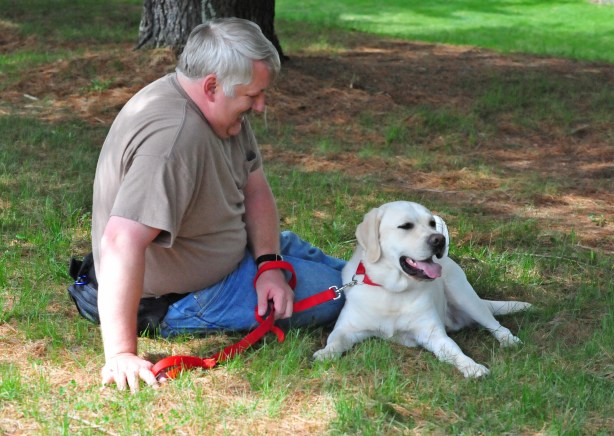
Assistant Chief Steve Gallagher and K-9 Gunther with the Chillicothe Fire Department (photo credit: State Farm)

Assistant Chief Steve Gallagher and K-9 Gunther with the Chillicothe Fire Department (photo credit: State Farm)


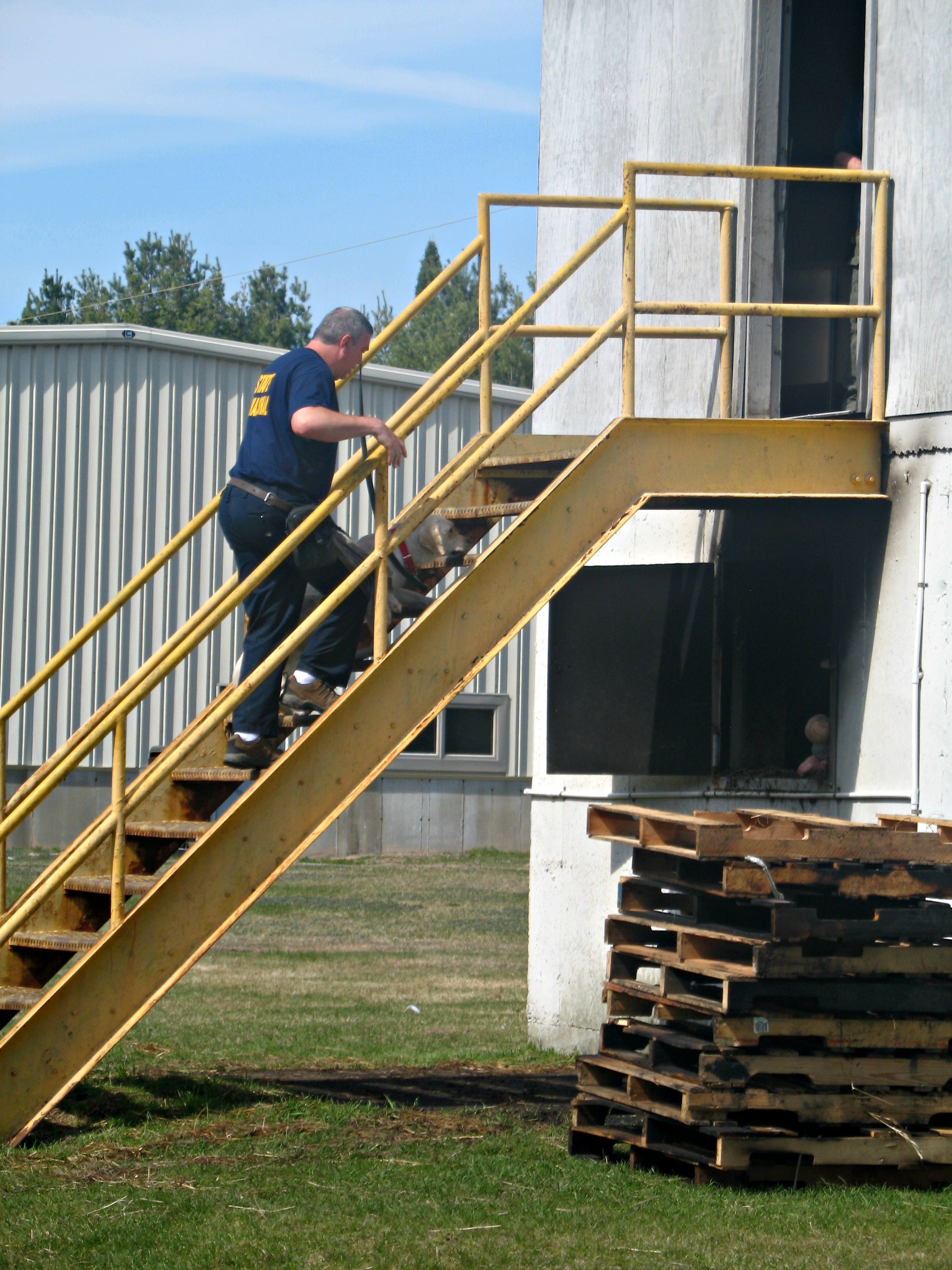
The day I visited the dogs were doing searches in a structure set up to look like a fire scene – complete with terrifying mannequins lying around looking like they just ran out of a burning mall.
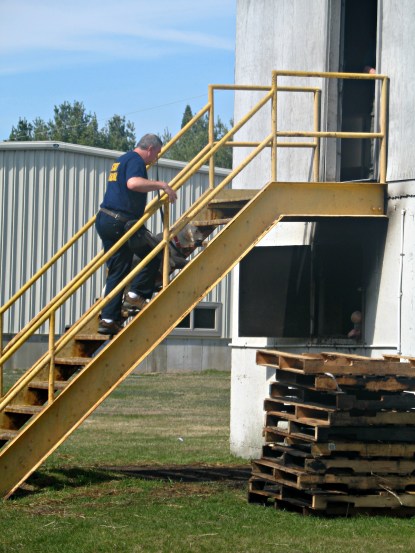
Arson Investigator Mitch Kushner and K-9 Zoe with the Illinois State Fire Marshal's office

Arson Investigator Mitch Kushner and K-9 Zoe with the Illinois State Fire Marshal’s office


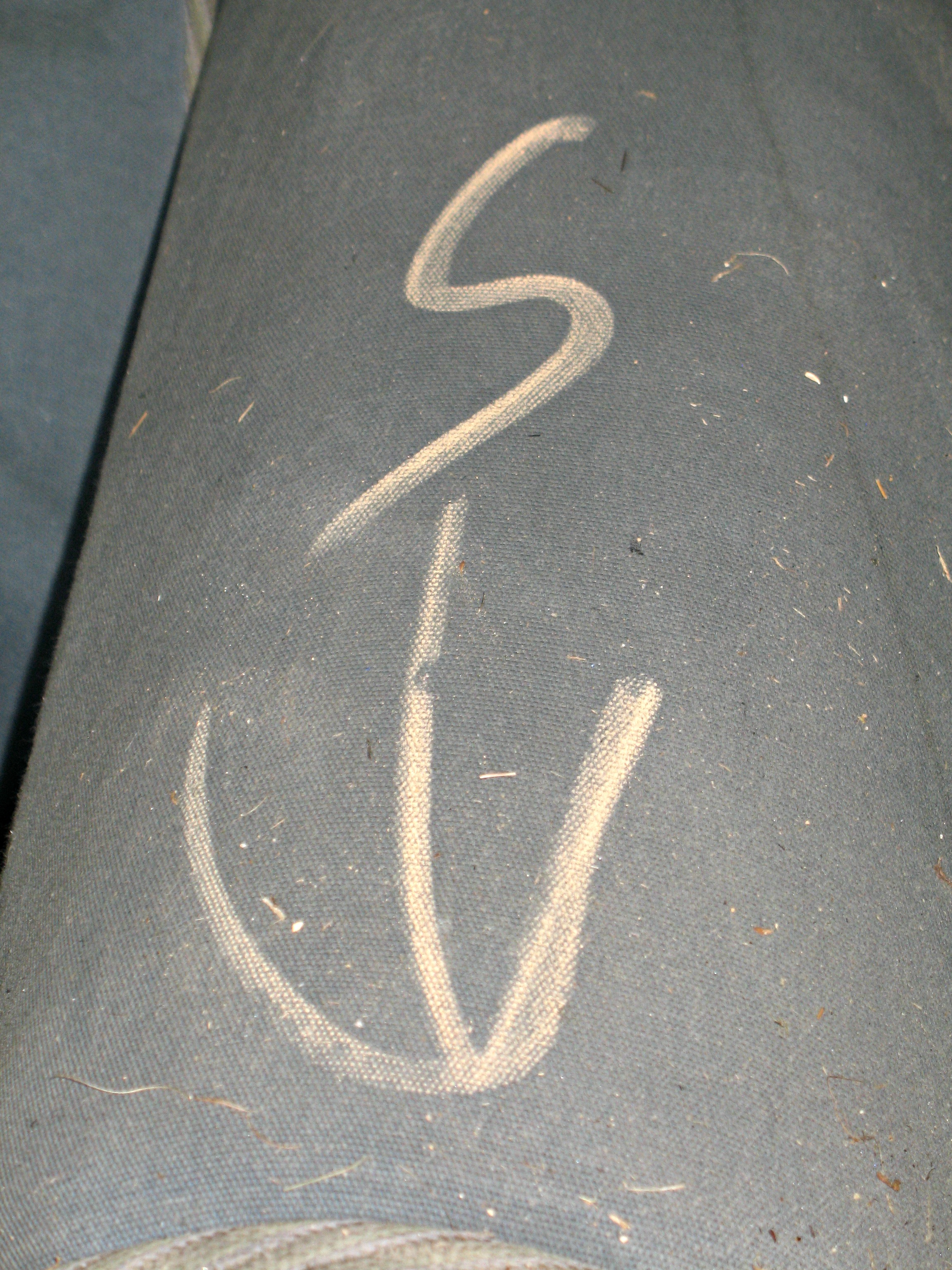
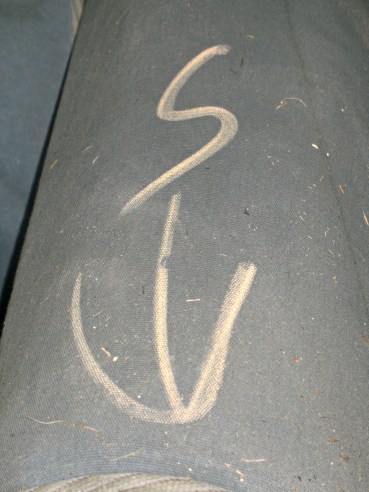
Before each team entered the building the instructors placed finds among the rooms and marked each spot with a chalk “S”:
state farm arson dog training

S marks the spot


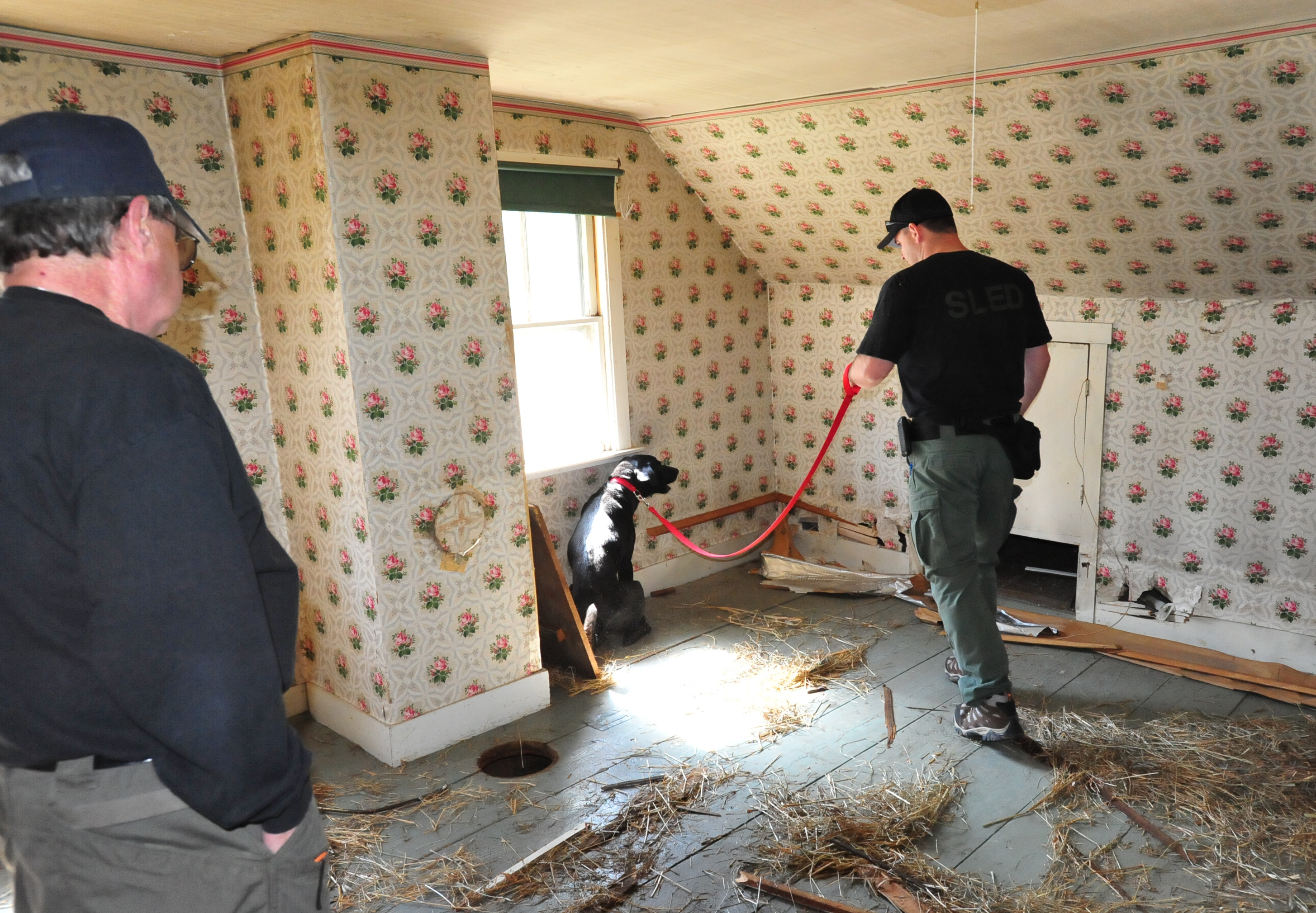
The teams entered one at a time and the dogs went to work.  The encouraging word “Seek, Seek, Seek” was all I heard as the handlers allowed the dogs to work the scene.

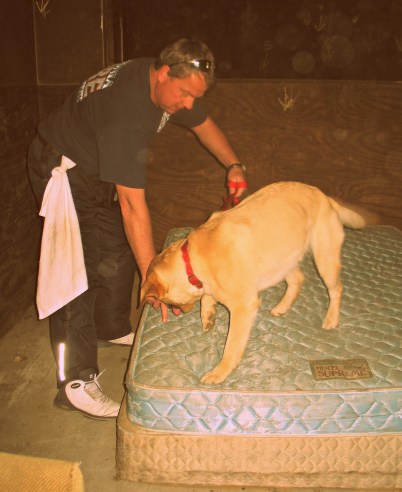
Just like in an amateur nose works class, the handler doesn’t direct the dog – they don’t pull on the leash – they let the dogs do the work. The handlers might tap on the walls or floor to engage the dogs, but they never tap the evidence itself. The handlers keep their feet moving, watch the body language of their dogs, and allow the dogs time to work.
state farm arson dog training

Special Agent Brett Ellis and K-9 Pippa with the Colorado Bureau of Investigation


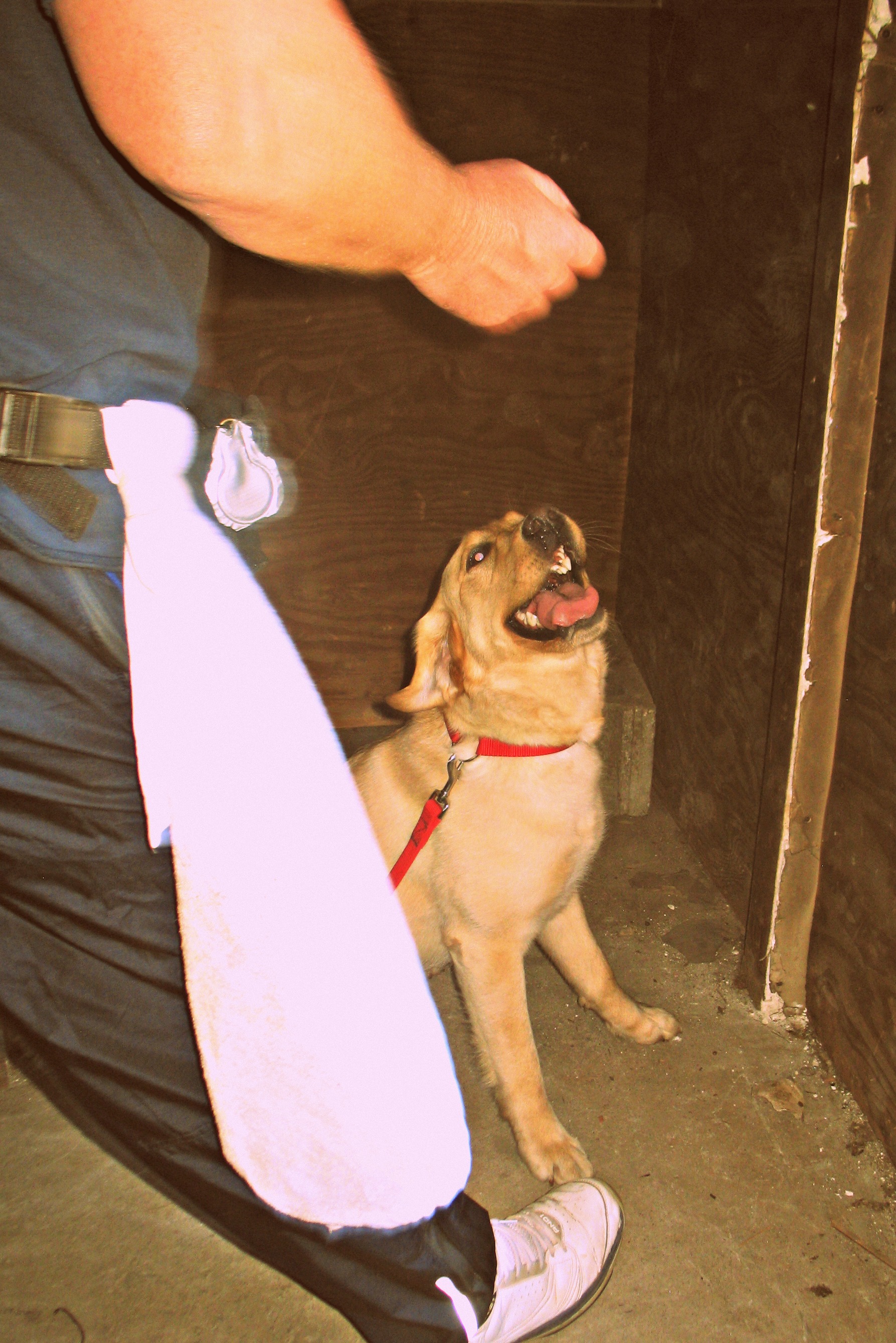
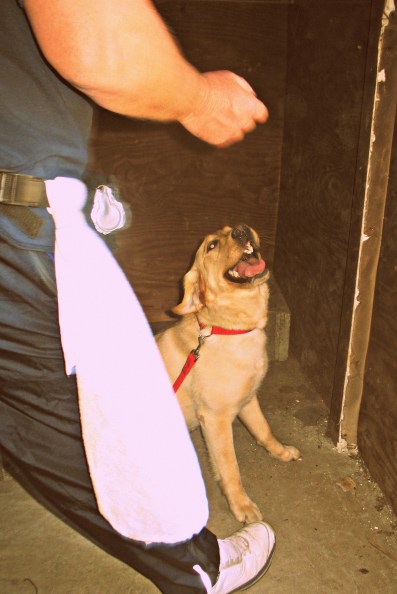
When a dog detects the accelerant they alert by sitting.Then the handler swoops in and rewards them with a handful of kibble and praise.  The dogs were so pleased with themselves!
state farm arson dog alerts

Pippa sits to alert and gets her reward


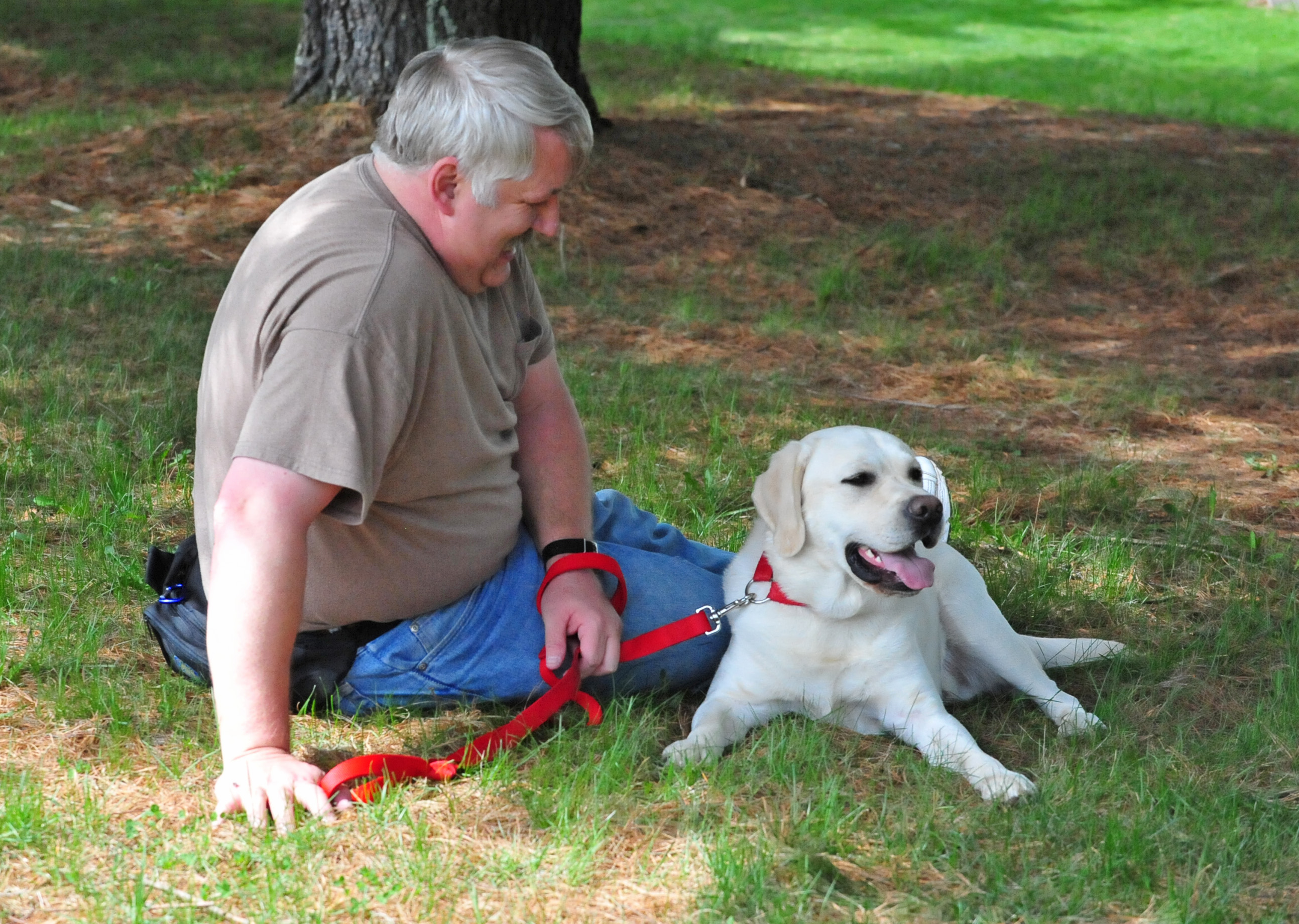
The dogs, who had received training before being placed with their handlers in the Spring camp, knew what they were doing. The training was primarily for the humans. So if a handler struggled, the instructors reminded them to be patient, let the dogs do the their jobs, and to reward them big time when they alerted. It was hard work – these guys were sweating – but the dogs were having a great time and seemed to know that the newer handlers would eventually have the coordination and skills to keep up with them!

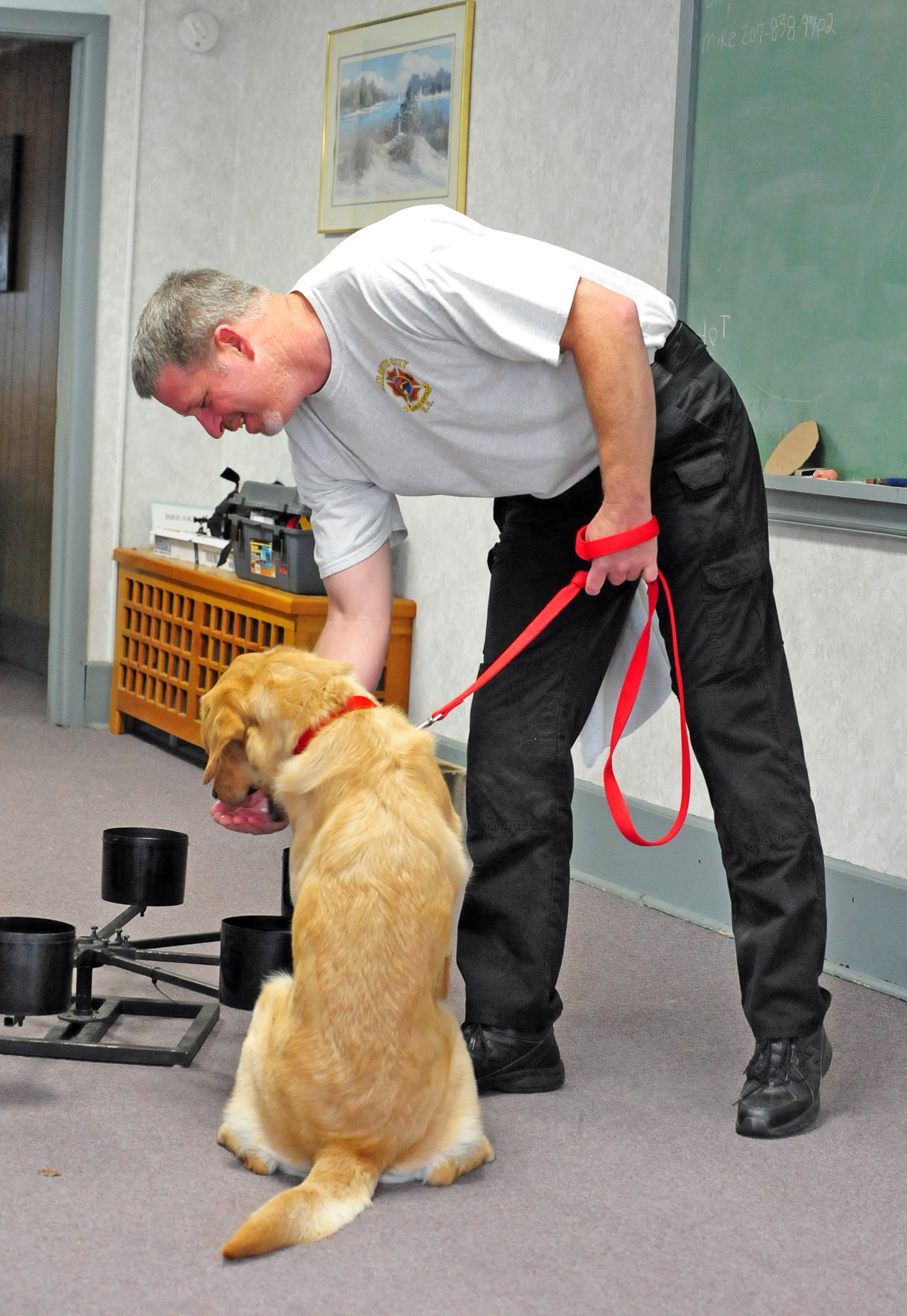
After they leave the training programs, the teams continue training together every day to keep their skills sharp. Everything they do is recorded in detailed training logs, including how much the dogs eat. That’s because the dogs get all of their food fed to them by hand, during their multiple training sessions per day. Until the dogs retire, they’ll never eat out of a bowl.

By the way, this type of feeding and training routine makes going on vacation pretty much impossible for the handlers. Unless they’ve trained a secondary handler to feed and train the dogs while they’re away, the handlers stay put.  Like I said earlier, this is no small commitment.
Deputy Chief Barry Overman and K-9 Ranson with the Elizabeth City Fire Department

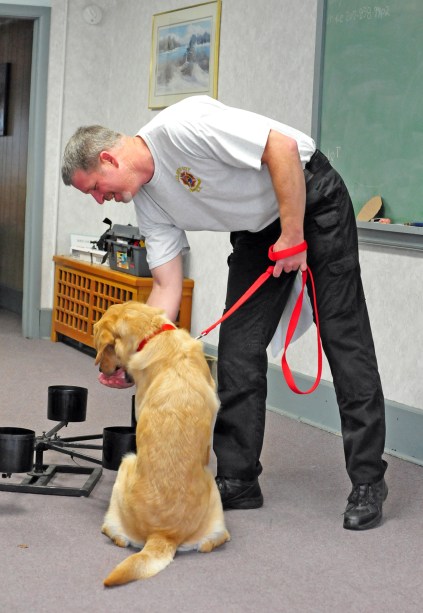
Deputy Chief Barry Overman and K-9 Ranson with the Elizabeth City Fire Department (photo credit: State Farm)


As for the dogs themselves, both the ATF and State Farm prefer Labradors or Lab-mixes for their programs. One reason they choose to work with Labs is public perception. If a Shepherd-type dog were to walk into a crowd at a fire scene, people may suspect that the dog is working for law enforcement and leave. But a Lab? People – including arsonists – are more than happy to let a Lab approach them, without ever suspecting that the Lab is searching them for clues!

Guide dog training “dropouts” are favorite candidates for arson detection work. Generally, it’s the guide dog with too much prey drive or one that’s too focused on food that makes the switch from service to arson work. The dogs need to be very high energy. It’s the kind of dog that may be considered a challenge by the average dog owner.

Occasionally, State Farm is able to pull a shelter dog for the program. But why not more? When I asked Paul Gallagher about this he explained that in the past, animal shelters haven’t been very enthusiastic about releasing their dogs to the program. Again, it’s a perception issue. The shelters perceive that all law enforcement-related agencies train their dog using force (even though that’s not the case with Arson Dogs), and some aren’t comfortable signing the dogs over. As a former shelter worker, I have to admit that I hope that changes, so that more shelter dogs might find their way into this amazing program.
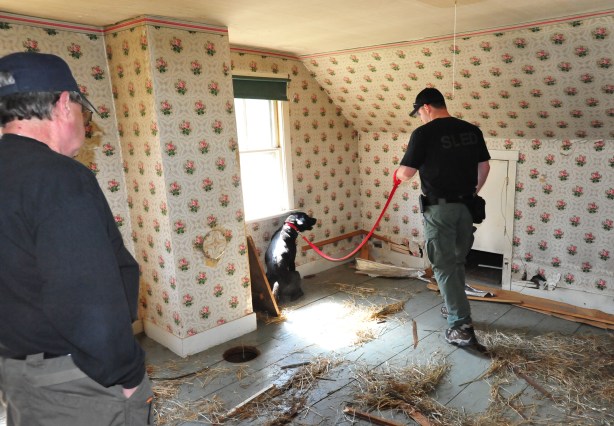
Special Agent Brian Wright and K-9 Gunner with the South Carolina Law Enforcement Division (photo credit: State Farm)

Sitting to alert. Special Agent Brian Wright and K-9 Gunner with the South Carolina Law Enforcement Division (photo credit: State Farm)


Beyond watching the dogs and handlers work, what I found interesting was State Farm’s commitment to the program. State Farm covers the cost of training each dog (tens of thousands of dollars) for fire departments and other public entities around the country. The dogs go where the need is, not necessarily where State Farm writes polices. For example, they’ve trained dogs to work in British Columbia, where they don’t even offer insurance.  This program is a real investment in our communities and I have to admit, it makes me proud to be a State Farm customer*.

It was a real pleasure to spend the afternoon with these dedicated, compassionate, hardworking guys. It’s a joyful thing to watch working dogs do what they do best, all while bonding with their new handlers.  And it was cool knowing that each team was just a few weeks from heading to their new homes, where they’re all destined to become local heroes.

Here in Maine one of the State Farm teams, Dan Young of the Maine State Fire Marshal’s office and his dog Shasta, were on the scene during a recent string of fires not far from my town. Having just seen the program in action, I was so glad to know they were there, using that amazing nose to help keep our communities safe.

To learn more about Arson Dogs or to find our how your agency can apply for the program, please visit the State Farm website. You can see more photos from the Spring Training here. 

*This blog is not a paid endorsement. I received no compensation for writing about the State Farm Arson Dog program.

Dog Walker’s Hair Goes Gray Overnight: Says Invisible Fences Are to Blame

I’ve been trying to write a funny take on how ridiculously stressful it is to walk past yard after yard of dogs who are behind invisible, underground fences and charge me as I pass by. It’s like the ultimate game of dog walker chicken.

The dogs are running towards me – there might be a fence to stop them, but maybe not – do I keep passing by or retreat?


Obviously I retreat, full of anxiety as I wonder if the dogs are going to chase us down the street. I age two years every time this happens. After more than a decade of playing dog walker chicken I’m starting to look like Cloris Leachman’s older sister.

So, yeah, this was going to be funny, but then a dog I love got hurt this week. One of my clients was walking her dog when they passed a house with a large dog and owner playing ball in the yard. The large dog saw my client and ran at them, slamming hard into her dog and grabbing a mouthful of fur.

Where was the other dog owner? Hiding behind a bush in her front lawn. That my friends, is a whole different blog.

Why did the owner allow the dog to run loose? She didn’t. The aggressing dog was in his yard behind an invisible fence when my client walked by. He busted right through the “fence”, happily taking the shock in order to get to my friend.

My dog pal has spent the last week with a swollen shoulder. She’s unable to shake her head or be touched on her left side without yelping. It could have been worse. Oh wait. It was. She’s reactive around some dogs. Thanks to this encounter, we’ve likely moved back a step or two.

Nothing funny about that.

I’m super tired of walking by these fences. How about you?


Every time I walk past a yard where I see dogs charging across their lawns towards me and my dogs I have to think: Do they have an invisible fence? If so will it stop the dogs? I quickly scan for little white flags. Sometimes the flags are there, but sometimes they’re not. Are they not there because there is no fence or because the owners took the flags down? Are those pesticide signs? Is there a sign anywhere else? The clock is ticking. The dogs are charging. Twenty more of my hairs turn gray, my stomach flips, and I do an Emergency U-turn.

Playing dog walker chicken with overstimulated, unsupervised dogs just isn’t my steez.

white fence flags


There’s already so much written about these fences, but in case it needs to be said again: Invisible fences are not REAL fences. Traditional fences are designed to keeps dogs in, keep others out, and they provide a clear visual barrier so people passing by know the dogs on the other side are contained.

Hit pause: I understand that these fences work for some of you. I’m not calling you a bad dog owner for using them. But these fences scare me and my friend just got hurt, so I’m gonna call out some problems with them. Nothing personal, ok? You know I love you guys.

Ok, so while no option is perfect, these invisible fences fail the average dog owner in many ways. Allow me to elaborate based on my experiences with these fences (as a dog walker and shelter worker where I was a frequent host to stray dogs with failed underground fence collars):


They fail to keep some dogs in:

  • Plenty of dogs are happy to take the shocks in order to get to whatever high value item is on the other side. This happens a lot. A dog sees: squirrels, turkeys, dogs they want to play with, a dog they want to chase away, a kid on bike, an ice cream truck, the Philly Phantic, etc. and they’re motivated enough to take a few shocks in order to get to it. See also: my friend this week.
  • Some of those dogs will leave the yard, but won’t take the shock to come back IN the yard. It’s not fun taking the pain just to go back and sit in your yard.  So now your dog is loose.
  • There are dogs that figure out that the batteries in their collars are dead (no warning beeps) or their collars are loose enough not to feel the shock. So off they go to explore the world!
  • When snow banks are high enough, dogs can walk right over where the invisible fence line reaches. And off they go again!
  • Some dogs will bolt when they are scared – thunderstorms, fireworks, etc. – and they don’t care about taking the shock if they think it’ll help them escape what’s frightening them.


They fail to keep others (animals and people) out:

  • It doesn’t prevent anything or anyone from entering your yard.  These fences don’t keep anything OUT.
  • Some dogs are perfectly happy to stay in the yards, dead batteries in their collars and all, but they are surprised to find other dogs have entered their yards.  Or wild animals, unwelcome people, or aggressive dogs that got loose from someone else’s house. Your dog will get shocked if they try to escape the yard/the threat.


They can cause behavior issues:

  • Some dogs are so frightened by the shocks they receive that they don’t want to go outside anymore. Like for days.
  • When dogs charge the boundaries of their yards every time they see a dog/bike/person and get a shock, this can cause behavior issues. Some dogs will associate the pain they feel with what they see. This can potentially lead to aggression or reactivity.
  • Some dogs won’t leave their yards for fear of a shock, even when they’re not wearing their collar. I knew a dog that had to be driven down the driveway, past the fence line, in order to leave the property for a leashed walk.
  •  Some dogs become afraid of beeping. Because their collars beep as a warning before they receive a shock, the dogs become fearful whenever they hear a similar beep. Like from the microwave.


They frighten people passing by who can’t tell if the dogs are really contained or not:

  • See: playing dog walker chicken. Also: delivery guy chicken, young children and senior citizens out strolling chicken, and jogger chicken. It’s scary to walk past your yards folks. Really scary. 


Look, there are no absolutes in this world, so I’ll be the first to admit that some of these things can happen no matter how you contain (or don’t contain) your dogs. Dogs dig under wood fences, jump chain link, gates swing open, etc.

And despite how much I can’t stand underground fences, I’ll acknowledge that there are two ways that these fences might not be totally unreasonable options for some families, provided the owners do the proper boundary training, have excellent recalls, and do not leave their dogs unattended in their yards:

  • As a secondary containment system for escape artists. If you have a dog that is able to scale or dig out of traditional fences, using an electric fences as a backup system, might be worth exploring.
  • As a containment system for rural properties with many acres. If you have acreage that can’t be fenced in because it is so large, using an electric fence at the far boundaries may be worth exploring.


And to keep the conversation rolling, here are two of the common reasons that responsible, dog-loving people I know pick Invisible Fencing:

  • Cost
  • Housing Associations


For cost: Underground fences range from $100 (for a DIY kit) to a couple thousand bucks. There are some affordable alternatives out there. Like these fence kits. My choice for affordable AND sturdy is farm fencing. I know because that’s what we choose for our yard. It’s comparable in price to a professionally installed electric fence. You can build it 4-8 feet high. You can bury part of it below ground if you have diggers. It doesn’t obstruct views and you can fence in just part of your yard if you have many acres.


We waited and saved for 5 years until we could put up a fence. Until then, we relied on leash walks and supervised time on tie-outs in the yard. This was Birdie’s first run in her new, fenced in yard!

We waited and saved for 5 years until we could put up a fence. Until then, we relied on leash walks and supervised time on tie-outs in the yard. This was Birdie’s first run in her new, fenced in yard!


For housing associations: please talk with them. Nothing will change if no one challenges the rules. Ask if you are allowed to fence in part of your property (maybe just the back yard). Discuss different types of fencing options. Can you put up a low physical fence, perhaps with Invisible Fence as a back-up if your dog can jump it? Can you fence in a portion of the yard with non-privacy fencing, like the options above? I know it’s not likely to work, but please try!


In the end, if you do choose a hidden electric fence please: Go with a professionally installed product, like the Invisible Fence brand, rather than a DIY job. Do the boundary training, slowly and as positively as you can. Make sure your dog has an excellent recall.

Never leave your dog unattended. You need to know if your dog leaves the yard. You need to know if another dog enters your property.


Finally, know your own dogs. This just isn’t the right fit for every dog. For some dogs it won’t keep them in, for other dogs it has the potential to cause serious issues. Never use them with dogs who have a history of reactivity, fear, phobias, or aggression.

For all of our sakes, I repeat: those of you with invisible fences (or no fences at all) have to stop leaving your dogs unattended in your yards. It’s crazy frightening to see dogs charging you at top speed, white flags or not.

And if you think your friendly dog would never do such a thing, I invite you to nanny-cam your yard. Betchya a five spot that lots of your dogs are having a blast playing dog walker chicken while you’re gone.


More on fences and fence problem-solving here!